Al-Jdayde: The Historic Christian Quarter of Aleppo
Al-Jdayde (Arabic for "The New Town"), also known as Al-Jdeideh or Al-Judayda, is one of the most culturally significant districts in Aleppo, Syria. Renowned for its winding narrow alleys, opulent mansions, and historic churches, this predominantly Christian neighborhood serves as a testament to the city's diverse religious and social tapestry. While it has long been a center of trade and faith, the district has recently faced the immense challenge of recovering from the devastation of the Syrian Civil War.
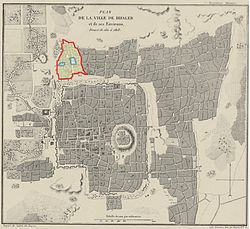
Key Facts
- Origin: Established in the late 14th century as a suburb outside Aleppo's northern walls.
- Demographics: Historically a predominantly Christian area, with a strong Armenian presence specializing in trade with Persia and India.
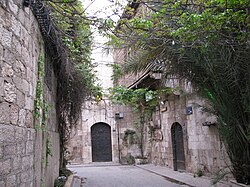
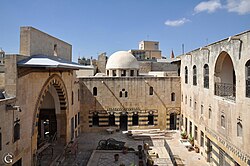
- Architecture: Characterized by richly decorated mansions, narrow alleyways, and a variety of denominational churches.
- Key Landmarks: Includes Sahat Farhat, Sahat Al Hatab, and historic homes like Beit Ghazaleh and Beit Wakil.
- Current Status: Undergoing rehabilitation following catastrophic damage during the Syrian Civil War.
The Evolution of Al-Jdayde
From Mamluk Suburb to Urban Center
During the end of the Mamluk period, Al-Jdayde began as a small suburb located outside the northern walls of Aleppo, situated near cemeteries and storage areas. Its growth was driven by the roads connecting the Bab al-Nasr gate to villages in the north and northeast, which gradually integrated the neighborhood into the city's urban fabric.
By the late 14th century, the area was equipped with fountains and khutba mosques (mosques where the Friday sermon is delivered), supported by an advanced network of water works. The opening of a new water duct in 1490–91 further spurred expansion, allowing for the creation of hammams (traditional public baths). The western side of the suburb contains Christian cemeteries and remnants of Byzantine-period churches, reflecting the growth of the Christian population and their desire for communal residency.
Religious and Social Diversity
The area around Farhat Square and the Salibeh intersection became the spiritual heart of the district. This area hosts several significant churches, including the Maronite, Syriac, Greek Orthodox, and the Armenian Holy Forty Martyrs Church, the latter of which was enlarged in 1490. Over time, the neighborhood became home to a mix of wealthy notables and less affluent residents.
Ottoman Influence and Urban Character
Following the Ottoman conquest in the 16th and 17th centuries, Al-Jdayde was organized into rectangular land parcels. The Armenians, who dominated trade with India and Persia, were the primary inhabitants. A unique feature of the district was the presence of two large waqfs (religious trusts) founded between 1583 and 1653.
These waqfs created architectural ensembles that served as the social and commercial hub for both Muslims and Christians. These complexes included:
- A cloth market and four large textile workshops.
- A vast cereal warehouse and various food souks.
- A school for Muslim pupils, a small mosque, a café, and a large hammam.
- A public fountain serving the Christian quarter.
This environment fostered a cosmopolitan atmosphere where dragomen (professional interpreters and guides) assisted foreign merchants in conducting trade under the encouragement of various sultans.
Revitalization and Cultural Heritage
Between 1990 and 2000, Al-Jdayde experienced a period of revitalization, becoming a major tourist destination. The area was famous for the scent of jasmine that permeated its streets. Many historic palaces were converted into boutique hotels, restaurants, and museums. Notable buildings from this era of restoration include Beit Wakil, Beit Ghazaleh, Dar Zamaria, Beit Achiqbash, Beit Sader, Beit Sissi, Dar Basile, and Beit Dallal. Additionally, the two primary squares, Sahat Farhat and Sahat Al Hatab, were renovated to preserve their historical charm.
War and Reconstruction
The Syrian Civil War, which reached Aleppo in 2012, brought catastrophic damage to Al-Jdayde. Positioned on the front line of a four-year war of attrition, the neighborhood suffered heavily. In April 2015, massive underground explosions beneath Sahat Al Hatab devastated the surrounding area.
Significant monuments, including the Waqf of Ibshir Mustafa Pasha, Beit Achiqbash, and Beit Ghazaleh, were severely damaged. Many buildings were looted of their ancient decorations and fixtures. In response, UNESCO and the DGAM completed a high-precision survey in November 2017 to facilitate emergency consolidation. Rehabilitation efforts began in 2017 with the back-filling of craters in Sahat al Hatab, followed by rubble clearance in 2018 and the ongoing reconstruction of key elements.
| Category | Notable Examples | Significance |
|---|---|---|
| Historic Mansions | Beit Ghazaleh, Beit Wakil, Dar Zamaria | Converted into museums and boutique hotels |
| Religious Sites | Holy Forty Martyrs Church, Maronite Church | Centers of the Christian community since the 15th century |
| Public Spaces | Sahat Al Hatab, Sahat Farhat | Central social hubs and renovated squares |
| Civic Structures | Waqf of Ibshir Mustafa Pasha | Combined commercial and religious trust complex |
Frequently Asked Questions
What does the name Al-Jdayde mean?
Al-Jdayde is Arabic for "The New Town," reflecting its origin as a suburb established outside the original walls of the ancient city of Aleppo.
Which community historically dominated the Al-Jdayde district?
The district was predominantly inhabited by Christians, with the Armenian community playing a particularly prominent role due to their specialization in trade with India and Persia.
How did the Syrian Civil War affect the neighborhood?
The area suffered catastrophic damage, particularly during a war of attrition. Huge underground explosions in 2015 devastated Sahat Al Hatab and damaged several museums, churches, and historic mansions.
What efforts are being made to restore Al-Jdayde?
UNESCO and the DGAM conducted high-precision surveys in 2017 to protect monuments. Restoration work has included clearing rubble and back-filling craters in Sahat al Hatab, with reconstruction of key buildings ongoing.
What were the 'waqfs' in Al-Jdayde?
Waqfs were religious trusts that established architectural complexes providing essential services, such as schools, mosques, textile workshops, and markets, where Muslims and Christians lived and worked side by side.