Airplane Evolution: From Early Gliders to Supersonic Jets
The history of the airplane is a saga of human ingenuity, spanning centuries of experimentation, from ancient legends of flight to the sophisticated supersonic machines of the modern era. What began as a dream of soaring like birds has transformed into a global industry that defines modern transportation and connectivity.
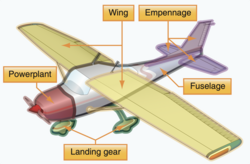
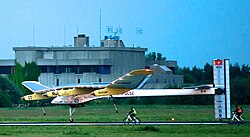
At its core, an airplane is a self-propelled vehicle designed for transportation. While early models relied on rudimentary mechanics, modern aircraft utilize a wide array of fuel sources, including gasoline, diesel, natural gas, hydrogen, electricity, and even solar energy.
Key Facts
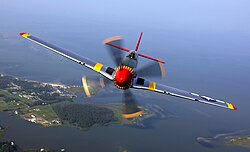
- First Sustained Flight: Achieved by the Wright brothers in 1903.
- Modern Concept: Established by George Cayley in 1799, separating lift, propulsion, and control.
- First Jet Aircraft: The German Heinkel He 178, tested in 1939.
- First Jet Airliner: The de Havilland Comet, introduced in 1952.
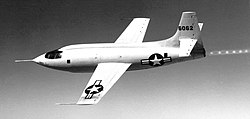
- Supersonic Milestone: The Bell X-1 was the first to break the sound barrier in level flight in 1948.
The Foundations of Flight
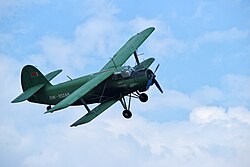
Long before the first engine roared, humanity obsessed over the mechanics of the sky. Ancient Greek legends of Icarus and Daedalus, alongside Indian epics featuring the Vimana, reflect this timeless fascination. As early as 400 BC, the Greek mathematician Archytas reportedly built a steam-propelled bird-shaped device that could fly approximately 200 meters.
The scientific groundwork for modern aviation was laid in 1799 by George Cayley. He was the first to define the airplane as a fixed-wing machine with distinct systems for lift, propulsion, and control. Cayley's work transitioned from theoretical models to practical application when he built a successful passenger-carrying glider in 1853.
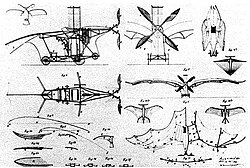
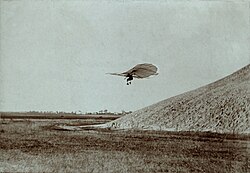
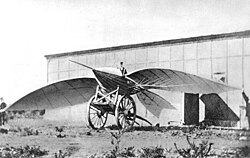
Other pioneers contributed vital pieces to the puzzle. In 1856, Jean-Marie Le Bris achieved a powered flight by having his glider, L'Albatros artificiel, pulled by a horse. Later, Otto Lilienthal became the first person to conduct well-documented, repeated, and successful gliding flights between 1867 and 1896. His research into the modern wing shape provided the essential inspiration for the Wright brothers.
The Wright Breakthrough
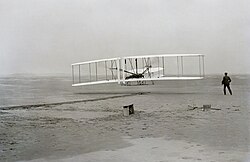
The turning point in aviation history occurred in 1903. Orville and Wilbur Wright achieved what the Fédération Aéronautique Internationale (FAI) recognizes as the first sustained and controlled heavier-than-air powered flight. By 1905, their Wright Flyer III had evolved to allow for stable, controllable flight over significant periods.
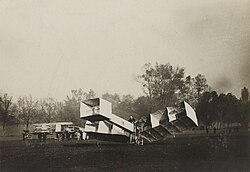
Following the Wrights, Alberto Santos-Dumont made headlines in 1906 by performing the first unassisted airplane flight (not requiring a catapult), flying 220 meters in under 22 seconds.
The Jet Age and Modern Propulsion
As aviation technology matured through the World Wars, the focus shifted from propellers to jet propulsion. The first practical jet aircraft, the Heinkel He 178, appeared in 1939, followed by the Messerschmitt Me 262, the first operational jet fighter, in 1943.
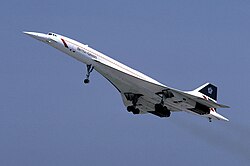
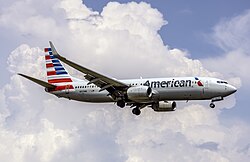
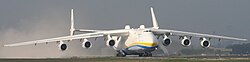
The mid-20th century saw the rise of commercial jet travel. While the de Havilland Comet was the first jet airliner (1952), the Boeing 707 became the first widely successful commercial jet, serving for over six decades. This era also saw the dominance of massive aircraft like the Boeing 747, which held the title of the world's largest passenger aircraft until the Airbus A380 arrived in 2005.
Advanced Propulsion Systems
Modern aircraft utilize various engines to achieve different performance goals:
- Turbofans and Jets: The standard for modern commercial and military flight.
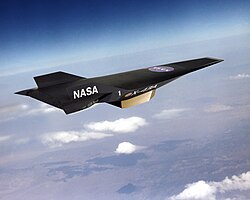
- Scramjets: A specialized ramjet that uses internal supersonic airflow to compress and combust fuel. The NASA X-43 set a record in 2004, reaching Mach 9.7.
- Rockets: Used for high-speed flight and space travel, such as the Bell X-1 or the North American X-15.
Design, Structure, and Configuration
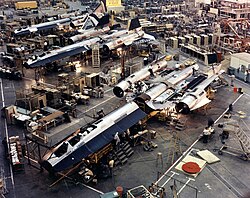
The physical architecture of an airplane is a balance of strength and weight. Early aircraft required external bracing struts and wires to support thin, lightweight wings. However, as engine power increased during the 1920s and 30s, engineers developed the cantilever wing—a strong, unbraced wing capable of supporting itself.
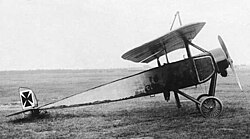
Engineers also experiment with different airframe configurations:
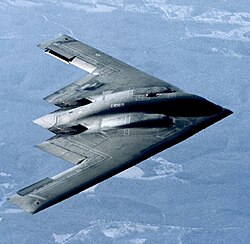
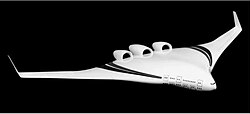
- Flying Wings: Designs like the B-2 Spirit lack a traditional fuselage and tail, offering unique aerodynamic properties.
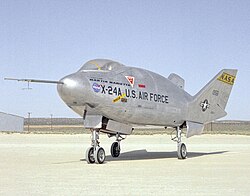
- Lifting Bodies: Research conducted in the 1960s and 70s to create lightweight crewed spacecraft.
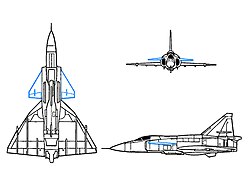
- Canards: Small foreplanes located ahead of the main wing, as seen on the Saab Viggen.
Summary of Aircraft Evolution
| Era/Milestone | Key Innovation/Aircraft | Significance |
|---|---|---|
| 1799 | George Cayley's Concept | Defined lift, propulsion, and control |
| 1891 | Otto Lilienthal's Gliders | First successful, documented human gliding |
| 1903 | Wright Flyer | First sustained, controlled powered flight |
| 1939 | Heinkel He 178 | First practical jet aircraft |
| 1948 | Bell X-1 | First aircraft to break the sound barrier |
| 1952 | de Havilland Comet | First jet airliner |
Frequently Asked Questions
Who invented the first airplane?
The Wright brothers, Orville and Wilbur, are recognized by the FAI for achieving the first sustained and controlled heavier-than-air powered flight in 1903.
What is the difference between a glider and a powered airplane?
A glider relies on air currents and gravity for flight without an engine, whereas a powered airplane uses a propulsion system (such as a propeller or jet engine) to generate thrust.
What is a scramjet?
A scramjet is a type of ramjet engine that operates at supersonic speeds, using internal supersonic airflow to compress and combust fuel for thrust.
How did wing design change over time?
Early wings were thin and required external wires and struts for support. As engines became more powerful, engineers developed the cantilever wing, which is strong enough to be self-supporting without external bracing.
What was the first jet airliner?
The de Havilland Comet, introduced in 1952, was the world's first jet airliner.