Afrikaans: The History, Evolution, and Distribution of a Southern African Language
Afrikaans is a vibrant West Germanic language spoken primarily in Southern Africa. While it shares deep roots with Dutch, it has evolved into a distinct language with its own unique grammar, phonology, and cultural identity. Spoken by millions of people, including Afrikaners and Coloured communities, Afrikaans serves as an official language in South Africa and a recognized minority language in Namibia.
The language is a fascinating example of linguistic adaptation, blending European origins with the diverse influences of the African continent.
Key Facts
- Native Regions: South Africa and Namibia.
- Language Family: Indo-European > Germanic > West Germanic > Low Franconian > Dutch.
- Speaker Population: Approximately 7.2 million native speakers (2016) and 10.3 million second-language speakers in South Africa (2011).
- Official Status: Official language of South Africa; recognized minority language in Namibia.
- Writing System: Primarily Latin script, with some use of Arabic script.
Origins and Historical Development
The emergence of Afrikaans is a subject of significant linguistic study. Historical linguist Hans den Besten theorizes that modern Standard Afrikaans derives from two primary sources: Cape Dutch, which was a direct transplantation of European Dutch to Southern Africa, and a Dutch-based pidgin known as Hottentot Dutch.
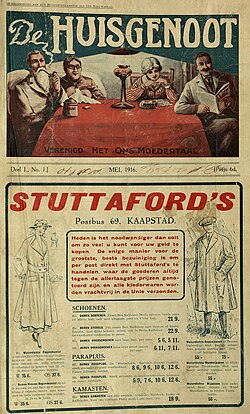
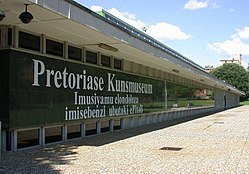
Over time, the language moved away from the formal structures of Standard Dutch. This transition is evident in historical media; for instance, early 20th-century South African newspapers used Standard Dutch before Afrikaans fully replaced it as the primary medium of communication.
Standardization and Recognition
The path to formal recognition involved the standardization of the language, a process bolstered by the translation of the Bible into Afrikaans. Today, the language is regulated by Die Taalkommissie, ensuring its consistency and growth across different dialects, including Kaaps, Boeraans, and regional variations in the Northern and Eastern Cape.
Geographic Distribution and Demographics
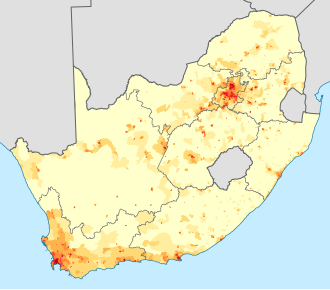
Afrikaans is most densely spoken in South Africa, though its presence varies significantly by province. While it remains a dominant home language in the Northern Cape, its proportion in the Western Cape has seen a decline over recent decades.
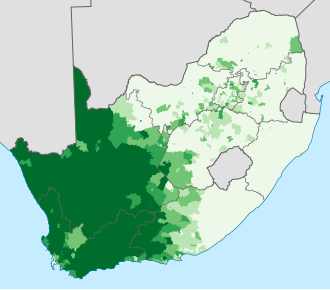
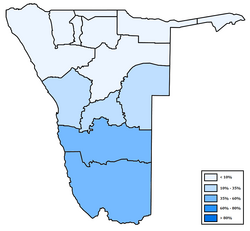
Beyond South Africa, the language has a notable presence in Namibia and smaller speaker communities in Australia, New Zealand, Canada, and the United States.
| Country | Speakers | Percentage of Population | Year |
|---|---|---|---|
| South Africa | 6,855,082 | 94.71% (of Afrikaans speakers) | 2011 |
| Namibia | 219,760 | 3.04% | 2011 |
| Australia | 49,375 | 0.68% | 2021 |
| New Zealand | 36,966 | 0.51% | 2018 |
| Canada | 29,670 | 0.41% | 2021 |
Linguistic Characteristics
Grammar and Simplification
One of the most striking features of Afrikaans is its simplified grammar compared to Dutch. For example, verbs in Afrikaans do not conjugate based on the subject. Whether the subject is "I" (ek), "you" (jy), or "they" (hulle), the verb form remains the same (e.g., ek is, jy is, hulle is).
Afrikaans also employs a unique double negative structure. A sentence like "Hy kan nie Afrikaans praat nie" literally translates to "He can not Afrikaans speak not."
Phonology and Orthography
The language uses the Latin alphabet with several diacritics (such as é, è, ê, and ë) to indicate pronunciation and emphasis. It also features a unique indefinite article, ʼn, which is styled as a ligature.

Cross-Linguistic Influences
Afrikaans has absorbed vocabulary from various languages reflecting the history of Southern Africa:
- Khoisan Languages: Terms like dagga (cannabis) and kierie (walking stick).
- Bantu Languages: Words such as lobola (bride price) and maroela (a type of tree).
- French: Many military and administrative terms, such as generaal (general) and bagasie (luggage).
- Malay and Portuguese: Various loanwords integrated through trade and colonization.
Frequently Asked Questions
Is Afrikaans the same as Dutch?
No. While Afrikaans evolved from Dutch and remains mutually intelligible to a large extent, it is a separate language with a significantly simplified grammar and a distinct vocabulary influenced by African and Asian languages.
Who speaks Afrikaans?
It is spoken by various ethnic groups in Southern Africa, most notably Afrikaners and Coloured communities, as well as speakers in Namibia.
What is the official status of Afrikaans?
Afrikaans is one of the official languages of South Africa and is recognized as a minority language in Namibia.
How does Afrikaans handle verb conjugation?
Unlike many Indo-European languages, Afrikaans verbs do not change their form to match the subject, making its conjugation system much simpler than that of Dutch or English.
What are some examples of non-European influences in Afrikaans?
Afrikaans includes many words from Khoisan and Bantu languages, such as gogga (insect) from Khoisan and tamboekiegras (thatching grass) from Bantu languages.