Abdullah Pasha: The Last Great Governor of Acre
The history of the Levant in the early 19th century was defined by shifting alliances, imperial ambition, and the rise and fall of powerful city-states. At the center of this turbulence was Abdullah Pasha ibn Ali, the Ottoman governor (wali) of the Sidon Eyalet. Ruling primarily from the strategic port city of Acre, Abdullah Pasha oversaw a domain that encompassed all of Palestine and the Syrian coastline.
His tenure, spanning from 1820 to 1832, was marked by a volatile mix of military success and economic decline. While he successfully suppressed internal revolts and survived imperial sieges, his reign ultimately ended with the collapse of Acre's political dominance, signaling a broader shift in regional power toward Egypt.
Key Facts
- Role: Wali (Governor) of Sidon Eyalet and Vizier of the Ottoman Empire.
- Power Base: Ruled from the fortified city of Acre.
- Major Alliances: Formed a critical military partnership with Emir Bashir Shihab II of Mount Lebanon.
- Key Conflict: Defeated by Ibrahim Pasha of Egypt in 1832.
- Legacy: The last governor of Sidon to rule from Acre, marking the end of the city's era as a major political power.
Early Life and Rise to Power
Born in Acre in 1801, Abdullah Bey was the son of Ali Pasha Khazindar, a Circassian Muslim mamluk (a soldier-slave who rose to political power) of Jazzar Pasha. His mother belonged to a family of ashraf, descendants of the Islamic prophet Muhammad. Following his father's death in 1814, Abdullah was placed under the mentorship of Haim Farhi, the chief adviser to Governor Sulayman Pasha al-Adil.
Farhi became a powerful advocate for Abdullah, lobbying the Sublime Porte (the central Ottoman government in Constantinople) to appoint him as successor. This process involved significant diplomacy and the payment of approximately 11 million piastres in bribes to imperial officials. On January 27, 1820, Abdullah was officially confirmed as the Wali of Sidon.
The Turbulent Rule of Abdullah Pasha
The Execution of Haim Farhi
Despite Farhi's role in securing his appointment, the relationship between the governor and his mentor soured. Following a heated argument, Abdullah ordered the execution of Farhi on August 8, 1820. Farhi was strangled and his body thrown into the Mediterranean Sea. This act was widely mourned across the province, as Farhi was regarded as a wise administrator.
Alliance with Emir Bashir Shihab II
Abdullah found a strategic partner in Emir Bashir Shihab II of Mount Lebanon. After Abdullah helped Bashir recover his territories and resolve disputes with the governor of Damascus, the two formed a military alliance in 1821. This partnership was instrumental in maintaining Abdullah's control over the region.

Military Conflicts and Regional Stability
Abdullah's reign was characterized by several significant military engagements:
- The War with Damascus (1822): A coalition of Abdullah's and Bashir's forces routed the troops of Darwish Pasha at Mezzeh, though this led to a retaliatory siege of Acre.
- The Siege of Acre (1822): Abdullah survived a five-month imperial-backed siege instigated by the Farhi family.
- Internal Suppressions: He successfully quelled revolts in Mount Lebanon (1824) and Jerusalem (1826).
- The Fall of Sanur (1831): Abdullah captured and subsequently destroyed the Sanur fortress after a three-month siege.
Economic Decline and the Fall of Acre
While Abdullah maintained military control, the economic foundations of his capital were crumbling. Acre's status as a primary export hub for Levantine olive oil and cotton diminished, leading to increased poverty and economic reversals across the region.
The end of Abdullah's rule came not from within the empire, but from the south. Muhammad Ali of Egypt sought control of Syria as compensation for his aid to the Ottomans during the Greek War of Independence. In 1831, his son, Ibrahim Pasha, launched an invasion.
Despite the fortifications of Acre, Abdullah's former ally, Emir Bashir, defected to the Egyptians. After a brutal bombardment and the breaching of the city walls on May 29, 1832, Abdullah surrendered. He spent his final years in exile in Egypt and the Hejaz, where he eventually died.
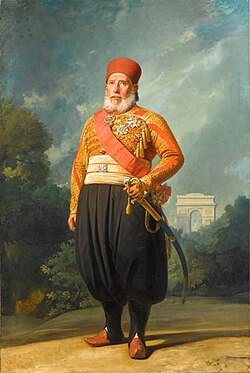
Summary of Abdullah Pasha's Administration
| Category | Details |
|---|---|
| Primary Seat of Power | Acre |
| Jurisdiction | Sidon Eyalet (including Palestine and Syrian coastline) |
| Key Military Allies | Emir Bashir Shihab II, Druze clans |
| Major Adversaries | Darwish Pasha, The Farhi Family, Ibrahim Pasha |
| Economic Trend | Decline in cotton and olive oil exports |
| End of Reign | Defeat by Egyptian forces in May 1832 |
Frequently Asked Questions
Who was Abdullah Pasha?
Abdullah Pasha was the Ottoman governor (Wali) of the Sidon Eyalet from 1820 to 1832. He ruled from Acre and was the last governor to maintain the city as a major political and economic center before the Egyptian conquest.
Why did Abdullah Pasha execute Haim Farhi?
The execution resulted from a power struggle. Despite Farhi's instrumental role in helping Abdullah secure the governorship, a severe argument between the two led Abdullah to order Farhi's death in 1820.
What was the significance of the Siege of Sanur?
The 1831 capture and destruction of the Sanur fortress demonstrated Abdullah's military reach and the Ottoman Empire's desire to strengthen Acre as a bulwark against a potential Egyptian invasion.
How did Abdullah Pasha lose power?
He was defeated by the forces of Ibrahim Pasha of Egypt in 1832. The fall of Acre was accelerated by the defection of his long-term ally, Emir Bashir Shihab II, to the Egyptian side.
What happened to Acre after Abdullah Pasha's defeat?
The defeat of Abdullah Pasha marked the end of Acre's era as a dominant political and economic power in the region, as control shifted to the Egyptian administration under Muhammad Ali.