1961 Syrian Coup d'état: The Fall of the United Arab Republic
On September 28, 1961, a decisive military uprising fundamentally altered the political landscape of the Middle East. A group of disgruntled Syrian Army officers executed a coup d'état that dismantled the United Arab Republic (UAR)—a political union between Egypt and Syria—and restored Syria as an independent sovereign state. This event was a pivotal moment in the Arab Cold War, reflecting the deep tensions between pan-Arab unification and national autonomy.
Key Facts
- Date: September 28, 1961.
- Primary Outcome: Dissolution of the UAR and restoration of Syrian independence.
- Key Figure: Lt-Colonel Abd al-Karim al-Nahlawi led the armored columns into Damascus.
- Political Shift: Transition from a socialist, Cairo-centered administration to the Syrian Arab Republic.
- Economic Impact: Repeal of UAR socialist laws and reversal of industry nationalization.
- Long-term Result: A period of instability leading to the coup of March 8, 1963.
The Road to Rebellion: Economic and Political Friction
The seeds of the 1961 coup were sown through increasing state control and the erosion of Syrian autonomy. Throughout early 1961, the UAR government intensified its socialist policies. This included the freezing of foreign currency deposits and the prohibition of exporting currency over 100 Syrian piasters to prevent capital flight.
Economic tensions peaked in March 1961, when the government mandated that all banks become joint-stock companies owned by UAR Arab citizens. This move targeted non-Arab and non-UAR Arab owners, creating significant friction among the Syrian business elite. During his final visit to Syria in early 1961, Egyptian President Gamal Abdel Nasser openly denounced liberal economics, promoting a state-controlled model that clashed with the interests of many Syrian traditionalists.
Politically, the situation deteriorated on August 16, 1961, when the Northern Executive council—Syria's regional government—was abolished. Executive power was concentrated in Cairo, and Syria was divided into 11 governorates managed by Nasser-appointed governors. This centralization stripped Syrian leaders of their authority and fueled resentment within the military.
The Sarraj Crisis
A critical catalyst for the coup was the struggle for power between Abd al-Karim Sarraj and Nasser's confidant, Abdel Hakim Amer. Sarraj, the powerful Secretary General of the regional National Union (the UAR's ruling party), saw his influence systematically dismantled. Nasser attempted to neutralize Sarraj by appointing him as a Vice President in Cairo, effectively removing him from his power base in Damascus.
The conflict escalated into a battle over the secret police and security services. Amer sought to merge Egyptian and Syrian security apparatuses under Cairo's direct control, curbing the autonomy of Syrian intelligence. Although Sarraj eventually resigned from all posts on September 26, 1961, the damage to the Syrian military's morale and the perceived "Egyptianization" of the state had already reached a breaking point.
The Coup of September 28
At 4:00 am on September 28, 1961, Lt-Colonel Abd al-Karim al-Nahlawi and Lt-Colonel Haydar al-Kuzbari led armored columns and Desert Guard units into Damascus. They swiftly seized the airport, radio station, and Army Headquarters. While Egyptian Major General Anwar al-Qadi attempted to deploy a field artillery brigade to suppress the uprising, Syrian commanding officers intercepted the troops and arrested the Egyptian officers.
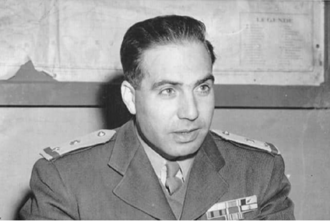
The Supreme Arab Revolutionary Command of the Armed Forces (SARCAF) took control, issuing communiqués that denounced the "corruption and tyranny" of the UAR regime. Despite Nasser's live radio broadcasts claiming the rebellion was small-scale and refusing to negotiate, the Syrian army units almost entirely supported the rebels. By the evening, Amer and other Egyptian loyalists were deported to Cairo.
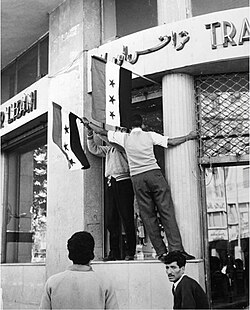
The transition to independence was finalized when Radio Damascus broadcast the Syrian national anthem after midnight, signaling a complete break from the union.
The Secessionist Era (1961–1963)
Following the coup, SARCAF entrusted Maamun al-Kuzbari to form a government composed of traditional political elites from the National and People's Parties. The state was renamed the Syrian Arab Republic to maintain a link to Arab nationalism, though it restored the Constitution of 1950 and abolished the socialist nationalization laws of July.
| Feature | United Arab Republic (Pre-Coup) | Syrian Arab Republic (Post-Coup) |
|---|---|---|
| Governance | Centralized in Cairo | Independent government in Damascus |
| Economy | Socialist, state-controlled | Reversal of nationalization; liberal leanings |
| Military Control | Under Nasser/Amer | Controlled by SARCAF/National Security Council |
| Foreign Relations | Strong USSR ties via Egypt | Improved ties with Iraq and West Germany |
The new regime, however, remained fragile. While the civilian government held nominal power, the National Security Council ensured the army maintained actual control. This period was marked by internal instability, including a series of coups and counter-coups in early 1962. A brief attempt by al-Nahlawi to regain influence in March 1962 led to a temporary crisis before a compromise reinstated President Nazim al-Kudsi.
The instability culminated in the coup of March 8, 1963, orchestrated by junior officers of the Ba'athist Military Committee, who swept away the traditionalist order and established a new political era in Syria.
Frequently Asked Questions
Why did the Syrian military lead the 1961 coup?
The military was driven by resentment over the centralization of power in Cairo, the purging of Syrian officers, and the imposition of socialist economic policies that disrupted the local economy and alienated the business class.
What was the role of the SARCAF?
The Supreme Arab Revolutionary Command of the Armed Forces (SARCAF) was the military body that seized power during the coup. It managed the transition to independence and maintained oversight of the civilian government through the National Security Council.
Did Gamal Abdel Nasser attempt to stop the secession?
Yes. Nasser used radio broadcasts to dismiss the rebellion and ordered Egyptian paratroopers and seaborne troops to land in Latakia and Aleppo. However, these forces were surrounded by rebel troops and eventually withdrawn.
What happened to the socialist laws after the coup?
The secessionist government abolished the "July laws" that had nationalized large sectors of the economy, attempting to return to a more liberal economic model, although some land reforms were later restarted under technocratic governments.
How long did the restored Syrian Arab Republic last before the next coup?
The secessionist period lasted from September 29, 1961, until March 8, 1963, when a coup by the Ba'ath Party ended the rule of the traditional political elites.