Zoonotic Diseases: How Pathogens Jump from Animals to Humans
The boundary between human and animal health is more porous than many realize. Every day, millions of interactions occur between people and non-human animals, and occasionally, these interactions lead to a spillover infection—an event where a pathogen jumps from a reservoir population into a novel host population. These infections are known as zoonoses (singular: zoonosis).
A zoonotic disease is an infectious disease caused by a pathogen—such as a virus, bacterium, parasite, fungus, or prion—that is transmitted from a non-human animal to a human. While we often focus on animals infecting humans, the process can also work in reverse; when humans infect non-human animals, it is termed reverse zoonosis or anthroponosis.
From the global impact of the 2009 swine flu to the persistence of rabies, zoonoses represent a significant portion of human health challenges. In fact, of the 1,415 pathogens known to infect humans, approximately 61% are zoonotic.
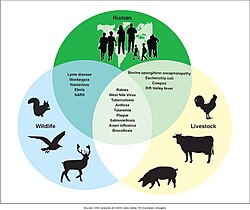
Key Facts
- High Prevalence: 61% of all known human pathogens are zoonotic in origin.
- Diverse Pathogens: Zoonoses can be caused by viruses, bacteria, fungi, parasites, and prions.
- Direct Zoonoses: Only diseases that routinely involve non-human to human transmission, such as rabies, are classified as direct zoonoses.
- Evolutionary Shifts: Some diseases, like HIV, began as zoonoses but evolved into human-only diseases.
- Pandemic Potential: Avian and swine influenza viruses possess high zoonotic potential and can recombine with human strains to cause pandemics.
Common Pathogens and Examples
Zoonotic diseases are categorized by the type of infectious agent responsible for the illness. These range from microscopic viruses to complex parasites.
Viral Pathogens
Viruses are among the most common causes of high-profile zoonoses. Ebola is a prime example of a severe viral zoonosis. Influenza also presents a unique risk; while human infection with animal flu viruses is generally rare, certain strains can jump species and spread rapidly among people.
Bacterial Pathogens
Bacteria can enter the human body through various means, including contaminated food or direct contact. Salmonellosis, caused by Salmonella Typhimurium, is a widespread bacterial zoonosis often linked to foodborne illness.
Parasitic and Fungal Pathogens
Parasites and fungi also bridge the gap between species, often utilizing intermediate hosts or environmental contamination to reach human populations.
| Disease | Pathogen Type | Common Source/Vector |
|---|---|---|
| Rabies | Virus | Infected animals (Direct) |
| Salmonellosis | Bacterium | Contaminated food/animals |
| Ebola | Virus | Wildlife reservoirs |
| Swine Flu | Virus | Swine/Human recombination |
| West Nile Fever | Virus | Insect vectors (Mosquitoes) |
Drivers of Zoonotic Transmission
The jump from animal to human is rarely random. Several environmental and behavioral factors increase the risk of spillover.
Human Activity and Wildlife Trade
Direct contact with animals is a primary driver. This includes farming, ranching, and animal husbandry, as well as the wildlife trade and the consumption of bushmeat. Pets and animals in exhibition settings can also serve as bridges for pathogens.
Environmental Degradation
The destruction of nature plays a critical role in disease emergence. Deforestation, biodiversity loss, and general environmental degradation force wildlife into closer proximity to human settlements. Climate change further exacerbates this by altering vector distribution (the geographic range of insects like ticks and mosquitoes) and triggering wildlife migration.
Contamination and Vectors
Many zoonoses are indirect. They may be transmitted via contaminated water or food supplies, or through insect vectors. Examples of vector-borne zoonoses include:
- Zika fever
- Japanese encephalitis
- West Nile fever
- African sleeping sickness
- Lyme disease and Scrub typhus
Prevention and the One Health Approach
To combat the rise of emerging infectious diseases, global health organizations advocate for the One Health approach. This strategy recognizes that the health of people is closely connected to the health of animals and our shared environment.
Prevention strategies focus on surveillance, improving animal welfare, and protecting ecosystems to reduce the frequency of spillover events. By monitoring pathogens in wildlife and livestock, scientists can better predict and prevent the next pandemic before it reaches the human population.
Frequently Asked Questions
What is the difference between zoonosis and reverse zoonosis?
Zoonosis occurs when a pathogen is transmitted from a non-human animal to a human. Reverse zoonosis (or anthroponosis) occurs when a human transmits a pathogen to a non-human animal.
Can a zoonotic disease become a human-only disease?
Yes. HIV is a notable example; it began as a zoonotic disease transmitted to humans in the early 20th century but has since evolved into a disease that spreads only between humans.
Why does deforestation increase the risk of pandemics?
Deforestation and biodiversity loss destroy natural habitats, forcing wild animals to migrate or move closer to human populations, which increases the likelihood of a pathogen spilling over from a wild reservoir to a human host.
What are vector-borne zoonoses?
These are diseases transmitted to humans via an intermediate biological agent, usually an insect. Examples include Zika fever and West Nile fever, where mosquitoes act as the vector carrying the pathogen from an animal host to a human.