Zhou and Fu: The Evolution of Chinese Administrative Divisions
The terminology used to describe administrative boundaries in East Asia is often complex, as single terms can translate into various English concepts such as provinces, prefectures, or departments. Central to this history are the terms zhou and fu, which have shaped the geopolitical landscape of China and influenced neighboring nations for centuries.
The Transition from Zhou to Fu
While zhou was a primary administrative designation, the Tang dynasty introduced the fu (府), or "prefecture." These were established for areas of special importance, specifically major cities and capitals. Over time, the role of the fu expanded; by the Ming and Qing dynasties, they became the predominant administrative divisions within Chinese provinces.
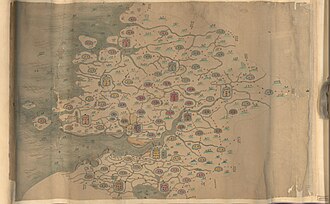
During the Ming and Qing eras, the term fu was typically appended to the name of a prefecture's capital city. This naming convention is frequently seen in historical geographical works and maps, where cities are listed as Hangzhou-fu, Wenzhou-fu, or Wuchang-fu.
Regional Influence and Legacy
The influence of these administrative terms extended beyond the borders of China, impacting the nomenclature of Japan, Korea, and Vietnam.
Impact on Japan
Following the Meiji Restoration, Japan adopted the term fu to designate urban prefectures for its most significant cities. This legacy persists today in the official names of the Osaka and Kyoto Prefectures.
Impact on Korea and Vietnam
Although modern provinces in Korea and Vietnam no longer use zhou cognates for their designations, the terms survive in historical place names. Examples include the Korean province of Jeju-do and Lai Châu in Vietnam.
Modern Usage in China
In the contemporary People's Republic of China, the term zhou is no longer a general administrative category. It exists exclusively in the designation autonomous prefecture (zìzhìzhōu), which refers to administrative areas specifically designated for ethnic minorities.
Despite this limited official use, zhou remains deeply embedded in Chinese geography through place names. This is evident in the province of Guizhou and major urban centers such as Guangzhou, Fuzhou, Hangzhou, Lanzhou, and Suzhou.
Key Facts
- Zhou is translated into English as province, prefecture, or department.
- Fu (prefectures) were introduced by the Tang dynasty for major cities and capitals.
- During the Ming and Qing dynasties, fu became the primary divisions within provinces.
- Modern zhou usage in China is restricted to autonomous prefectures for minorities.
- The term fu is still used in Japan for the Osaka and Kyoto Prefectures.
| Term | Primary Meaning | Historical Context | Modern Example |
|---|---|---|---|
| Zhou | Province/Prefecture | General administrative division | Autonomous Prefecture (zìzhìzhōu) |
| Fu | Prefecture | Special status for capitals/major cities | Osaka-fu / Kyoto-fu (Japan) |
Frequently Asked Questions
What does the term "fu" mean in a historical Chinese context?
In historical China, fu referred to prefectures, specifically those established for major cities or capitals. By the Ming and Qing dynasties, they served as the main divisions within provinces.
How is "zhou" used in modern China?
Today, zhou is used only in the term "autonomous prefecture" (zìzhìzhōu), which identifies administrative regions for designated ethnic minorities.
Which Japanese prefectures still use the term "fu"?
The term is still used in the Japanese names for the Osaka and Kyoto Prefectures.
Can you provide examples of modern Chinese cities that retain "zhou" in their names?
Many major cities retain the term, including Guangzhou, Fuzhou, Hangzhou, Lanzhou, and Suzhou.
Did the term "zhou" influence other East Asian countries?
Yes, while no longer used for current provinces, cognates of zhou survive in place names such as the Japanese islands of Honshu and Kyushu, the Korean province Jeju-do, and Lai Châu in Vietnam.