Yucatán History: From Ancient Maya Civilizations to Modern Tourism
The Yucatán Peninsula is a land of profound historical layers, where ancient indigenous brilliance meets the complex legacy of European colonization. From the towering pyramids of the Maya to the "green gold" of the henequen industry, the region has evolved from a fragmented collection of city-states into a global tourism powerhouse. Its journey is marked by resilience, rebellion, and a unique cultural identity that remains distinct from the rest of Mexico.
Pre-Columbian Era and the Maya Civilization
Human presence in the region dates back to the late Pleistocene (the ice age), approximately 10,000 to 12,000 years ago, as evidenced by archaeological findings in the Loltún caves and the caverns of Tulum. However, the structured Maya civilization began to shape the peninsula around 250 CE, with migrants moving from the Petén region of northern Guatemala to settle in southeastern areas like modern-day Bacalar.
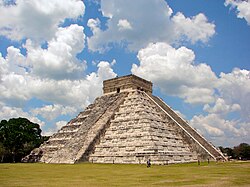
By 525 CE, a Maya group known as the Chanés founded several pivotal cities, including Chichén Itzá, Izamal, Motul, Ek' Balam, Champotón, and Ichcaanzihó (the site of modern Mérida). The political landscape shifted with the arrival of the Tutul Xiúes, people of Toltec descent from the Gulf coast, who displaced the Itza and Cocomes. This era of conflict eventually led to the formation of the League of Mayapan—a coalition of the Itza, Xiús, and Cocomes. When this league disintegrated around 1194, the region entered a period of anarchy and fragmentation, leaving it divided into small domains by the time the Spanish arrived.
Spanish Exploration and Conquest
European contact began in the early 16th century. Following the conquests of Puerto Rico and Florida by Juan Ponce de León, explorers Antón de Alaminos and Diego Velázquez de Cuéllar sought new lands west of Cuba. In 1517, Francisco Hernández de Córdoba led an expedition that made landfall on the peninsula on March 1. While accounts differ, some sources place the landing at Isla Mujeres, while others, such as Bernal Díaz del Castillo, cite Cabo Catoche.
The full conquest was a prolonged process led by Francisco de Montejo "el Adelantado," his son "el Mozo," and his nephew "el Sobrino." After several failed attempts between 1527 and 1535, the conquest gained momentum. On October 4, 1540, "el Mozo" founded San Francisco de Campeche, followed by the founding of Mérida on January 6, 1542. Mérida was built directly upon the ruins of the Maya city of Ichkanzihóo, utilizing the stones of original Maya structures for Spanish buildings.
The Spanish consolidated power after a decisive victory over the Maya troops led by the Halach uinik (overlord) Nachi Cocom. The conquest of the eastern peninsula was completed by "el Sobrino" with the foundation of Valladolid on May 28, 1543.
Colonial Tensions and the Canek Rebellion
Spanish rule was characterized by oppressive policies, inequality, and prejudice against the native Maya. These tensions culminated in November 1761 when Jacinto Canek led an armed uprising in the town of Cisteil. Although the rebellion was swiftly crushed and the town of Cisteil was burned and salted as a warning, the event became a powerful symbol of anti-colonial resistance and a precursor to later social upheavals.
The Republic of Yucatán and Independence
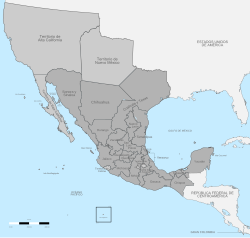
Due to its distance from Mexico City, Yucatán was largely spared the military violence of the Mexican War of Independence. On September 15, 1821, Yucatán declared its independence from Spain and joined the Mexican Empire on November 2, 1821. However, the collapse of the empire in 1823 led to the creation of the first Republic of Yucatán.
Political instability and conflicts between centralist and federalist governments in Mexico led to a second Republic of Yucatán in 1841. During this period, the region utilized its own official flag, featuring a green field with five stars representing the departments of Mérida, Izamal, Valladolid, Tekax, and Campeche. Yucatán eventually rejoined Mexico under the government of José Joaquín de Herrera, driven largely by the need for external assistance during the Caste War.
The Caste War (1847–1901)
The Caste War was a brutal conflict between the native Maya, led by chiefs Jacinto Pat and Cecilio Chi, and the "Yucatecos" (people of European descent). The war divided the peninsula, with the Yucatecos controlling the northwest and the independent Maya holding the southeast. This "race war" resulted in an estimated 200,000 deaths. The conflict officially ended in 1901 with the fall of the Maya capital, Chan Santa Cruz, though skirmishes continued for years. As a result of the war, the Federal Territory of Quintana Roo was created in 1902, significantly reducing Yucatán's original land area.
The Henequen Industry: "Green Gold"
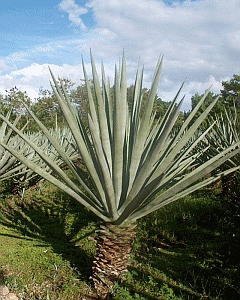
In the late 19th century, Yucatán experienced an economic boom through the cultivation of henequén (Agave fourcroydes), a plant used to produce high-quality rope and twine known globally as sisal. This industry brought immense wealth to local families and funded the opulent architecture of Mérida and over 150 grand haciendas.
This economic prosperity attracted international labor, including the first Korean immigrants to Mexico in 1905, who arrived to work on the plantations. The wealth was so significant that Mérida installed street lights and a tram system before Mexico City did. However, the monopoly declined after World War II due to the rise of synthetic fibers and global competition.
Modern Yucatán
For centuries, Yucatán remained isolated from central Mexico, relying on maritime trade with the US, Cuba, and Europe. This isolation ended in the 1950s and 60s with the introduction of railways and highways. The arrival of commercial jets and the development of Cancún in the 1980s transformed the region into a global tourism hub. A milestone in political representation occurred in 1976 with the election of Francisco Luna Kan, the first Maya governor of Yucatán.
Key Facts
- Ancient Roots: Human presence dates back 10,000–12,000 years; Maya settlements began around 250 CE.
- Spanish Foundation: Mérida was founded in 1542 on the ruins of the Maya city Ichkanzihóo.
- The Caste War: A devastating conflict (1847–1901) that resulted in up to 200,000 deaths.
- Economic Boom: The henequen (sisal) industry made Mérida one of the wealthiest cities per capita in the early 20th century.
- Territorial Change: The creation of Quintana Roo in 1902 stripped Yucatán of over two-thirds of its original territory.
| Era | Key Events/Developments | Primary Influence |
|---|---|---|
| Pre-Columbian | Rise of Maya city-states; League of Mayapan | Indigenous Maya |
| Conquest | Foundation of Mérida (1542) and Valladolid (1543) | Spanish Empire |
| Colonial/Early Republic | Canek Rebellion; Independence from Spain (1821) | Creoles and Maya |
| 19th Century | Caste War; Henequen boom | Maya vs. Yucatecos |
| Modern Era | Infrastructure links; Tourism growth; First Maya governor (1976) | Mexican State/Global Tourism |
Frequently Asked Questions
What was the significance of the henequen industry?
Henequen, or sisal, provided Yucatán with financial autonomy and immense wealth in the late 19th century. The fiber was used worldwide for rope and twine, funding the construction of Mérida's elegant mansions and numerous rural haciendas.
Who were the leaders of the Caste War?
The native Maya uprising was led by chiefs Jacinto Pat and Cecilio Chi, who fought against the European-descended Yucatecos for political and economic control of the region.
How was the city of Mérida founded?
Mérida was founded on January 6, 1542, by Francisco de Montejo "el Mozo." It was built over the ruins of the Maya city of Ichkanzihóo, using the stones from the original Maya buildings.
What was the Canek Rebellion?
Led by Jacinto Canek in 1761, it was an armed Maya uprising against Spanish colonial oppression. While it was quickly suppressed, it serves as a symbol of racial and social conflict in the colonies.
Why did Yucatán have its own Republics?
Yucatán declared independence from Spain in 1821 and later formed its own republics due to geographical isolation and disagreements with the centralist government of Mexico regarding federalism and the 1824 constitution.