Yeongjong Island: South Korea's Gateway of Aviation and Tourism
Yeongjong Island, known in Korean as Yeongjongdo (영종도), serves as a vital hub connecting South Korea to the rest of the world. Located in the Yeongjong District, this island is most famous for being the home of Incheon International Airport, one of the world's major aviation gateways. Beyond its massive logistical importance, the island is a blend of modern urban development, serene coastal landscapes, and traditional cultural sites.
Historically, the island's geography has evolved significantly. What is now a unified landmass was once composed of several separate islands, including Yongyu, Sammok, and Sinbul. These were joined together through extensive land reclamation projects designed to facilitate the construction and expansion of the international airport.
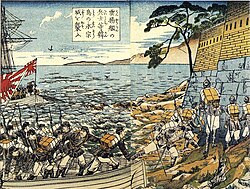
Japanese marines landing from the Unyo at Yeongjong Island (永宗島) during the Ganghwa Island incident in 1875
Geography and Connectivity
Yeongjong Island is an exclave of Incheon's Jung District. Despite being separated from the mainland by water, it is highly accessible through advanced infrastructure. Travelers can reach the island via three major bridges: Yeongjong Bridge, Cheongna Haneul Bridge, and the Incheon Bridge, which was completed in October 2009.
For local transit, the island features the Incheon Airport Maglev—a magnetic levitation train system—which connects the airport to Yongyu station, located near the southwest coast's ferry terminal. This terminal provides daily ferry services to the nearby island of Muuido.
Key Facts
- Location: Yeongjong District, Incheon, South Korea (37°29′N 126°31′E).
- Primary Landmark: Incheon International Airport.
- Major Beaches: Eulwangni Beach and Wangsan Beach on the west coast.
- Cultural Site: Yongguksa Temple located in the central region.
- Economic Status: Part of the Incheon Free Economic Zone (IFEZ).
The Incheon Free Economic Zone (IFEZ)
Yeongjong Island is a core component of the Incheon Free Economic Zone, a specialized area designed to foster international business. The island's economic focus is centered on three main pillars: airport logistics, travel, and tourism. To further bolster this sector, the city of Incheon is investing in its own airline to be operated directly from the island.
Major Development Projects
The island is undergoing continuous transformation through several large-scale urban and leisure projects:
- Yeongjong Sky City: A comprehensive urban plan aimed at establishing air traffic logistics businesses and creating a livable urban environment.
- Unbuk Multi-leisure Complex: A dedicated zone for tourism, leisure businesses, and a theme park, including residential areas designed for foreign residents.
- Yongyu-Muui Tourist Complex: A project focused on the construction of a marina and a general tourism zone.
| Category | Details |
|---|---|
| Korean Name | Yeongjongdo (영종도) |
| Primary Transport | Incheon International Airport |
| Main Bridges | Yeongjong, Cheongna Haneul, and Incheon Bridges |
| Coastal Attractions | Eulwangni Beach, Wangsan Beach |
| Economic Zone | Incheon Free Economic Zone (IFEZ) |
Frequently Asked Questions
How do I get to Yeongjong Island from the mainland?
You can access the island via three major bridges: the Yeongjong Bridge, the Cheongna Haneul Bridge, and the Incheon Bridge.
What are the main tourist attractions on the island?
Visitors frequently visit Eulwangni Beach and Wangsan Beach on the west coast, or explore the Yongguksa temple in the central part of the island.
Is there public transport within the island?
Yes, the Incheon Airport Maglev connects the airport to Yongyu station. Additionally, there is a ferry terminal on the southwest coast for travel to Muuido.
What is the economic focus of Yeongjong Island?
As part of the Incheon Free Economic Zone, the island focuses heavily on airport logistics, tourism, and travel services.
Can I visit nearby islands from Yeongjong?
Yes, daily ferry services are available from the southwest coast ferry terminal to the island of Muuido.