Connecting Seoul to the World: A Guide to the AREX Airport Railroad
For travelers navigating the bustling Seoul Metropolitan Area, the AREX (Airport Railroad Express) serves as a vital lifeline. This specialized rail link provides a high-speed, efficient connection between the heart of Seoul and South Korea's primary international gateways: Incheon International Airport and Gimpo International Airport.
Whether you are a tourist arriving for a holiday or a local commuter, understanding the different services, routes, and stations offered by AREX is essential for a smooth journey. This guide explores the history, technical specifications, and operational details of this essential transit system.
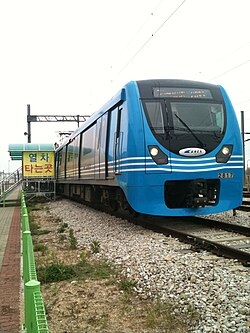
Key Facts
- Total Line Length: 63.8 km (39.6 mi)
- Termini: Seoul Station to Incheon International Airport Terminal 2
- Daily Ridership: Approximately 182,343 passengers
- Service Types: Non-stop Express and All-stops Commuter
- Operating Speed: Maximum 110 km/h (68 mph) on surface tracks
- Owner: Korea Rail Network Authority
The Evolution of AREX
The history of AREX is a story of phased expansion and strategic development. Originally announced in 1998 as the Incheon International Airport Railroad (IREX), the project was South Korea's first build-operate-transfer (BOT) franchise—a method where a private entity builds infrastructure and operates it for a set period before transferring it to the government.
Phase 1: The Airport Link
The first segment opened on March 23, 2007, connecting Incheon International Airport Terminal 1 to Gimpo International Airport. This made AREX the first dedicated airport rail link in the country. The project involved a major international consortium, including the French company Alstom and the South Korean manufacturer Rotem.
Phase 2 and 3: Reaching Seoul Station
The line's reach was significantly extended on December 29, 2010, when Phase 2 opened, connecting the airport lines to Seoul Station. This allowed passengers to transition easily from the airport to the national rail network. In September 2018, Phase 3 was completed with the opening of Magongnaru station. Further extensions were made to serve Incheon International Airport Terminal 2, which opened in early 2018.
Understanding the Services
AREX operates two distinct types of service, distinguished by their color coding and stopping patterns. Choosing the right one depends on your destination and budget.
Express Service (Orange)
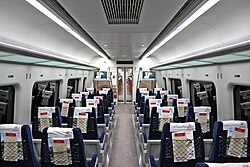
The Express service is designed for speed and comfort, traveling non-stop between Seoul Station and Incheon International Airport. It is ideal for travelers looking to minimize travel time. A half-hourly Express service can reach Terminal 1 in just 43 minutes.
Commuter Service (Sea Blue)
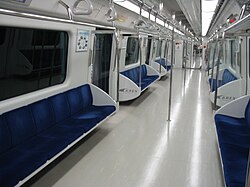
The Commuter service (all-stops) functions similarly to the Seoul Metropolitan Subway. It stops at every station along the route, providing essential access to various districts such as Gimpo, Gyeyang, and Unseo. While slower than the Express, it offers much higher frequency, with trains running as often as every 6 minutes.
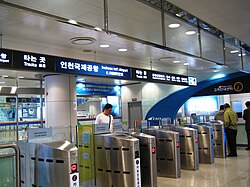
Technical Specifications and Rolling Stock
The AREX system utilizes Electric Multiple Units (EMUs)—trains powered by electricity distributed through overhead catenary wires. The fleet is primarily supplied by Hyundai Rotem and consists of two main classes:
- AREX Class 1000: Dedicated to express services.
- AREX Class 2000: Used for commuter services. A second generation of these trains began entering service in September 2025.
The trains feature aluminium carbodies and are designed for high capacity. While the design speed is 120 km/h, operational speeds are capped at 110 km/h on surface tracks and 100 km/h within tunnels to ensure safety and efficiency.
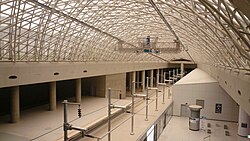
Station Overview and Connectivity
The line spans 14 stations, providing a bridge between the urban center and the coastal airport regions. Below is a summary of the key stations and their service patterns.
| Station Name | Commuter Service | Express Service | Distance (km) |
|---|---|---|---|
| Seoul Station | Yes | Yes | 0.0 |
| Gongdeok | Yes | No | 3.3 |
| Hongik Univ. | Yes | No | 6.1 |
| Digital Media City | Yes | No | 9.5 |
| Gimpo Int'l Airport | Yes | No | 20.4 |
| Gyeyang | Yes | No | 27.0 |
| Unseo | Yes | No | 51.1 |
| Incheon Int'l Airport T1 | Yes | Yes | 58.0 |
| Incheon Int'l Airport T2 | Yes | No | 63.8 |
Frequently Asked Questions
How do I tell the difference between the Express and Commuter trains?
The easiest way to distinguish them is by color and stopping pattern. Express trains are identified by orange branding and do not stop at intermediate stations between Seoul and the airport. Commuter trains use sea blue branding and stop at all stations.
Which service is faster for getting to Incheon Airport?
The Express service is significantly faster, taking approximately 43 minutes to reach Terminal 1. The all-stops commuter service takes about 53 minutes for the same journey.
Can I use the AREX to get to Gimpo International Airport?
Yes. While the Express service is non-stop between Seoul and Incheon, the Commuter service stops at Gimpo International Airport, making it a convenient option for travelers using that airport.
What are the current fare estimates?
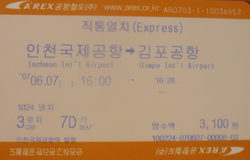
As of 2022, commuter fares for the full length of the line are approximately ₩4,750, while Express service fares are approximately ₩9,500. Note that using a single-use card may require an additional ₩500 deposit.
Did KTX trains ever run on the AREX line?
Yes, KTX high-speed trains operated on the AREX line from June 2014 to March 2018. However, due to low ridership, the service was suspended and the line was officially abolished in September 2018.