Yamhad: The Dominant Kingdom of Ancient Syria
Emerging at the close of the 19th century BC, Yamhad was a powerful Semitic-speaking kingdom centered in the city of Ḥalab (modern-day Aleppo, Syria). For nearly a century and a half, this Bronze Age state served as the geopolitical anchor of northern Syria, utilizing a sophisticated blend of military strength and strategic diplomacy to expand its influence across the Levant.
At its zenith, Yamhad was the most formidable Syrian power of its era. Under the leadership of the Yamhad dynasty, the kingdom successfully repelled aggressions from neighboring rivals such as Mari, Qatna, and the Kingdom of Upper Mesopotamia. Through the ambitious policies of King Yarim-Lim I, Yamhad extended its authority over most of Syria—excluding the south—either through direct annexation or by establishing a network of vassal states.
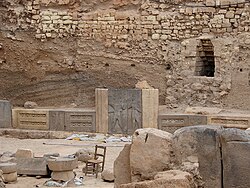
Key Facts
- Capital: Ḥalab (Aleppo).
- Timeline: Approximately 1810 BC to 1517 BC.
- Peak Area: Estimated at 43,000 km² around 1750 BC.
- Chief Deity: Hadad, the storm god.
- Languages: Amorite and Hurrian.
- Political Structure: Absolute monarchy.
The Rise and Hegemony of Yamhad
The foundation of Yamhad around 1810 BC marked the beginning of a dynasty that would dominate the northern, northwestern, and eastern regions of Syria. The kingdom's influence was not limited to the Levant; it extended its reach into small Mesopotamian kingdoms bordering Elam.
The era of Yarim-Lim I was particularly pivotal, as he transformed the state into a regional superpower. This period of stability and growth allowed Yamhad to maintain a complex system of vassalage, ensuring that surrounding territories contributed to the wealth and security of the capital at Halab.
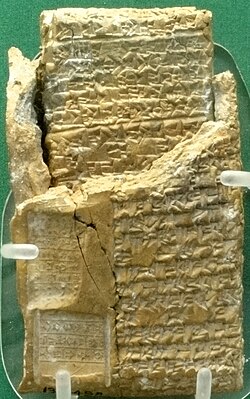
Conflict and Decline
The decline of Yamhad was precipitated by the rise of the Hittite kingdom to the north. While kings Yarim-Lim III and Hammurabi III initially resisted Hittite incursions through alliances with Hurrian principalities, the Hittite king Hattusili I employed a strategy of attrition. Rather than attacking Halab directly, Hattusili first dismantled Yamhad's support system by conquering its vassals, including Alalakh around 1650 BC.
Despite a victory at the battle of Mount Atalur and the eventual defeat and death of Hattusili I during an attack on Halab (c. 1620 BC), the kingdom was severely weakened. The monarch lost the prestigious title of "Great King," signaling a permanent drop in international status.
![God head, discovered near Jabbul (c. 1600 BC).[35]](/images/24/f4/24f4f547765dbf6fd6b478b7d10d1a09a235084d3a16e8a3cf4c8a7979e23fc4.jpg)
The Final Collapse and Mitanni Annexation
The definitive blow came around 1600 BC when Mursili I, grandson of Hattusili, conquered and destroyed Halab. Although the city was later rebuilt and the kingdom briefly expanded under rulers like Sarra-El, it never regained its former glory. The dynasty's end arrived c. 1524 BC when King Ilim-Ilimma I was killed during a rebellion orchestrated by King Parshatatar of Mitanni.
The remnants of the dynasty survived through Ilim-Ilimma's son, Idrimi, who conquered Alalakh in 1517 BC. However, Idrimi was forced to accept vassalage under Mitanni, relocate the royal residence to Alalakh, and relinquish the title "King of Halab." With this transition, the name Yamhad vanished from history.
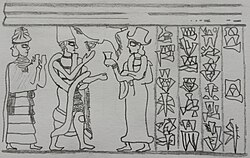
Administration and Culture
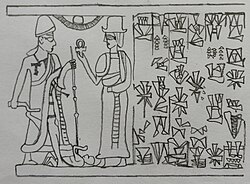
Yamhad's administration was characterized by an absolute monarchy that managed a diverse population of Amorite and Hurrian speakers. The use of cylinder seals was common for official and legal documentation, reflecting the kingdom's bureaucratic sophistication.
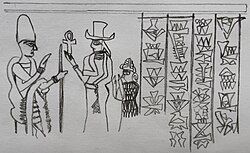
Religion played a central role in public life, with the ancient Levantine religion centering on Hadad as the chief deity. Artistic expressions, including deity figures and seals, often incorporated foreign influences, such as the Egyptian ankh, which occasionally replaced traditional symbols in royal iconography.
Summary of the Yamhad Dynasty
| King | Approximate Reign | Title |
|---|---|---|
| Sumu-Epuh | c. 1810 – c. 1780 BC | King |
| Yarim-Lim I | c. 1780 – c. 1764 BC | Great King |
| Abba-El I | c. 1750 – c. 1720 BC | Great King |
| Niqmi-Epuh | c. 1700 – c. 1675 BC | Great King |
| Yarim-Lim III | Mid-17th century – c. 1625 BC | Great King |
| Hammurabi III | c. 1625 – c. 1600 BC | King |
| Ilim-Ilimma I | c. 1524 – c. 1517 BC | King |
Frequently Asked Questions
Where was the kingdom of Yamhad located?
Yamhad was centered in Ḥalab (modern-day Aleppo) in present-day Syria, with its influence extending across northern, northwestern, and eastern Syria, as well as parts of Turkey.
Who was the most influential king of Yamhad?
Yarim-Lim I is credited with turning Yamhad into the most powerful Syrian kingdom of its time, expanding its territory and establishing its dominance through military and diplomatic means.
Which deity was most important to the people of Yamhad?
Hadad, the storm god, was the chief deity of the ancient Levantine religion practiced in Yamhad.
How did the Hittites contribute to the fall of Yamhad?
The Hittites, specifically under Hattusili I and Mursili I, weakened Yamhad by conquering its vassal states and eventually sacking the capital city of Halab around 1600 BC.
What happened to the dynasty after the fall of Halab?
The dynasty continued in a diminished capacity until c. 1517 BC, when Idrimi established himself at Alalakh as a vassal of the Mitanni, marking the end of the use of the name Yamhad.