Xiaotingia: The Feathered Paravian of Jurassic China
In the lush, arboreal environments of the Middle to Late Jurassic, a small but significant creature roamed the forests of what is now western Liaoning, China. Xiaotingia, a genus of paravian theropod dinosaur, provides critical insights into the evolutionary transition between non-avian dinosaurs and the first birds. Known for its intricate plumage and bird-like anatomy, this small predator challenges our understanding of how flight evolved.
The genus consists of a single species, Xiaotingia zhengi. Its discovery has sparked extensive debate among paleontologists regarding the classification of early avians and the relationship between dromaeosaurids, troodontids, and the iconic Archaeopteryx.
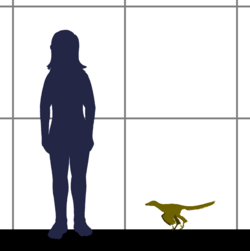
Key Facts
- Temporal Range: Bathonian to Oxfordian stages (~165–153 million years ago).
- Location: Tiaojishan Formation, western Liaoning, China.
- Size: Approximately 60 cm in length.
- Weight: Estimated at 0.82 kg.
- Distinguishing Feature: Extensive feathers on the head, body, forelimbs, and hind limbs.
Discovery and Etymology
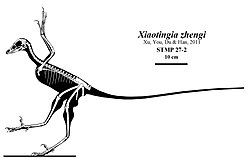
Xiaotingia zhengi was first described in 2011 by a team of researchers including Xu Xing, You Hailu, Du Kai, and Han Fenglu. The specimen, designated as holotype STM 27-2, is an exceptionally well-preserved, articulated skeleton that includes the skull. It was recovered from the Linglongta area of Jianchang within the Tiaojishan Formation.
The name Xiaotingia zhengi was chosen to honor the paleontologist Zheng Xiaoting, combining both the generic and specific names to pay tribute to his contributions to the field.
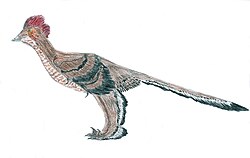
Physical Description and Biology
Xiaotingia was a small, lightweight dinosaur adapted for an arboreal (tree-dwelling) lifestyle. Morphologically, it closely resembles other anchiornithids, characterized by its small frame and extensive feathering.
Anatomy and Flight Potential
One of the most striking features of Xiaotingia is the proportion of its limbs. While it possessed long forelimbs similar to Archaeopteryx, its femur (84 mm) was longer than its humerus (71 mm). This anatomical arrangement suggests that the animal likely stood on its hind limbs and may have flapped its forelimbs to achieve flight.
The distribution of feathers was comprehensive, covering the head, body, and limbs. Notably, the feathers on the femur reached lengths of 55 mm, and long pennaceous (vane-like) feathers were present on the tibia and metatarsus. This suggests that Xiaotingia may have used its hind limbs as auxiliary wings to assist in short-distance flight.
Dental Characteristics
The skull of Xiaotingia reveals a dentary tooth count of likely fewer than 10. The morphology of these teeth is very similar to those found in basal avians, further blurring the line between traditional dinosaurs and early birds.
Classification and Phylogenetic Debate
The classification of Xiaotingia has been a subject of significant scientific revision since its discovery. Because it shares traits with both birds and non-avian theropods, its position on the evolutionary tree has shifted across various studies.
- Initial Analysis (2011): Xu et al. proposed that Xiaotingia and Archaeopteryx belonged to a clade called Archaeopterygidae within the Deinonychosauria, suggesting Archaeopteryx might not be a bird in the strictest sense.
- Subsequent Challenges: Other analyses recovered Archaeopteryx as an avialan (a bird-like dinosaur), while placing Xiaotingia as a close relative of Anchiornis within the Troodontidae.
- 2012 Revision: A revised study suggested Xiaotingia was the most primitive member of the Dromaeosauridae.
- Recent Findings (2017–2025): A 2017 re-evaluation identified it as an anchiornithid within the avialan group. More recently, in 2025, Foth et al. recovered Xiaotingia as a sister taxon to Avialae, though outside the anchiornithids.
| Feature | Detail |
|---|---|
| Length | ~60 cm |
| Weight | ~0.82 kg |
| Femur Length | 84 mm |
| Humerus Length | 71 mm |
| Period | Middle to Late Jurassic |
| Region | Liaoning, China |
Frequently Asked Questions
Was Xiaotingia a bird?
Whether Xiaotingia is classified as a bird depends on the definition of "bird" (Avialae) being used. While it possesses many bird-like features, such as feathers and a lightweight frame, different phylogenetic analyses place it variously as a primitive dromaeosaurid, a troodontid, or a sister taxon to the Avialae.
Could Xiaotingia fly?
Evidence suggests it may have been capable of short-distance flight. Its long forelimbs and the presence of long pennaceous feathers on its legs suggest it could have used both its arms and legs to generate lift or stability.
How does Xiaotingia relate to Archaeopteryx?
Both are small, feathered paravians from the Jurassic. Some studies have grouped them together in the clade Archaeopterygidae, while others separate them, placing Archaeopteryx closer to modern birds and Xiaotingia closer to the dromaeosaurid or troodontid lineages.
Where was Xiaotingia discovered?
The holotype specimen was discovered in the Tiaojishan Formation in the Linglongta area of Jianchang, located in western Liaoning, China.