Wonsan: North Korea's Coastal Hub and Emerging Tourist Destination
Situated on the eastern edge of the Korean Peninsula, Wonsan serves as a vital maritime gateway and a significant administrative center within Kangwon Province. Known for its excellent natural port and scenic coastline, the city has transitioned from an ancient settlement to a heavily industrialized center, and more recently, into a focal point for large-scale tourism development.
Key Facts
- Location: Kangwon Province, North Korea, on the Sea of Japan.
- Geography: Spans 269 km² and features a natural deep-water port.
- Population: Approximately 363,127 (2008 estimate).
- Major Attractions: Wonsan Kalma Coastal Tourist Area, Masikryong Ski Resort, and Myongsasibri Beach.
- Transportation: Served by Wonsan Airport and a trolleybus transit system.
Geography and Climate
Wonsan occupies a strategic position at the eastern end of the Korean Peninsula's neck. The landscape is defined by its proximity to the sea and several prominent mountains, including Mt. Changdok and Mt. Nap'al to the west. The coastal area is further characterized by more than 20 small islands, such as Hwangt'o and Ryo Islands, which enhance its status as a premier natural port.
The city experiences a seasonal climate. Summers are warm and humid, with July and August seeing mean daily maximums around 27°C (81°F). Winters are cold, with January temperatures often dropping to a mean daily minimum of −5.7°C (21.7°F). The region receives significant precipitation, particularly during the summer months.
Historical Evolution
Ancient and Early Modern Eras
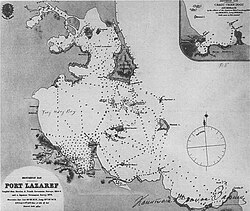
Archaeological evidence, including pottery found in the Chungpyongdong area, suggests human habitation dating back to the Neolithic and Bronze ages. Historically, the region has been known by various names, including Eo eul mae under the Goguryeo kingdom and Yongju during the Goryeo dynasty. In 1880, Wonsan officially opened as a trade port, originally known as Wonsanjin and sometimes referred to by the Russian name Port Lazarev.
The Korean War and Modern Development
The 20th century brought significant upheaval. During the Korean War (1950–1953), Wonsan was the site of the Blockade of Wonsan, which the U.S. Navy records describe as the longest siege in modern American naval history. The city was heavily bombarded and left largely in ruins by the war's end.
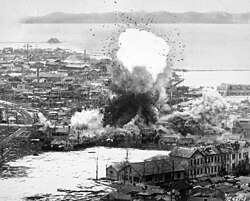
Following the war, the city underwent various administrative shifts, eventually becoming the capital of Kangwon Province after borders were redrawn in 1946. In recent years, major redevelopment projects have been announced to modernize the city center and expand its economic footprint.
Economy and Infrastructure
Wonsan is a diverse industrial hub. Its economy is supported by several key sectors, including:
- Manufacturing: The 4 June Rolling Stock Works, one of the nation's largest railway rolling stock factories.
- Heavy Industry: Shipyards, cement factories, and chemical enterprises.
- Maritime: Aquatic product processing and significant port activities.
Transportation Networks
The city is well-connected via road and rail. A trolleybus system, which began operations in 1988, has seen recent expansions to improve urban transit and reduce fossil fuel reliance. For air travel, Wonsan Airport (IATA: WON) serves both military and civilian purposes, featuring dual runways and having hosted the Wonsan International Friendship Air Festival.
Tourism and Recreation
A major pillar of Wonsan's modern identity is the Wonsan Special Tourist Zone. This massive development project aims to leverage the region's natural beauty, including its ten sand beaches and various mineral springs.
Major Tourist Sites
- Wonsan Kalma Coastal Tourist Area: A massive beach resort inaugurated in June 2025, featuring facilities for nearly 20,000 people.
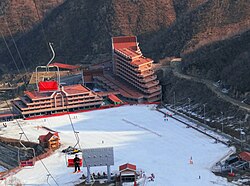
- Masikryong Ski Resort: A mountain resort built to provide year-round recreational opportunities.
- Myongsasibri: A famous four-mile-long sandy field on the Kalma Peninsula.
- Lake Sijung: A natural monument consisting of a seaside lake with seven islands, known for its therapeutic mud.
- Songdowon International Children's Camp: A facility hosting international students for cultural exchange and summer activities.
| Category | Details |
|---|---|
| Province | Kangwon |
| Total Area | 269 km² |
| Primary Port | Wonsan Natural Port |
| Key Industry | Railway Rolling Stock, Shipbuilding, Chemicals |
| Major Resort | Wonsan Kalma Coastal Tourist Area |
Frequently Asked Questions
What is the significance of the Blockade of Wonsan?
The Blockade of Wonsan was a major naval operation during the Korean War. According to U.S. Navy history, it was a continuous siege and bombardment by the American navy from March 1951 until July 1953, marking the longest siege in modern American naval history.
What makes the Wonsan Kalma Coastal Tourist Area unique?
It is described as the largest single-owned beach resort in the world, featuring hotels, inns, and various entertainment facilities designed to accommodate nearly 20,000 visitors.
How is public transport managed in Wonsan?
Wonsan utilizes a trolleybus system. Recent efforts have focused on expanding these lines to connect key areas like Changchon-dong, Kalma station, and Songdowon to reduce air pollution.
Is Wonsan accessible to international tourists?
As of mid-2025, the Wonsan Kalma Coastal Tourist Area has opened to domestic tourists and specifically to Russian tourists, while access for other international visitors has faced restrictions.
What are the primary natural landmarks near Wonsan?
Key landmarks include Mt. Changdok, Mt. Nap'al, the Myongsasibri sand dunes, and the natural monument Lake Sijung.