Wislicenus Crater: Analyzing Martian Strata and the Evidence for Water
The surface of Mars is a geological archive, with many regions revealing rocks arranged in distinct layers, known as strata. One of the most compelling examples of this phenomenon is found within the Wislicenus crater. By studying these layers, scientists can piece together the environmental history of the Red Planet and identify regions that may have once supported life.
Observations from orbiting spacecraft have provided a detailed look at the floor of Wislicenus, where erosion has exposed these ancient layers to view.
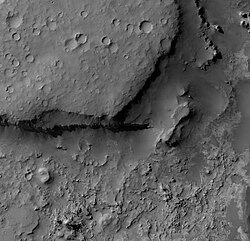
The Composition of Martian Layers
Not all strata are created equal. In Wislicenus and other Martian regions, layers often vary in color and physical durability, suggesting a diverse mineralogical makeup.
Mineral Indicators and Water
Light-toned rocks are of particular interest to researchers because they are often associated with hydrated minerals—minerals that contain water within their molecular structure. Specifically, instruments have detected sulfates and phyllosilicates (commonly known as clays) within some of these layers.
The presence of these minerals is significant because they typically form in the presence of water. Consequently, areas rich in clays and sulfates are primary targets in the search for evidence of past life on Mars.
Physical Properties and Rock Types
The way these layers break down provides clues about their composition. Some strata crumble into fine dust, indicating they are composed of small particles. In contrast, other layers break into large boulders, suggesting a much harder material. Scientists believe these harder layers are likely composed of basalt, a common volcanic rock found across Mars.
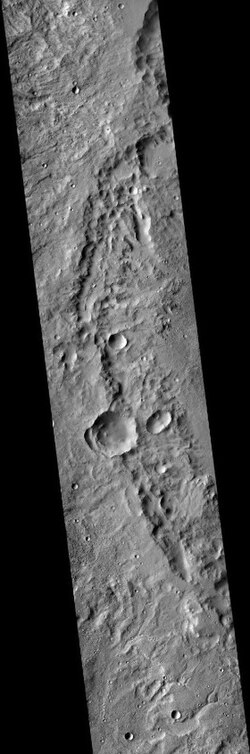
Key Facts
- Strata: The geological term for the visible layers of rock found in Wislicenus crater.
- Hydrated Minerals: Sulfates and phyllosilicates (clays) found in the layers, indicating the historical presence of water.
- Basalt: A volcanic rock believed to form the harder, boulder-producing layers.
- Formation Drivers: While volcanoes and wind can create layers, the hydrated minerals in Wislicenus strongly suggest water involvement.
- Biological Potential: Regions with hydrated minerals are considered high-priority areas for seeking evidence of life.
Geological Summary of Wislicenus Crater
| Layer Characteristic | Likely Composition | Physical Behavior | Environmental Implication |
|---|---|---|---|
| Light-toned | Sulfates / Clays | Variable | Presence of water |
| Hard/Dense | Basalt | Breaks into boulders | Volcanic activity |
| Soft/Fine | Fine particles | Breaks into dust | Sedimentary deposition |
How These Layers Formed
Geological layering can occur through several different processes. Volcanic eruptions can stack lava flows, wind can deposit dust and sand, and water can settle sediments over time. However, the specific discovery of hydrated minerals in Wislicenus crater provides strong evidence that water played a central role.
It is hypothesized that Wislicenus, like many other Martian craters, may have once hosted a lake, allowing minerals to precipitate and layers to build up on the crater floor.
Frequently Asked Questions
What are strata?
Strata are layers of sedimentary or volcanic rock that have accumulated over time, providing a chronological record of the environment in which they formed.
Why are phyllosilicates important?
Phyllosilicates, or clays, are hydrated minerals. Because they usually form in the presence of water, their detection suggests that the area was once wet, making it a prime location to search for signs of ancient life.
What is basalt and where is it found on Mars?
Basalt is a hard volcanic rock. It has been identified in many locations across Mars and is thought to be the primary component of the layers that break into large boulders in Wislicenus.
Did Wislicenus crater once contain a lake?
While not definitively proven, the presence of hydrated minerals is strong evidence for the involvement of water, leading scientists to believe the crater may have once contained a lake.
How do scientists know the composition of these layers from orbit?
Scientists use instruments on orbiting spacecraft, such as the HiRISE and CTX cameras on the Mars Reconnaissance Orbiter (MRO), to analyze colors, textures, and mineral signatures from space.