Wine: History, Production, and Global Culture
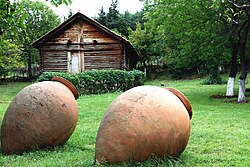
Wine is a timeless alcoholic beverage crafted from the fermented grape juice of various vine species. With an alcohol by volume (ABV) typically ranging between 12.5% and 14.5%, it has evolved from a prehistoric discovery into a multi-billion dollar global industry. From the ancient clay vessels of Georgia to the high-tech cellars of Napa Valley, wine remains a central element of human culinary and social history.
Key Facts
- Oldest Evidence: Traces of wine date back to c. 6000 BCE near Tbilisi, Georgia.
- Oldest Winery: The Areni-1 winery in Armenia dates to c. 4100 BCE.
- Global Market: The 2024 global market was estimated at US$515.1 billion.
- Top Producer: France leads the world in production volume and export value.
- Ideal Storage: 12–13 °C (54–55 °F) with 65–70% humidity.
The History of Viticulture
The origins of wine predate written records, though the first cultivation of wild grapevines remains uncertain. The earliest known traces were discovered in Georgia around 6000 BCE, followed by the establishment of the Areni-1 winery in Armenia around 4100 BCE.

Wine culture spread across the Mediterranean primarily through the influence of the Phoenicians (c. 1000 BCE) and the Greeks (c. 600 BCE). The Phoenicians were noted for exporting high-quality wines from Byblos. Later, the ancient Romans expanded production and trade networks significantly, particularly in Gaul during the Gallic Wars.
European traditions eventually reached the "New World" via colonists. Vineyards appeared in Mexico by 1530, Peru by the 1550s, and Chile shortly after. In South Africa, vines were planted in 1655 via the Dutch East India Company. In North America, Jesuit Missionaries grew vines in California in the 1670s, with major regions like Napa and Sonoma established by the 1850s. Australia saw its first vines in 1788, and New Zealand followed in 1819.
Wine Styles and Production
Wine is categorized primarily by the color of the grapes and the process of vinification (the chemical process of turning grapes into wine). The primary distinction between red and white wine is the duration of contact with grape skins.
- Red Wine: Produced from red grapes with long contact with skins.
- White Wine: Produced from white grapes with short or no skin contact.
- Rosé Wine: A blend or short-maceration wine with a pink hue.
- Other Variants: Including Orange, Sparkling, Dessert, and Fortified wines.
Packaging and Containers
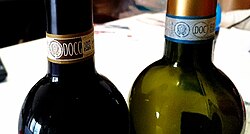
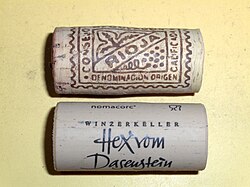
Most wines are sold in glass bottles, with the standard volume being 75 cl. These range from small 18.7 cl bottles to large 18-liter containers. Traditionally, bottles are sealed with a cork stopper, though synthetic alternatives and screwcaps are common.
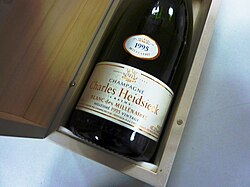
Sparkling wines require thicker glass to withstand internal gas pressure, which can reach up to 6 standard atmospheres (88 psi).
Global Production and Market Share
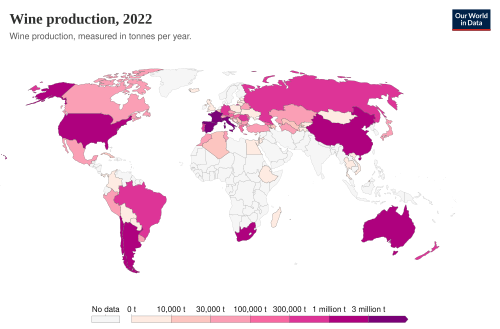
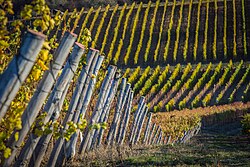
Wine production is dominated by a few key nations, with Europe maintaining a strong lead in both volume and market value.
| Rank | Country | Production (Million Hectolitres) | World Production % | Export Market Share (Value US$) |
|---|---|---|---|---|
| 1 | France | 48.0 | 20.2% | 33.3% |
| 2 | Italy | 38.3 | 16.1% | 21.6% |
| 3 | Spain | 28.3 | 11.9% | 8.2% |
| 4 | United States | 24.3* | 10.2%* | 3.2% |
| 5 | Chile | 11.0 | 4.6% | 3.9% |
*Estimated values.
Consumption and Tasting
The global consumption of wine saw a decline in the early 2010s, largely due to decreased drinking in France and Italy. However, this trend is reversing as wine gains popularity among younger consumers in the United States and China. Current trends show a rising demand for organic wines and premium, high-quality products.
Serving Temperatures
To maximize flavor, wines should be served at specific temperatures:
- Tannic Red Wines: 15–18 °C (59–64 °F)
- Complex Dry White Wines: 12–16 °C (54–61 °F)
- Light Red Wines: 10–12 °C (50–54 °F)
- Sweet, Sparkling, or Rosé: 6–10 °C (43–50 °F)
![Tilting the glass and judging a wine's color against a white background is often one of the first steps in tasting a wine.[83]](/images/8d/45/8d451211d52728a49dbd329a62908345dc3ad6a10c72c08fffad33c5afbd4627.jpg)
Storage and Investment
Proper storage is critical to prevent oxidation—the process where oxygen enters the bottle and degrades the wine's quality. The ideal environment is 12–13 °C (54–55 °F) with 65–70% humidity. Bottles with corks are typically stored horizontally to keep the cork moist and airtight.
In the 21st century, wine has become a popular investment asset. Regions like Bordeaux and Burgundy are highly sought after due to their prestige and longevity. For example, the 2016 Romanée-Conti has fetched as much as £3,250 per bottle.
Wine in Society and the Arts
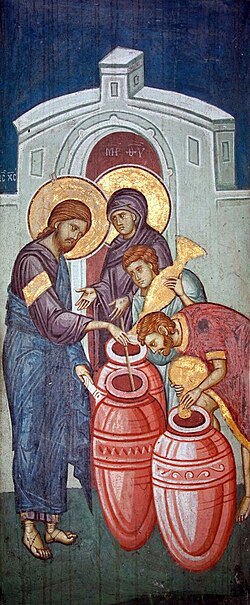
Wine has long been a symbol of hedonism and spirituality. In literature, poets like Lord Byron and John Keats referenced the phrase "wine, women and song," linking the drink to pleasure and the carpe diem philosophy. In religion, wine is central to the Eucharist in Christianity and appears in various ancient religious traditions.
Frequently Asked Questions
What is the difference between red and white wine production?
The primary difference is the amount of time the grape juice spends in contact with the skins. Red wines have long skin contact to extract color and tannins, while white wines have short or no skin contact.
How should I store a bottle of wine with a cork?
Store the bottle horizontally in a cool (12–13 °C), humid (65–70%) environment. Horizontal storage keeps the cork moist, preventing it from drying out and allowing oxygen to enter the bottle.
Which countries are the largest wine producers?
France is the world leader in production and export value, followed by Italy, Spain, and the United States.
What is the standard volume of a wine bottle?
The standard volume is 75 cl, although bottles can range from as small as 18.7 cl to as large as 18 liters.
At what temperature should sparkling wine be served?
Sweet, sparkling, and rosé wines should be cooled and served between 6–10 °C (43–50 °F).