The Ultimate Guide to Grapes: History, Varieties, and Nutrition
Grapes are much more than just a sweet snack; they are a versatile fruit with a history spanning millennia. Botanically classified as a berry, grapes belong to the genus Vitis and grow on deciduous woody vines. Unlike many other fruits, grapes are non-climacteric, meaning they do not continue to ripen significantly once they have been harvested from the vine.
Whether enjoyed fresh, dried into raisins, or fermented into fine wines, grapes hold immense cultural and economic importance worldwide. From the ancient vineyards of the Middle East to modern industrial agriculture, the story of the grape is a fascinating journey of human cultivation and biological wonder.
Key Facts
- Botanical Classification: Grapes are berries belonging to the genus Vitis.
- Primary Uses: Approximately 71% of world grape production is used for winemaking.
- Top Producer: China is the world's leading producer, accounting for 19% of global production.
- Nutritional Highlight: Grapes are a good source of Vitamin K, providing 12% of the Daily Value per 100g.
- Safety Warning: Grapes and raisins are toxic to dogs and can cause acute kidney failure.
The Rich History of Viticulture
The cultivation of grapes is believed to have begun approximately 6,000 to 8,000 years ago in the Middle East, which is considered the plant's homeland. Because yeast occurs naturally on grape skins, the fermentation process led to the early discovery of alcoholic beverages. Archaeological evidence suggests that winemaking has been a dominant part of human culture in Georgia for at least 8,000 years.
One of the oldest known wineries, the Areni-1 winery in Armenia, dates back to around 4000 BC. As cultivation spread, different regions developed unique traditions. For instance, the city of Shiraz in Persia was famous for its fine wines by the 9th century AD, leading to the proposal that the Syrah grape variety is named after this city. In Cyprus, archaeologists discovered wine jars dating to 3500 BC, and the island is also home to Commandaria, a sweet dessert wine with origins reaching back to 2000 BC.
In North America, native grape species were a staple in the diets of many Native Americans. While early European colonists initially thought native varieties were unsuitable for wine, the 19th century saw a breakthrough. Ephraim Bull of Concord, Massachusetts, cultivated seeds from wild Vitis labrusca vines to create the Concord grape, which became a major agricultural crop in the United States.
Biology and Growth of the Grapevine
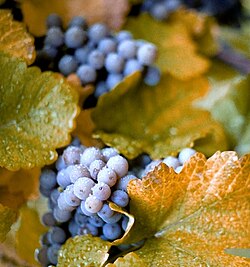
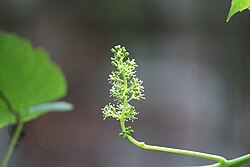
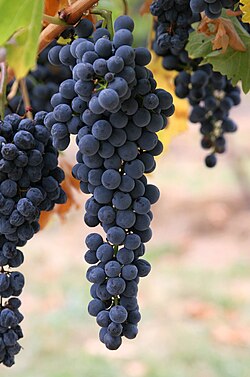
Grapes typically grow in clusters containing between 15 and 300 berries. The development of the fruit begins after fertilization, a process that takes about 60 days. During this time, the berries first produce tartaric acid and later malic acid, which contribute a slight sourness to the fruit's natural sweetness.
A critical stage in grape development is véraison. This is the ripening period—beginning around August in the Northern Hemisphere—when the berries increase in size, change to darker colors, and begin producing sugars. During this stage, the plant's phloem (the tissue that transports nutrients) supplies the berries with soluble sugars like glucose and fructose.
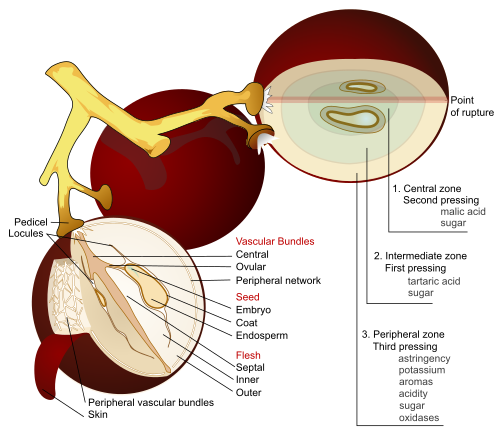
The shape of a ripe grape berry is typically ellipsoid, resembling a prolate spheroid. The flesh of the fruit is highly hydrated, consisting of 75-85% water obtained from the plant's xylem (the tissue that transports water) before ripening.
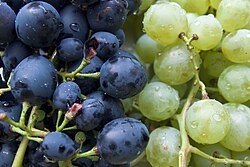
The color of grapes is determined by anthocyanins, which are a type of pigment within the polyphenol family. While purple grapes contain high levels of these pigments, "white" grapes are actually green. This color difference is due to a mutation in two regulatory genes that turns off the production of anthocyanins.
Common Grape Species and Varieties
While most domesticated grapes come from Vitis vinifera (native to the Mediterranean and Central Asia), several other species are significant:
- Vitis amurensis: The most important Asian species.
- Vitis labrusca: Native to Eastern US and Canada; includes the Concord variety.
- Vitis riparia: A wild North American vine used for jam and wine.
- Vitis rotundifolia: Also known as the muscadine, native to the Southeastern United States.
- Vitis mustangensis: Known as the mustang grape, found in the southern United States.
Table Grapes vs. Wine Grapes
Grapes are commercially categorized based on how they are consumed. Table grapes are intended to be eaten raw; they are typically larger, seedless, and have thinner skins. In contrast, wine grapes are smaller, usually contain seeds, and have thicker skins. Thick skins are highly desirable in winemaking because much of the wine's aroma is derived from them. Additionally, wine grapes are harvested at higher sugar levels (approximately 24% by weight) compared to table grapes used for juice (around 15% sugar).
The Rise of Seedless Varieties
Seedless cultivars now dominate the table grape market. Because grapevines are propagated through cuttings (vegetative propagation), the absence of seeds does not hinder reproduction. Common sources for seedlessness include the Thompson Seedless, Russian Seedless, and Black Monukka varieties. However, it is worth noting that the loss of seeds can also mean a reduction in the phytochemical content found in grape seeds.
Global Production and Distribution
In 2023, the world dedicated over 6.5 million hectares to grape growing. Global production reached 72.5 million tonnes, with China leading the market. The industry is divided into three main sectors: 71% for wine, 27% as fresh fruit, and 2% as dried fruit.

| Nutrient | Amount |
|---|---|
| Energy | 288 kJ (69 kcal) |
| Carbohydrates | 18.1 g |
| Sugars | 15.48 g |
| Dietary Fiber | 0.9 g |
| Protein | 0.72 g |
| Fat | 0.16 g |
| Water | 81 g |
Culinary and Industrial Uses
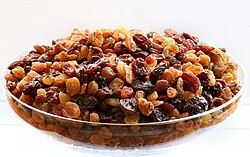
Beyond fresh consumption, grapes are processed into a wide array of products. They can be dried into various forms, such as raisins, currants, or sultanas. They are also used to produce jams, juices, vinegars, and oils.
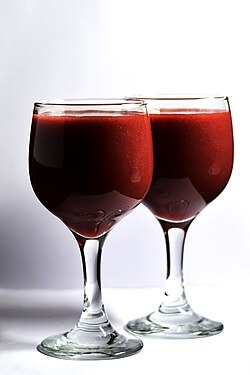
Grape juice is created by crushing and blending the fruit. In the wine industry, the unfermented juice that contains pulp, skins, and stems is known as must. In the Middle East, a type of vinegar called husrum (or verjuice) is made from unripened, sour grapes and is used as an acidic ingredient in cooking.
The winemaking process also produces pomace (or marc), which consists of the leftover skins, seeds, and stems. This organic residue is often used as compost, but it is also increasingly used for "valorization"—the extraction of valuable phytochemicals like polyphenols and tannins for commercial use.
Frequently Asked Questions
What is the difference between a raisin, a currant, and a sultana?
A raisin is a general term for any dried grape. A currant specifically refers to a dried Zante Black Corinth grape. A sultana is a raisin made from white or red grapes that have been bleached to appear lighter.
Why are grapes toxic to dogs?
Consuming grapes or raisins can cause acute kidney failure in dogs, which may lead to a lack of urine production (anuria) and can be fatal.
What are the health benefits of grape skins and seeds?
Grape skins and seeds are rich in phytochemicals, including resveratrol (a stilbene compound), anthocyanins, and polyphenols, which are studied for their various biological properties.
What does "non-climacteric" mean in relation to grapes?
It means that grapes do not continue to increase in sugar content or ripen significantly once they have been removed from the vine.
How do "white" grapes get their color?
White grapes are evolutionarily derived from purple grapes. A mutation in two regulatory genes prevents the production of anthocyanins, the pigments responsible for purple and red colors.