William Tilden: A Legacy of Chemistry and Academic Leadership
William Tilden was a distinguished chemist and educator whose career spanned several of Britain's most prestigious academic institutions. From his early days of rigorous study to his leadership roles in the scientific community, Tilden played a pivotal role in shaping the landscape of chemical education and research at the turn of the 20th century.
Academic Foundations and Early Career
Tilden's journey began at Bedford Modern School, providing the groundwork for his higher education. He pursued scientific studies at the University of London, where he earned a Bachelor of Science (B Sc) in 1868, followed by a Doctor of Science (D Sc) in 1871.
His transition into teaching began at Clifton College in Bristol, where he served as the Senior Teacher of Science from 1872 to 1880. This period established his reputation as an educator before he moved into higher academia.
University Professorships
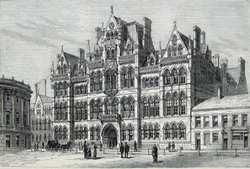
In 1880, Tilden joined Mason College as a professor of chemistry, a position he held until 1894. Mason College later evolved into the University of Birmingham, marking a significant era in the institution's growth.
From 1894 until his passing, Tilden was associated with the Royal College of Science in London. His tenure there was marked by increasing responsibility; he served as professor of chemistry until 1909 and held the role of Dean from 1905 to 1909. Following these appointments, he was named an emeritus professor, a title granted to retired professors to honor their distinguished service.
Professional Honors and Leadership
Tilden's contributions to science were recognized by the most elite organizations of his time. He was elected a Fellow of the Royal Society in 1880 and later served as its vice-president between 1904 and 1906. In 1908, the society awarded him the Davy Medal, one of its most prestigious honors.
Beyond the Royal Society, Tilden held leadership roles in several other key organizations:
- Chemical Society: Served as president from 1903 to 1905.
- British Association for the Advancement of Science: Held various offices.
- Institute of Chemistry: Held office in the organization, which was renamed the Royal Institute of Chemistry in 1885.
- Society of Chemical Industry: Held office within the society.
Key Facts
- Education: B Sc (1868) and D Sc (1871) from the University of London.
- Major Roles: Professor at Mason College and the Royal College of Science.
- Top Honors: Davy Medal (1908) and Fellow of the Royal Society (1880).
- Legacy: The Tilden Prize, established in 1939, is awarded annually to three younger members by the Royal Society of Chemistry.
- Literary Work: Authored Famous Chemists: the men and their work, published in 1921.
Summary of Professional Timeline
| Period/Year | Institution/Organization | Role/Achievement |
|---|---|---|
| 1868 & 1871 | University of London | Earned B Sc and D Sc |
| 1872–1880 | Clifton College, Bristol | Senior Teacher of Science |
| 1880–1894 | Mason College | Professor of Chemistry |
| 1894–1909 | Royal College of Science | Professor of Chemistry / Dean |
| 1903–1905 | Chemical Society | President |
| 1908 | Royal Society | Awarded Davy Medal |
Frequently Asked Questions
What is the Tilden Prize?
The Tilden Prize was established in 1939 in memory of William Tilden. It is awarded annually by the Royal Society of Chemistry to three younger members of the scientific community.
Which institutions did William Tilden teach at?
Tilden taught at Clifton College in Bristol, Mason College (now the University of Birmingham), and the Royal College of Science in London.
What book did William Tilden write?
In 1921, he published a work titled Famous Chemists: the men and their work, published by George Routledge and Sons Ltd.
What were Tilden's highest academic honors?
His most prominent honors include being a Fellow of the Royal Society, serving as vice-president of the Royal Society, and receiving the Davy Medal in 1908.
Who was Philip Armstrong Tilden?
Philip Armstrong Tilden was the son of William Tilden and became a prominent architect.