William A. Wheeler: A Legacy of Integrity and Public Service
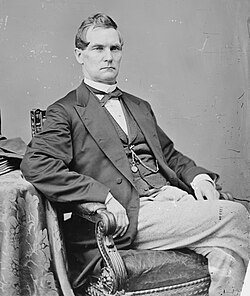
William Almon Wheeler was a distinguished American statesman whose career spanned the local, state, and federal levels of government. Known for his unwavering commitment to ethics and civil liberties, Wheeler navigated the turbulent political landscape of the 19th century with a reputation for honesty that earned him recognition long after his tenure in office.
Born in Malone, New York, Wheeler's early academic journey was marked by resilience. He attended Franklin Academy and the University of Vermont, though financial difficulties forced him to leave before completing his degree. Despite this early setback, his intellectual pursuits continued, and he eventually received a Bachelor of Arts from the University of Vermont in 1876, officially joining the class of 1842. His academic contributions were later recognized with honorary degrees, including a Master of Arts from Dartmouth College (1865) and LL.D. degrees from the University of Vermont (1867) and Union College (1877).
Legal Foundations and State Politics
Wheeler began his professional life studying law under Asa Hascall, a versatile Malone attorney and politician who served as a town supervisor, justice of the peace, district attorney, and member of the New York State Assembly. Admitted to the bar in 1845, Wheeler quickly established himself in Malone, serving as the District Attorney of Franklin County from 1846 to 1849.
His ascent in New York politics was steady. He served in the New York State Assembly representing Franklin County in 1850 and 1851, and later served in the New York State Senate for the 17th District during 1858 and 1859. These roles provided the foundation for his eventual transition to national governance.
Congressional Career and Leadership
A member of the Republican Party, Wheeler was first elected to the 37th United States Congress, serving from March 4, 1861, to March 3, 1863. After a hiatus, he returned to the House of Representatives for four consecutive terms, serving in the 41st, 42nd, 43rd, and 44th Congresses from 1869 to 1877.
During his time in the House, Wheeler held significant leadership positions, serving as the chairman of the Committee on Pacific Railroads during the 42nd Congress and the Committee on Commerce during the 43rd Congress. Beyond legislation, he also served as the president of New York's Northern Railroad.
A Commitment to Ethics and Equality
Wheeler is perhaps best remembered for his rigid adherence to personal and professional integrity. This was famously highlighted in an exchange with Roscoe Conkling, a powerful New York political boss. When Conkling offered Wheeler any reward the state could provide in exchange for political alignment, Wheeler replied that nothing the state could offer would compensate him for the loss of his self-respect.
His commitment to justice extended to racial equality. As president of the New York State Constitutional Convention (June 1867 to February 1868), Wheeler argued that every man, regardless of race, color, or economic status, was entitled to the full rights of citizenship based on his manhood.
Wheeler's financial integrity was further demonstrated during the Salary Grab Act of 1873. When Congress passed a retroactive pay raise spanning five years, Wheeler not only voted against the measure but returned the resulting salary increase to the Treasury Department.
The Wheeler Compromise and Reconstruction
In 1875, Wheeler was the architect of the Wheeler Compromise. This political agreement was designed to resolve a volatile situation in Louisiana. While it achieved a temporary settlement, it ultimately contributed to the withdrawal of federal troops and the conclusion of Reconstruction, the period of rebuilding and social reorganization in the American South following the Civil War.
Key Facts
- Political Affiliation: Republican.
- Congressional Service: Served in the 37th, 41st, 42nd, 43rd, and 44th U.S. Congresses.
- Key Leadership: Chairman of the Committees on Pacific Railroads and Commerce.
- Notable Act: Returned retroactive pay from the Salary Grab Act of 1873 to the Treasury.
- Major Contribution: Authored the Wheeler Compromise of 1875 regarding Louisiana.
| Role/Achievement | Period/Year | Details |
|---|---|---|
| District Attorney | 1846–1849 | Franklin County, NY |
| NY State Assembly | 1850–1851 | Representing Franklin County |
| NY State Senate | 1858–1859 | 17th District |
| U.S. Representative | 1861–1863; 1869–1877 | Multiple Congresses |
| Convention President | 1867–1868 | NY State Constitutional Convention |
Frequently Asked Questions
What was the Salary Grab Act and how did Wheeler respond?
The Salary Grab Act of 1873 was a congressional vote for a pay raise that was made retroactive for five years. William A. Wheeler voted against the raise and returned the retroactive funds he received to the Treasury Department.
What was the Wheeler Compromise of 1875?
The Wheeler Compromise was a political settlement intended to resolve a volatile situation in Louisiana. However, it eventually led to the withdrawal of federal troops and the end of the Reconstruction era.
How did Wheeler view racial equality?
During the New York State Constitutional Convention, Wheeler advocated for universal civil liberty, stating that every man, regardless of race or color, was entitled to the full rights of citizenship.
What was Wheeler's relationship with Roscoe Conkling?
Wheeler famously rejected an offer from political boss Roscoe Conkling to provide him with state rewards in exchange for political cooperation, citing that his self-respect was more valuable than any gift from the State of New York.
Where did William A. Wheeler receive his education?
Wheeler attended Franklin Academy and the University of Vermont. Although he initially dropped out due to financial concerns, he later received his Bachelor of Arts from the University of Vermont in 1876.