Wilhelm I: The Architect of a United Germany
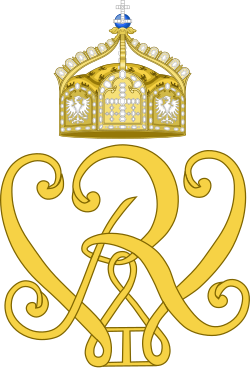
Wilhelm I, known in English as William I, stands as one of the most pivotal figures in European history. As the King of Prussia and the first German Emperor, he presided over the transformation of a collection of independent states into a unified global power. While often overshadowed by his formidable Chancellor, Otto von Bismarck, Wilhelm I provided the royal legitimacy and military leadership necessary to forge the German Empire.
Born into the prestigious House of Hohenzollern, Wilhelm's journey to the throne was not a predetermined path. His life spanned nearly a century of upheaval, from the Napoleonic Wars to the industrialization of Europe, culminating in his role as the head of state for a newly unified Germany.
Key Facts
- Full Name: Wilhelm Friedrich Ludwig (William Frederick Louis).
- Reign as King of Prussia: January 2, 1861 – March 9, 1888.
- Reign as German Emperor: January 18, 1871 – March 9, 1888.
- Key Partnership: Worked closely with Chancellor Otto von Bismarck to achieve unification.
- Military Rank: Generalfeldmarschall (Field Marshal).
- Legacy: First head of state of a united Germany.
Early Life and Military Foundations
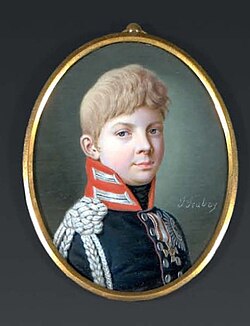
Wilhelm was born on March 22, 1797, at the Kronprinzenpalais in Berlin. As the second son of Prince Frederick William and Louise of Mecklenburg-Strelitz, he was not originally expected to inherit the crown. His education was overseen by Johann Friedrich Gottlieb Delbrück, and by the age of twelve, he had already been appointed as an officer in the Prussian army.
Wilhelm's identity was deeply rooted in military service. He fought with distinction during the War of the Sixth Coalition and later became a leading voice for a modernized, well-equipped Prussian Army. Over the decades, he held various high-ranking commands, including the 1st Guards Regiment and the fortress of Mainz, eventually reaching the rank of Generalfeldmarschall.
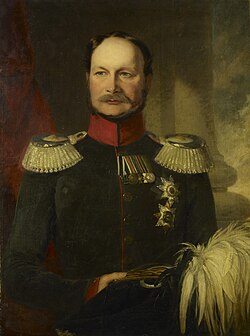
In 1829, he married Princess Augusta of Saxe-Weimar-Eisenach. Although their marriage was outwardly stable, it was noted for lacking deep happiness. Together, they built the Old Palace in Berlin as a private family residence, separate from the formal Berlin Palace used for state functions.
Ascension to the Prussian Throne
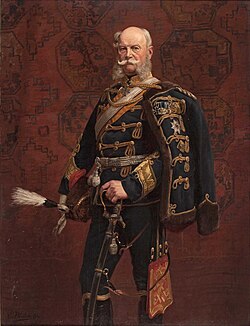
The trajectory of Wilhelm's life changed in 1840 when his childless elder brother became King of Prussia, making Wilhelm the heir presumptive. He played a significant role in suppressing the Revolutions of 1848, an event that briefly forced him into exile in England. By 1858, he was named Prince Regent after his brother, King Frederick William IV, suffered a debilitating stroke.
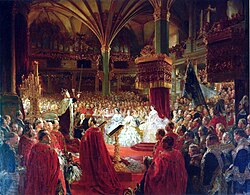
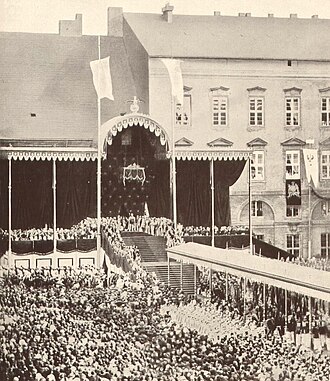
Upon the death of his brother on January 2, 1861, Wilhelm officially ascended the throne. In a move of historical significance, he traveled to Königsberg to crown himself at the Schlosskirche on October 18, 1861—the first Prussian coronation since 1701.
The Path to German Unification
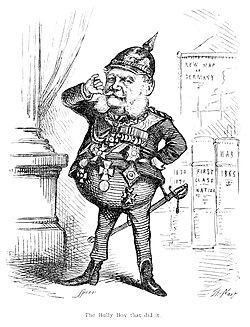
Wilhelm's early reign was marked by political tension. He immediately clashed with the liberal Landtag (the Prussian parliament) over military spending. To resolve this deadlock, he appointed Otto von Bismarck as Minister President. This decision sparked a lifelong partnership that would redefine the map of Europe.
Under Wilhelm's sovereignty and Bismarck's strategic guidance, Prussia secured a series of decisive victories in the Second Schleswig War and the Austro-Prussian War. These conflicts established Prussia as the dominant power among the German states. The process culminated in the Franco-Prussian War, which led to the final unification of Germany.
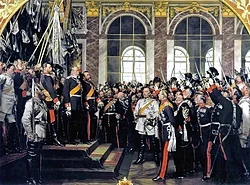
On January 18, 1871, in the Hall of Mirrors at Versailles, Wilhelm was proclaimed German Emperor (Kaiser). While he held supreme authority, he largely deferred the complexities of governance and diplomacy to Bismarck.
Challenges and Later Years
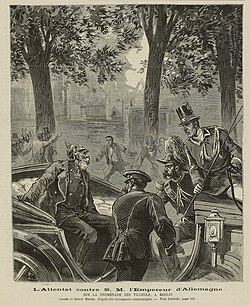
The latter part of Wilhelm's reign was not without turmoil. He was the target of several assassination attempts, which Bismarck utilized as political leverage to pass the Anti-Socialist Laws. Despite these tensions, Wilhelm and Empress Augusta became symbols of "the old Prussia," admired by many for their austere and simple lifestyle.
Wilhelm I died on March 9, 1888, at the age of 90. His death triggered the "Year of the Three Emperors," as his son Frederick III succeeded him, only to die of throat cancer 99 days later, passing the throne to the future Wilhelm II.
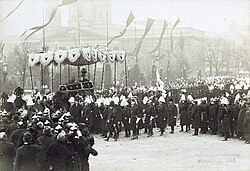
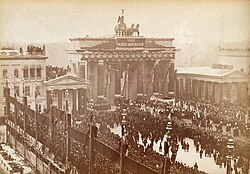
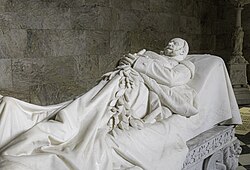
He was interred in the Royal Mausoleum at Park Charlottenburg, beside his mother, Queen Luise. His legacy was commemorated through numerous monuments, including the Kyffhäuser monument and the statue at the Deutsches Eck in Koblenz.
Summary of Reign and Lineage
| Category | Details |
|---|---|
| House | Hohenzollern |
| Spouse | Augusta of Saxe-Weimar |
| Children | Frederick III (Emperor), Louise (Grand Duchess of Baden) |
| Key Conflicts | War of the Sixth Coalition, Austro-Prussian War, Franco-Prussian War |
| Major Titles | King of Prussia, German Emperor, Prince Regent |
| Death | March 9, 1888 (Aged 90) |
Frequently Asked Questions
Who was the Chancellor during Wilhelm I's reign?
The most prominent Chancellor was Otto von Bismarck, who served as Minister President and later as the Imperial Chancellor, guiding the unification of Germany.
How did Wilhelm I become the German Emperor?
Following the victory in the Franco-Prussian War, the various German states were unified. Wilhelm I was proclaimed German Emperor on January 18, 1871, at the Palace of Versailles.
What was the "Year of the Three Emperors"?
This refers to 1888, the year in which Wilhelm I died, followed shortly by his son Frederick III (who reigned for only 99 days), and finally his grandson Wilhelm II.
What was Wilhelm I's role in the military?
Wilhelm was a career soldier who reached the rank of Generalfeldmarschall. He was a strong advocate for a well-trained army and fought in several major conflicts, including the Battle of Waterloo.
Where is Wilhelm I buried?
He is buried in the Royal Mausoleum located in the park of Schloss Charlottenburg in Berlin.