Wilhelm August Lampadius: Pioneer of Metallurgy and Coal Gas Lighting
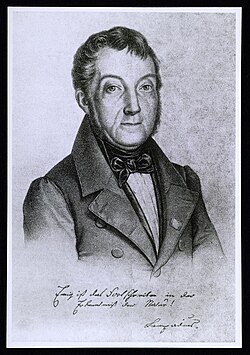
Wilhelm August Lampadius was a distinguished German chemist and metallurgist whose contributions spanned the realms of academic instruction, industrial chemistry, and urban innovation. Best remembered for introducing the first coal gas street lighting in Europe, Lampadius spent much of his career shaping the scientific landscape at the Mining Academy in Freiberg.
Born on August 8, 1772, in Hehlen, Braunschweig-Wolfenbüttel, Lampadius began his journey in the sciences through a practical apprenticeship. After the early loss of his father, Christoph Wilhelm, he was sent at age fourteen to apprentice with an apothecary in Göttingen. This foundation led him to the University of Göttingen between 1791 and 1792, where he studied under the guidance of J. F. Gmelin and Georg Christoph Lichtenberg.
Academic Journey and Professional Career
Lampadius' early career was marked by diverse experiences in pharmacy and metallurgy. After working as a pharmacist in Göttingen from 1785 to 1791, he entered the service of Count Joachim Graf von Sternberg of Bohemia. During this period, he traveled to Russia to conduct experiments in physics and electricity, though the journey was cut short in Moscow due to travel restrictions. He subsequently worked as a chemist for the Radwitz ironworks in Bohemia.
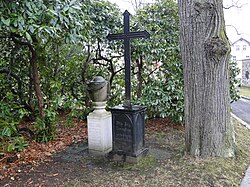
His transition to academia was facilitated by influential figures such as Martin Heinrich Klaproth and Gottlob Werner. In 1794, Lampadius was appointed as an "extraordinary professor" of chemistry and mineralogy at the Mining Academy in Freiberg. Following the death of C. E. Gellert in 1795, he ascended to the role of "ordinary professor," a position he held for the remainder of his life until his death on April 13, 1842.
Contributions to Education and Science
As a professor, Lampadius was instrumental in modernizing German chemistry by introducing the revolutionary ideas of Antoine Lavoisier. He became a recognized specialist in blow pipe analysis—a method used to identify minerals by observing their reaction to a concentrated flame—and authored a comprehensive textbook on metal smelting.
Key Facts
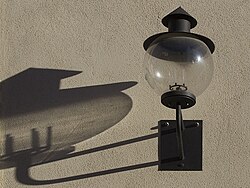
- First Coal Gas Light: In 1811/12, he illuminated the street in front of his Freiberg home with Europe's first hard coal gas lantern.
- Chemical Discovery: Accidentally discovered carbon disulfide (which he called "alcohol sulfuris") in 1796.
- Academic Legacy: Taught at the Mining Academy in Freiberg, introducing Lavoisier's chemical theories to Germany.
- Public Health: Identified the dangers of using tin-alloyed lead in cookware.
- Authorship: Wrote key texts on technical chemistry and mineral analysis.
Scientific Discoveries and Innovations
Lampadius' research extended beyond the classroom into experimental chemistry. In 1796, while distilling iron pyrites with moist charcoal, he accidentally produced carbon disulfide (Schwefelalcohol). He concluded that hydrogen and sulfur were the primary source materials for this substance.
His work also had practical implications for public health. Lampadius discovered that lead dissolves more readily in acids when alloyed with tin. This finding led him to warn against the use of certain plates and pans in food preparation, as the alloy made the cookware dangerous for consumption.
Additionally, Lampadius conducted research on sugar derived from fodder beets and contributed extensively to the field of metallurgy through his textbooks, including the Handbuch der allgemeinen Hüttenkunde and Grundriß der technischen Chemie.
Personal Life
Lampadius married Henriette Wilhelmine in 1796; the couple had a daughter and two sons who passed away at a young age. Following Henriette's death in 1806, he married a second wife, Wilhelmine, with whom he had three sons and three daughters. His eldest son, Wilhelm Adolph Lampadius, followed a spiritual path and became a priest.
| Category | Details |
|---|---|
| Lifespan | August 8, 1772 – April 13, 1842 |
| Primary Role | Professor of Metallurgy at Mining Academy in Freiberg |
| Major Innovation | First hard coal gas street lantern in Europe (1811/12) |
| Chemical Discovery | Carbon disulfide (1796) |
| Key Academic Influence | Introduced Lavoisier's ideas to Germany |
Frequently Asked Questions
What is Wilhelm August Lampadius most famous for?
He is most widely recognized for installing the first hard coal gas lantern for street lighting in Europe in 1811/12, located in front of his home in Freiberg.
What chemical substance did Lampadius discover?
In 1796, he accidentally discovered carbon disulfide, which he referred to as "alcohol sulfuris," while distilling iron pyrites with moist charcoal.
How did Lampadius contribute to public health?
He discovered that alloying lead with tin makes the lead dissolve more easily in acids, leading him to realize that many plates and pans used for food preparation at the time were harmful.
Where did Lampadius teach?
He served as a professor of chemistry and mineralogy at the Mining Academy in Freiberg, where he taught for the majority of his professional life.
Who were some of Lampadius' academic influences?
He studied under J. F. Gmelin and Georg Christoph Lichtenberg at the University of Göttingen and was aided in his career by Martin Heinrich Klaproth and Gottlob Werner.