Wemyss Bay History: From the Lands of Kelly to a Marine Village
The story of Wemyss Bay is one of grand ambitions, industrial wealth, and the evolution of a quiet Scottish coastline into a sophisticated retreat. From the early grants of the 15th century to the arrival of the railway in the 19th century, this region has transitioned from a rugged landscape of ravines and castles to a sought-after residential settlement.
At the heart of this transformation were the lands of Kelly and Ardgowan. The Kelly Burn, which flows west into the bay (formerly known as Kelly Bay or White Week), served as a natural boundary. In the late 15th century, King James III granted the lands of Kelly to the Bannatyne family. Their ancestral home, Kelly Castle, perched on a cliff edge, later inspired the song "The Carle of Kellyburn Braes," collected by Robert Burns. However, the castle was destroyed by fire in 1740 and never rebuilt.
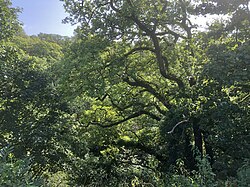
The Rise of "New Glasgow"
By the late 18th century, the area began to attract the attention of wealthy merchants. The Shaw Stewart Ardgowan Estate, which owned the densely wooded Lower Finnock area, feued land to a Mr. Orkney of Rothesay. He constructed four identical villas facing the bay, which became the first residential hub of the area. Because these homes were primarily leased to Glasgow merchants, the settlement earned the nickname New Glasgow.
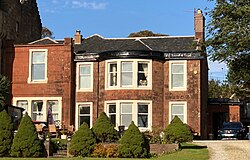
Robert Wallace and the Marine Village Vision
In 1792, John Wallace, a Glasgow merchant with extensive sugar plantations and slaves in Jamaica, purchased the Kelly Estate. He commissioned the construction of Kelly House, a red sandstone mansion that overlooked the bay.
His son, Robert Wallace, inherited the estate in 1803 and expanded the property significantly. Robert Wallace was a man of influence, serving as Greenock's first MP and contributing to the introduction of the Uniform Penny Post. His most ambitious project was the conceptualization of Wemyss Bay as a "Marine Village." This master plan envisioned a community of 200 villas supported by an extensive array of amenities, including:
- Three churches and an Academy.
- A hotel, reading room, and billiards room.
- Hot baths and a grass promenade with a fountain.
- Recreational facilities such as a bowling green, curling pond, and quoiting ground.
- A dedicated harbour and steamboat quay.
Despite these grand plans, the devaluation of the Jamaican estates in 1846 led to Wallace's financial ruin. He resigned from Parliament and sold the Kelly Estate to James Alexander, an Australian merchant.
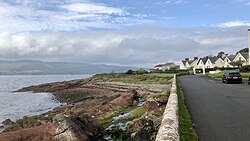
![Wemyss Bay beach from rocks, railway in front of Kelly estate. Kelly House (once prominent in this view[6]) was located where modern "lodges" look out above houses on Shore Road.](/images/dc/1c/dc1c15903f1890a0ee9a956fc5cb0a1895449474ae5016224333afdfdb8e3ac5.jpg)
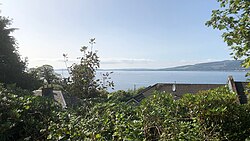
Industrial Wealth and the Arrival of the Railway
Following the bankruptcy of James Alexander in 1850, the estate was split. Charles Wilsone Brown acquired Wemyss Bay and aggressively developed the land, building Castle Wemyss (designed by Robert William Billings). The estate later passed to George Burns, a retired partner of the Cunard Line, who commissioned Wemyss House.
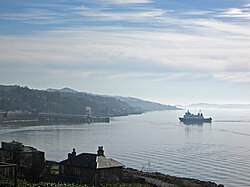
The landscape changed forever in November 1862 with the commencement of the Greenock and Wemyss Bay Railway. While the Burns family objected to the original route, the line eventually opened in May 1865. The stone-built terminus station was placed near the Kelly Burn, creating a vital link between the coast and the city.
James Young and the Livingstone Connection
In 1867, the Kelly estate was purchased by James Young, the industrialist who invented paraffin. Young was a long-time supporter of the explorer David Livingstone. After Livingstone's death, Young hosted the explorer's assistants, Chuma and Susi, at Kelly in 1874.
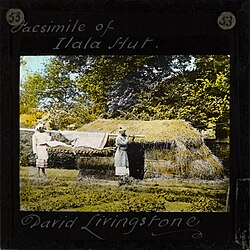
To assist book illustrators in accurately depicting Livingstone's final days, Young and the assistants created a facsimile of the hut in which Livingstone died at Ilala, as well as a replica of the kitanda (a carrying bed) used to transport the weakened explorer.
Legacy and Modern Wemyss Bay
The architectural grandeur of the 19th century eventually faded. The 1890 version of Kelly House, designed by William Leiper, was destroyed by fire in 1913—likely due to faulty wiring, despite contemporary rumors blaming suffragettes. Other landmarks, including Castle Wemyss, Wemyss House, and the episcopal Inverclyde Church, were demolished between the 1940s and 1980s.
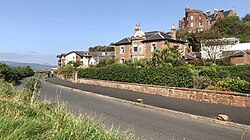
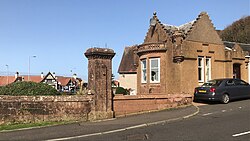
Today, Wemyss Bay serves largely as a dormitory settlement for Greenock and Glasgow. While many of the great mansions are gone, several red sandstone properties remain, and the village maintains a small commercial heart with a butcher, cafe, and pub located within the railway station buildings.
Key Facts
- Original Name: The bay was once referred to as Kelly Bay or White Week.
- New Glasgow: A nickname for the early settlement of villas leased to Glasgow merchants.
- Robert Wallace: Greenock's first MP who envisioned a "Marine Village" of 200 villas.
- Industrial Innovation: James Young of Kelly was the inventor of paraffin.
- Railway Opening: The Greenock and Wemyss Bay Railway opened in May 1865.
- Livingstone Link: A replica of David Livingstone's death hut and kitanda were constructed at Kelly.
| Figure/Family | Key Contribution/Property | Notable Detail |
|---|---|---|
| Bannatyne Family | Kelly Castle | Granted land in the late 15th century; castle burnt in 1740. |
| Robert Wallace | Kelly House / Marine Village | Planned 200 villas; Greenock's first MP. |
| Charles Wilsone Brown | Castle Wemyss | Developed the bay through feuing in the mid-19th century. |
| George Burns | Wemyss House | Former Cunard Line partner; built Inverclyde Church. |
| James Young | Kelly Estate | Paraffin inventor; hosted David Livingstone's assistants. |
Frequently Asked Questions
What happened to the original Kelly House?
The original red sandstone house was replaced in 1890 by a mansion designed by William Leiper. This second mansion was destroyed by fire in 1913, likely due to faulty electrical wiring, and remained a ruin for several years. The site is now occupied by a caravan park.
Who was Robert Wallace and why is he significant?
Robert Wallace was the owner of the Kelly Estate and Greenock's first MP. He is significant for his ambitious plan to turn Wemyss Bay into a "Marine Village" with 200 villas and extensive social facilities, and for his role in introducing the Uniform Penny Post.
What is the connection between Wemyss Bay and David Livingstone?
James Young of Kelly was a friend of David Livingstone. After Livingstone's death, Young brought the explorer's assistants, Chuma and Susi, to Kelly to build a facsimile of Livingstone's hut and a replica of his kitanda (carrying bed) for historical record and illustration.
Which notable buildings in Wemyss Bay have been demolished?
Several prominent structures are gone, including Castle Wemyss (demolished in the 1980s), Wemyss House (demolished in the 1940s), and the episcopal Inverclyde Church (demolished in 1970).
What was "New Glasgow"?
New Glasgow was the name given to a group of four identical villas built in the late 18th century by Mr. Orkney of Rothesay. These homes were primarily let to merchants from Glasgow, marking the beginning of the bay's residential development.