Weißenburg: A Journey Through Roman Roots and Imperial History
Nestled in the heart of Bavaria, Weißenburg is a city where layers of history are visible in every street and stone. From its origins as a strategic Roman outpost to its era as a sovereign city-state, Weißenburg has evolved through centuries of political shifts and cultural transformations, maintaining a unique identity that bridges the ancient and modern worlds.
The Roman Foundations of Biriciana
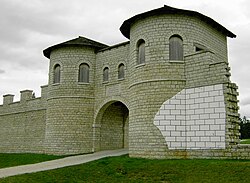
The story of Weißenburg begins in the late first century with the construction of a Roman fort. Positioned on the border of the Roman Empire, this settlement served as a vital military and administrative hub. According to the Tabula Peutingeriana—an ancient map of the Roman road network dating from the 4th century—the settlement was known as Biriciana. The site featured Thermae (Roman baths), highlighting the sophisticated infrastructure the Romans brought to the region.
Eventually, Germanic tribes destroyed the fort and established their own settlements in the area that now constitutes the city center.
From Frankish Residence to Free Imperial City
The name Weißenburg first appears in official records in a deed from 867. During the Frankish period, the city served as a royal residence. Local legend suggests that Charlemagne himself stayed in the city to oversee the construction of the Fossa Carolina, an ambitious canal project.
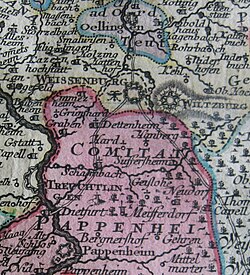
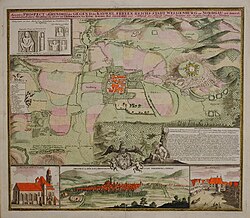
By 1296, Weißenburg achieved the status of a Free Imperial City. This meant that, like roughly 50 other cities of the time, it was virtually independent, answering directly to the Emperor rather than a local lord. This autonomy fueled growth until the onset of the Reformation.
Following the lead of Nuremberg, Weißenburg adopted Protestantism. While the subsequent religious wars caused significant damage, the city's status as a Free Imperial City and an Imperial Estate was eventually restored in the final peace treaty, allowing for a period of recovery.
Transition to the Modern Era
The era of independence ended in 1802, and by 1806, Weißenburg was integrated into the Bavarian kingdom. While the loss of sovereignty could have led to stagnation, the city was revitalized by the industrial revolution. The construction of a railway connecting Nuremberg and Augsburg passed directly through Weißenburg, sparking industrial growth.
Following World War II, the city's demographic and cultural landscape shifted again. Over 6,000 refugees and expellees from lost German territories settled in Weißenburg, contributing significantly to the city's industrial development and cultural diversity.
Preserving the Past
Today, Weißenburg serves as a living museum. The Roman legacy is preserved through various ruins, most notably the Roman baths excavated in 1977, which now function as a museum. The medieval influence remains starkly visible in the nearly intact city wall and its towers. Furthermore, the Gothic Town Hall stands as a testament to civic governance, having hosted the city's elected members since 1476.
| Period/Year | Key Event/Status |
|---|---|
| Late 1st Century | Construction of Roman fort (Biriciana) |
| 867 | First written mention of the name Weißenburg |
| 1296 | Became a Free Imperial City |
| 1476 | Establishment of meetings in the Gothic Town Hall |
| 1802 & 1806 | Loss of independence; joined Bavarian kingdom |
| Post-WWII | Arrival of 6,000+ refugees and expellees |
Key Facts
- Ancient Name: Known as Biriciana during the Roman era.
- Imperial Status: Was a Free Imperial City starting in 1296, granting it virtual independence.
- Royal Connection: Legend links Charlemagne to the city via the Fossa Carolina project.
- Architectural Heritage: Features a Gothic Town Hall in use since 1476 and a preserved medieval city wall.
- Industrial Catalyst: The Nuremberg-Augsburg railway was pivotal for the city's modern industrialization.
Frequently Asked Questions
What was Weißenburg called during the Roman period?
During the Roman era, the settlement was known as Biriciana, as recorded on the 4th-century Tabula Peutingeriana.
What is the significance of the Free Imperial City status?
Being a Free Imperial City meant that Weißenburg was virtually independent and held the status of an Imperial Estate, reporting directly to the Emperor.
Which famous historical figure is associated with the city?
According to legend, Charlemagne stayed in Weißenburg to supervise the construction of the Fossa Carolina.
How did the city recover after losing its independence in the 19th century?
The construction of the railway between Nuremberg and Augsburg supported industrialization, preventing the city from falling into insignificance.
What Roman remains can visitors see today?
Visitors can explore various Roman ruins, including a Roman bath that was excavated in 1977 and converted into a museum.