Waziristan Campaign 1936–1939: The Struggle Against the Faqir of Ipi
Between 1936 and 1939, the British Indian Army engaged in a series of intense military operations in Waziristan, located in the Federally Administrated Tribal Areas of the British Raj (modern-day Pakistan). This conflict pitted the imperial forces of the British Raj against fiercely independent tribesmen led by Mirzali Khan, a religious and political agitator known to the British as the "Faqir of Ipi." Khan sought to undermine British prestige and spread anti-colonial sentiment across the region.
Key Facts
- Timeline: 1936–1939.
- Primary Adversary: Mirzali Khan (The Faqir of Ipi).
- British Strength: Approximately 60,000 regular and irregular troops at the campaign's peak.
- Tribal Strength: Estimated 4,000 hostile fighters.
- Outcome: British Raj victory, though the Faqir of Ipi was never captured.
- Key Tactics: British combined arms (air and ground) versus tribal guerrilla ambushes.
Background and Origins of the Conflict
The region had a long history of volatility. Following a campaign in 1919–1920 and road construction efforts between 1921 and 1924, a period of relative stability had been maintained through a permanent garrison at Razmak. However, by 1936, unrest resurfaced.
The instability was fueled by a perceived decline in British resolve due to constitutional changes in India. The spark for the 1936 uprising was the trial of a Muslim student accused of abducting a Hindu girl; Mirzali Khan utilized this event to claim the government was interfering in religious matters, effectively galvanizing anti-British sentiment.
Military Operations and the Razcol Expedition
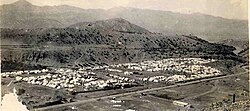
In November 1936, the government of India attempted to reassert control by moving troops through the Khaisora Valley. The plan involved two columns: one marching from the Razmak garrison (known as Razcol) and another from the Bannu Brigade advancing from Mirali. To avoid unnecessary escalation, troops were ordered not to take offensive action unless fired upon.
The operation failed to achieve its goals. Razcol came under heavy fire in a narrow valley, and the column from Mirali faced even stiffer opposition. With desperate supply lines and roughly 100 casualties, the British were forced to withdraw to Mirali. Rather than demonstrating strength, the retreat highlighted British vulnerability, causing Mirzali Khan's support to surge.
Escalation and Guerrilla Warfare
By April 1937, the insurrection had spread, drawing support from the Wazirs, Dawars, Mahsuds, Bettanis, and Afghan volunteers. The British responded by deploying four additional brigades, bringing their total force to 60,000 troops to combat roughly 4,000 tribesmen.
The tribesmen avoided decisive pitched battles, instead employing guerrilla tactics—small-scale, surprise attacks designed to keep the initiative. A notable example occurred in April 1937 at the Shahur Tangi defile, where a convoy from Wanna was ambushed using modern rifles and captured mountain guns, resulting in the deaths of seven officers and 45 men.
The British Response: Combined Arms
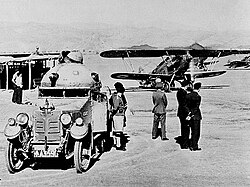
To counter the insurgency, the British utilized a strategy of "quartering" troubled areas and destroying hostile villages. This was achieved through a combination of ground and air power, including:
- Mechanized Artillery: Five batteries of mechanized field artillery.
- Armor: Two companies of Mk II and Mk IIb Light Tanks.
- Air Support: Six squadrons of aircraft, including Hawker Harts, Westland Wapitis, and Hawker Audaxs.
Campaign Conclusion and Aftermath
By December 1937, support for Mirzali Khan began to fade, leading the British to withdraw most additional brigades to avoid further inflaming the local population. While a significant attack on the town of Bannu occurred on July 23, 1938—resulting in up to 200 civilian deaths—the overall intensity of the conflict diminished by 1939.
The North West Frontier remained relatively peaceful until the end of British rule in 1947, when new rebellions emerged against the state of Pakistan.
| Category | Details |
|---|---|
| Belligerents | British Indian Army vs. Waziristan Tribes (supported by Germany and Italy) |
| Key Leaders | Mirzali Khan (Tribal) vs. John Coleridge, Thakur Mahadeo Singh, Muhammad Musa Khan (British) |
| British Casualties (1936–37) | 1,100 killed, 3,700 wounded |
| Tribal Casualties (1936–37) | 650+ killed, 650+ wounded |
| Primary Locations | Razmak, Bannu, Wanna, Khaisora Valley |
Frequently Asked Questions
Who was the Faqir of Ipi?
Mirzali Khan, known as the Faqir of Ipi, was a religious and political leader who led the tribal insurrection against the British Raj in Waziristan. He was a skilled agitator who used guerrilla warfare to resist British control.
Why did the Razcol expedition fail?
The expedition was intended as a demonstration of resolve, but the troops were ambushed in a narrow valley. Due to heavy casualties and a desperate supply situation, the British were forced to retreat, which inadvertently signaled weakness to the tribesmen.
What military technology did the British use to suppress the rebellion?
The British employed a combined arms approach, using Mk II and Mk IIb Light Tanks, mechanized field artillery, and various aircraft such as the Hawker Hart and Westland Wapiti for reconnaissance and close air support.
Did the British ever capture Mirzali Khan?
No, despite the deployment of thousands of troops and extensive air and ground operations, Mirzali Khan remained at large throughout the campaign.
What was the long-term result of the campaign?
The British achieved a tactical victory and the region remained relatively quiet from 1939 until the end of British rule in 1947, although the prestige of the Raj had been periodically damaged by tribal attacks.