Wall of Sound: Phil Spector's Orchestral Production Revolution
In the early 1960s, American producer and songwriter Phil Spector fundamentally altered the landscape of popular music. Developing a recording approach known as the Wall of Sound at Gold Star Studios in Hollywood, Spector sought to blend the raw, live spontaneity of 1950s rock 'n' roll with the grandeur of an orchestral scale. Rather than treating the studio as a mere place to capture a performance, Spector used it as a compositional tool to create what he described as "little symphonies for the kids."
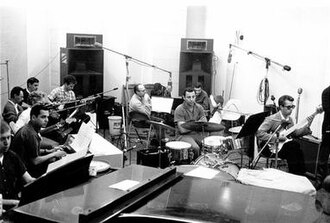
To achieve this massive sonic architecture, Spector employed a rotating ensemble of approximately twenty-five Los Angeles-based session musicians. This group, later famously dubbed the Wrecking Crew (and sometimes credited as the Phil Spector Wall of Sound Orchestra), provided the technical precision and versatility required for his ambitious arrangements.
Key Facts
- Origin: Developed by Phil Spector at Gold Star Studios in the early 1960s.
- Core Team: Primarily involved arranger Jack Nitzsche, engineer Larry Levine, and the Wrecking Crew musicians.
- Technical Approach: Used orchestral doubling, mono mixing, and heavy use of echo and reverb.
- Philosophy: A "Wagnerian" approach that quadrupled standard rock band lineups with brass, strings, and woodwinds.
- Legacy: Influenced Motown, psychedelia, sunshine pop, and later genres like shoegaze and dream pop.
The Architecture of Sound: Process and Technique
Spector's production style was a departure from the minimalism common in early rock and roll. He combined arranging, rehearsal, and mixing into a simultaneous process. By quadrupling the typical four-person band and adding orchestral sections, he created a dense, layered texture. He mixed exclusively in mono (single-channel audio) and pushed for extreme loudness.
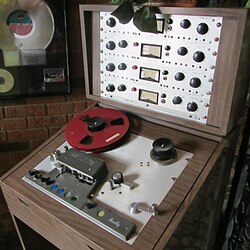
A critical component of this sound was the use of ambience, echo, reverb, and compression. These effects were heavily influenced by the constrained layout of Gold Star Studios. Spector spent hours "diffusing" instruments—a method of coupling orchestral doubling with specific microphone placement and level balancing. This created a natural chorusing or phasing effect that could not be replicated by electronic means at the time.
The Role of Gold Star Studios
The physical environment of Gold Star Studios was essential to the Wall of Sound. The recording space was remarkably small—approximately 23 by 35 feet with an 11.5-foot ceiling. This cramped space, combined with the studio's unique echo chambers, allowed the sound to bleed and blend in a way that created the signature "wall."
Collaborators and Commercial Success
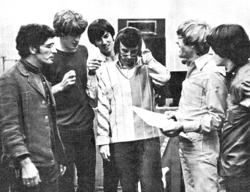
Between 1962 and 1966, Spector produced over a dozen U.S. top 40 hits. This success was largely due to a tight-knit circle of collaborators. Songwriting teams like Ellie Greenwich and Jeff Barry provided the material, while Jack Nitzsche handled the complex arrangements and Larry Levine managed the engineering.
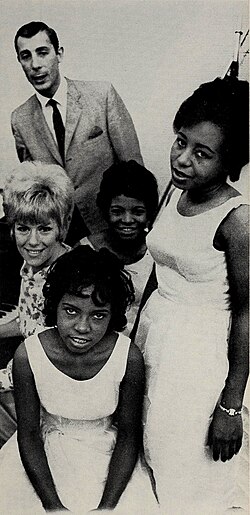

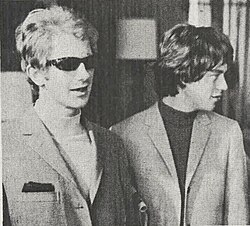
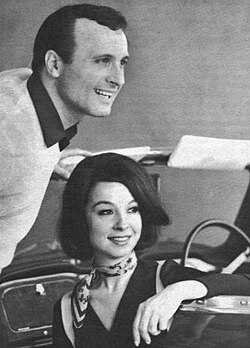
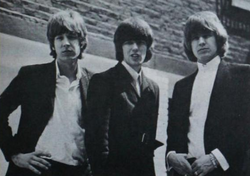
While Spector was the architect, other artists and producers also found success using similar approaches. In the UK, producer Johnny Franz applied these techniques for the Walker Brothers and Dusty Springfield, while Andrew Loog Oldham imitated the style for the Rolling Stones.
Evolution and Lasting Influence
The Wall of Sound did not remain static. By the mid-1960s, it was reconfigured by visionaries like Brian Wilson of the Beach Boys. Its influence spread into the Motown sound, French yé-yé, and later Philadelphia soul. In the 1970s, artists such as Bruce Springsteen (on Born to Run) and Meat Loaf (on Bat Out of Hell) utilized variants of the technique to create cinematic rock anthems.
![Roy Wood (left) and Jeff Lynne (right) were among producers of the 1970s who drew from Spector's techniques.[233]](/images/8d/7d/8d7d755c9429cc87a23de84550eae144978786b2e558e8d7e3703476b2ce446f.png)
By the 1980s, the use of large live ensembles waned, but the spirit of the Wall of Sound evolved into the indie and alternative movements. Genres such as shoegaze and dream pop—pioneered by bands like My Bloody Valentine and the Cocteau Twins—substituted orchestral layers with distorted guitars and digital effects to achieve a similar sense of sonic immersion.
![Described by Rolling Stone editors as "the Phil Spector of the Eighties and Nineties", Spector later dismissed Jim Steinman as a "bad clone of yours truly", a remark that Steinman welcomed.[244]](/images/54/bf/54bf7400e5a25b22674899ecaa98901bbff077f0a95921cc95972bc4f115c459.jpg)

Summary of Wall of Sound Impact
| Era | Key Artists/Producers | Notable Examples/Impact |
|---|---|---|
| Early 1960s | Phil Spector, The Ronettes, Righteous Brothers | U.S. Top 40 hits; creation of the "Spector Sound" |
| Mid 1960s | Brian Wilson, Johnny Franz, Andrew Loog Oldham | The Beach Boys, The Walker Brothers, Rolling Stones |
| 1970s | Bruce Springsteen, Meat Loaf, ABBA | Born to Run, Bat Out of Hell, "Waterloo" |
| 1980s-90s | My Bloody Valentine, Cocteau Twins | Shoegaze and Dream Pop (digital/guitar walls) |
Frequently Asked Questions
What exactly is the "Wall of Sound"?
It is a music production style developed by Phil Spector that uses large ensembles of musicians, orchestral doubling, and specific studio acoustics to create a dense, layered, and powerful monaural sound.
Why was Gold Star Studios so important to this sound?
The studio's small physical dimensions and unique echo chambers created a natural blending of instruments and a specific acoustic ambience that Spector found essential and irreplicable elsewhere.
Who were the Wrecking Crew?
The Wrecking Crew was a group of elite Los Angeles session musicians who provided the instrumental backbone for Spector's recordings, often playing in large groups to achieve the orchestral density he desired.
Did Phil Spector use stereo recording?
No, Spector mixed exclusively in mono. He believed that a single-channel mix allowed for greater control over the loudness and the cohesive "wall" effect.
How did the Wall of Sound influence modern music?
Beyond 1960s pop, it influenced the development of psychedelia and sunshine pop. In later decades, it inspired the distorted, immersive textures of shoegaze and dream pop bands.