Viscount Slim: The Military Genius and Governor-General of Australia
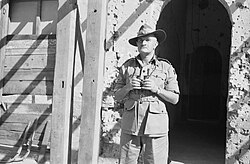
Field Marshal William Joseph Slim, 1st Viscount Slim (1891–1970), was one of the most distinguished British military commanders of the 20th century. Known affectionately by his troops as "Uncle Bill," Slim rose from modest social origins to reach the highest echelons of military and diplomatic service. His legacy is defined by his masterful leadership of the Fourteenth Army during the Burma campaign and his subsequent tenure as the 13th Governor-General of Australia.
Slim's career was characterized by a rare combination of tactical brilliance, humility, and a deep commitment to the welfare of his soldiers. From the trenches of the First World War to the jungles of Southeast Asia, he demonstrated an uncanny ability to turn defeat into victory.
Key Facts
- Full Name: William Joseph Slim, 1st Viscount Slim.
- Highest Military Rank: Field Marshal.
- Major Command: General Officer Commanding the Fourteenth Army in Burma.
- Political Role: 13th Governor-General of Australia (1953–1960).
- Key Victories: Battle of Kohima, Battle of Imphal, and the Battle of Central Burma.
- Notable Achievement: First Indian Army officer to be appointed Chief of the Imperial General Staff (CIGS).
Early Life and First World War
Born on August 6, 1891, in Bishopston, Bristol, Slim entered the military via the Birmingham University Officers' Training Corps. He was commissioned as a temporary second lieutenant in the Royal Warwickshire Regiment on August 22, 1914, just as the First World War erupted.
His early service was marked by hardship and bravery; he was badly wounded during the Gallipoli Campaign. Following his recovery, he served in the West India Regiment and later the 6th Gurkha Rifles, where he held the temporary rank of major by November 1918. He formally transferred to the Indian Army in 1919, beginning a lifelong association with the region.
Interwar Years and Literary Pursuits
Between the wars, Slim focused on professional development and education. He attended the Staff College, Quetta, and later taught at the Staff College, Camberley, from 1934 to 1937. He also attended the Imperial Defence College in 1937.
Interestingly, Slim possessed a strong literary streak. To supplement his modest army salary, he wrote novels and short stories under the pseudonym Anthony Mills. By 1939, he had risen to the rank of colonel and was appointed head of the Senior Officers' School in Belgaum, India.
Command in the Second World War
At the start of World War II, Slim commanded the 10th Indian Infantry Brigade in Sudan, participating in the East African campaign to liberate Ethiopia. Despite being wounded by aircraft strafing in Eritrea in 1941, he returned to service, eventually taking command of the 10th Indian Infantry Division in Iraq.
The Burma Campaign
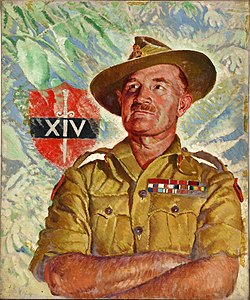
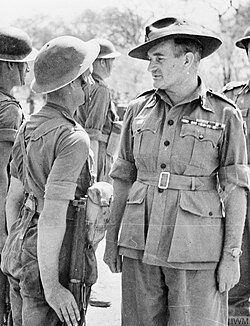
Slim's most significant contribution came in March 1942 when he was given command of the Burma Corps (BurCorps). Initially, his forces were outclassed by the mobile Japanese army and forced to withdraw to India. However, Slim rebuilt the army's morale and tactics, leading the Fourteenth Army to a series of stunning reversals.
Under his leadership, the Allied forces achieved critical victories at the Battle of Imphal and the Battle of Kohima, eventually pushing the Japanese out of Burma during the Battle of Central Burma. His ability to maintain troop morale in grueling jungle conditions earned him the enduring respect of his men.
Post-War Career and Political Service
After the war, Slim initially retired in 1948. However, he was brought back into service in 1949 by Prime Minister Clement Attlee to serve as the Chief of the Imperial General Staff (CIGS), the professional head of the British Army. He was the first officer from the Indian Army to hold this prestigious position.
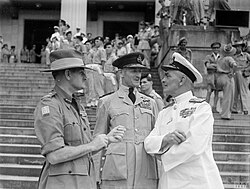
In 1953, Slim transitioned to a diplomatic role as the 13th Governor-General of Australia, serving until 1960. He was a popular figure in Australia, having fought alongside Australian troops in previous campaigns. During his tenure, he welcomed Queen Elizabeth II during her first visit to the country in 1954.
Final Years and Legacy
Upon returning to Britain, Slim published his acclaimed military memoir, Defeat into Victory (1956), and his broader memoirs, Unofficial History. He was created Viscount Slim in 1960 and served as the Constable and Governor of Windsor Castle from 1964 until his death on December 14, 1970.
Summary of Service and Honors
| Period | Role/Command | Key Location/Event |
|---|---|---|
| 1914–1918 | Second Lieutenant to Major | Gallipoli, Mesopotamia |
| 1934–1937 | Instructor | Staff College, Camberley |
| 1941–1942 | Major-General | East Africa, Iraq |
| 1942–1945 | GOC Fourteenth Army | Burma Campaign |
| 1949–1952 | Chief of the Imperial General Staff | United Kingdom |
| 1953–1960 | Governor-General | Australia |
Commemorations
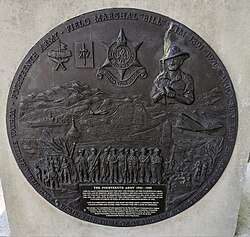
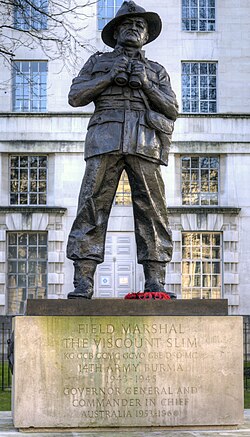
Today, Slim is remembered through various monuments, including a statue on Whitehall in London and a commemorative plaque in Bristol. His papers are preserved at the Churchill Archives Centre.
Frequently Asked Questions
What was Slim's most significant military achievement?
His most significant achievement was leading the Fourteenth Army to victory in the Burma campaign during World War II, specifically through the decisive battles of Imphal and Kohima, which halted the Japanese advance into India.
Why was he called "Uncle Bill"?
The nickname "Uncle Bill" reflected his unpretentious manner and the deep affection and trust he fostered among the soldiers under his command.
Did Slim have a career outside of the military?
Yes, Slim was a published author who wrote novels and short stories under the pen name Anthony Mills. He also served as the Governor-General of Australia and held positions on the boards of several major UK companies.
What is the significance of his appointment as CIGS?
His appointment as Chief of the Imperial General Staff was historic because he was the first officer from the British Indian Army to hold the position of professional head of the British Army.
What are his most notable written works?
He is best known for Defeat into Victory, a candid account of the Burma Campaign, and his memoirs titled Unofficial History.