Viceroyalty of Peru: The Rise and Fall of Spain's South American Stronghold
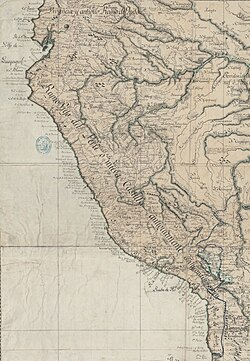
The Viceroyalty of Peru was one of the most significant administrative districts of the Spanish Empire, serving as the primary center of Spanish power in South America for nearly three centuries. Established in 1542, it evolved from the ruins of the Inca Empire into a sprawling colonial entity that funneled immense wealth—primarily in the form of silver—back to the Spanish Crown.
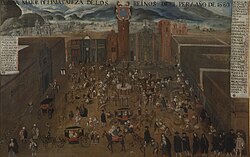
From its capital in Lima, the "City of Kings," the Spanish administration governed a vast territory that initially encompassed most of the South American continent. However, the viceroyalty's history is one of dramatic peaks and gradual decline, marked by economic booms, indigenous resistance, and eventual liberation.
Key Facts
- Duration: 1542 to 1824.
- Capital: Lima (1535–1821) and Cusco (1821–1824).
- Primary Wealth: Silver mining, centered largely at Potosí.
- Major Languages: Spanish (official), Quechua, Kichwa, Aymara, Puquina, and Mapudungun.
- End of Rule: Finalized by the Battle of Ayacucho on December 9, 1824.
The Conquest and Foundation
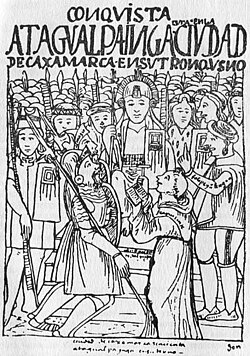
The seeds of the viceroyalty were sown in 1532 when Francisco Pizarro and his conquistadors arrived in Peru. Following a civil war between the Inca heirs Huáscar and Atahualpa, the Spanish encountered the Inca army in Cajamarca on November 16, 1532. The subsequent capture and execution of Emperor Atahualpa in 1533 paved the way for the Spanish conquest.
To formalize control, the Spanish Crown established the Viceroyalty of Peru on November 20, 1542. Lima was founded in 1535 as the administrative heart of the region, strategically positioned to manage the flow of wealth from the Andes to Spain via the Isthmus of Panama.
Economic Power and the Silver Boom
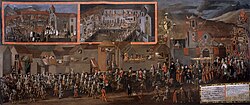
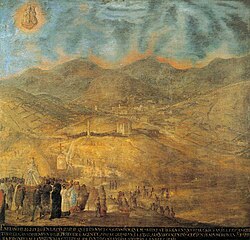
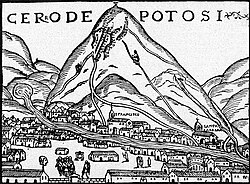
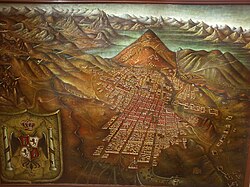
The economy of the viceroyalty was driven by mining. While several centers like Huancavelica and Cerro de Pasco were productive, the Cerro Rico of Potosí became the largest silver mine in the world. Potosí's output was so massive that the city grew to over 200,000 inhabitants, becoming the largest city in the Americas during the 16th and 17th centuries.
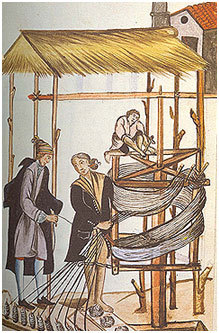
This production relied heavily on the mita system, a form of forced labor imposed on the indigenous population. The Crown claimed ownership of the highest-quality mines, while private owners paid a "Royal Fifth" (20%) tax on their findings.
Currency and Trade
Trade initially relied on rudimentary pieces called callana before transitioning to the peso. Eventually, the Spanish dollar became the standard currency. The wealth generated here not only funded the Spanish monarchy but also supported military campaigns, such as the Arauco War against the Mapuche people.
![Silver coin: 8 reales Carlos IV, Viceroyalty of Peru – 1800[17]](/images/39/8a/398a9fbd0885eb86a6a712a60650421e03e48a4cbdd15b5927bb18897efbb426.png)
Administrative Evolution and Territorial Loss
![The audiencia subdivisions of the Viceroyalty of Peru c. 1650, as numbered in the article.[note 3]](/images/58/08/58084bf182503975c3f1b4ca2c1d18ea18e71503531a233e2aa0350b6c8be82c.webp)
For over a century, the Viceroyalty of Peru held nearly unmatched authority in South America. However, the 18th century brought the Bourbon Reforms, a series of administrative changes designed to increase efficiency and revenue for Spain. These reforms led to the carving out of new viceroyalties:
- Viceroyalty of New Granada (1717/1740): Created from northern territories including Bogotá, Quito, and Panama.
- Viceroyalty of the Río de la Plata (1776): Created from southern areas including modern-day Argentina, Uruguay, and Paraguay.
These territorial losses shifted the economic center of gravity away from Lima toward Buenos Aires and reduced the overall prominence of the Peruvian viceroyalty.
Social Unrest and the Rebellion of Túpac Amaru II
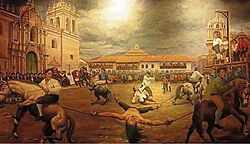
The late 18th century was marked by severe instability. Fiscal pressures, including a sales tax increase to 6% implemented by inspector José Antonio de Areche, fueled widespread discontent. This culminated in 1780 with the Rebellion of Túpac Amaru II, a descendant of the Inca royalty.
This uprising was the largest in Spanish colonial America, spanning from Peru to northern Argentina. Although it ended by 1783, it resulted in over 100,000 deaths and severely weakened the bond between the colonists and the Spanish Crown.
The Path to Independence
By the early 19th century, the viceroyalty became the final stronghold of Spanish royalism in South America. While other regions fell to revolutionary movements, Viceroy José Fernando de Abascal y Sousa successfully repressed internal uprisings and contained the advance of independence forces from Argentina and Chile.
The tide turned in 1820 when the Expedición Libertadora, led by José de San Martín and supported by the Chilean government and Admiral Thomas Cochrane, landed at Paracas Bay. Lima was occupied on July 21, 1821, and Peruvian independence was officially proclaimed on July 28, 1821.
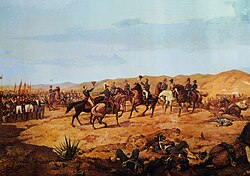
The final remnants of Spanish power were dismantled by Simón Bolívar and Antonio José de Sucre. The conflict concluded decisively at the Battle of Ayacucho on December 9, 1824, leading to the formal dissolution of the viceroyalty on December 30, 1824.
Summary of the Viceroyalty of Peru
| Category | Details |
|---|---|
| Established | November 20, 1542 |
| Dissolved | December 30, 1824 |
| Key Cities | Lima, Cusco, Potosí |
| Primary Export | Silver |
| Major Conflicts | Arauco War, Rebellion of Túpac Amaru II, War of Independence |
| Final Battle | Battle of Ayacucho |
Frequently Asked Questions
What was the primary source of wealth for the Viceroyalty of Peru?
The primary source of wealth was silver mining, most notably from the Cerro Rico of Potosí, which was the largest silver mine in the world at the time.
How did the population change after the Spanish conquest?
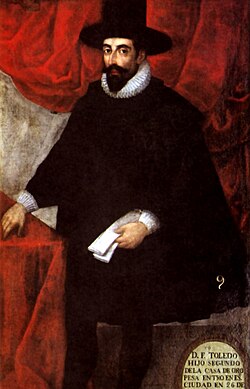
There was a massive demographic collapse. While Inca Peru had an estimated 12 million inhabitants, census figures under Viceroy Toledo 45 years later showed only 1.1 million indigenous people, largely due to Eurasian diseases like smallpox.
What were the Bourbon Reforms?
The Bourbon Reforms were 18th-century administrative and fiscal changes implemented by the Spanish Crown to increase revenue and control, which included creating the Viceroyalties of New Granada and Río de la Plata.
Who were the key figures in Peru's independence?
The liberation of Peru was primarily led by José de San Martín, who proclaimed independence in 1821, and Simón Bolívar, who commanded the final offensive against royalist forces.
What was the mita system?
The mita system was a colonial adaptation of an Inca labor draft, used by the Spanish to force indigenous people to work in the silver mines, particularly in Potosí.