Viceroy and Governor-General of India
The office of the Governor-General of India served as the primary link between the British monarchy and the Indian subcontinent for nearly two centuries. From its origins as a corporate administrative role under the East India Company to its final years as a ceremonial position in an independent dominion, the office mirrored the shifting political landscape of South Asia.
Initially established in 1773, the role evolved from managing a single presidency into overseeing a vast empire. Between 1858 and 1947, the holder also bore the title of Viceroy, acting as the direct representative of the British monarch, who held the title of Emperor or Empress of India.
Key Facts
- First Holder: Warren Hastings (Governor-General of Fort William, 1773).
- Final Holder: Chakravarti Rajagopalachari (Governor-General of the Dominion of India, 1948–1950).
- Key Transition: The office shifted from East India Company control to the British Crown in 1858.
- Dual Title: From 1858 to 1947, the official was known as the Viceroy and Governor-General of India.
- Abolition: The office was abolished on January 26, 1950, when India became a republic.
The Evolution of the Office
The East India Company Era (1773–1858)
The position began with the Regulating Act 1773, which created the Governor-General of the Presidency of Fort William in Bengal. This was a response to corruption within the East India Company (the chartered trading company that governed much of India). While the first Governor-General had direct control only over his own presidency, he supervised other Company officials across the region.
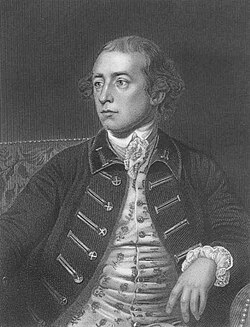
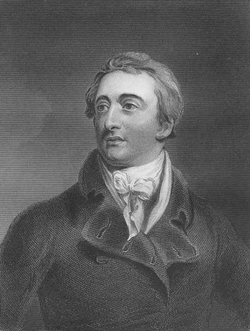
The Charter Act 1833 expanded this authority significantly, granting the Governor-General "superintendence, direction and control" over the entire civil and military government of British India. This act officially changed the title to Governor-General of India.
The British Raj and the Viceroyalty (1858–1947)
Following the Indian Rebellion of 1857, the British government ended Company rule and placed Indian territories under the direct control of the British Crown, establishing the British Raj. To reflect the official's role as the monarch's representative—particularly in dealings with the nominally independent princely states—the title of Viceroy (from the French roi for king) was added.
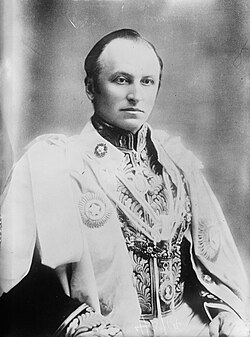
The Viceroy headed the central government, administering provinces such as Bengal, Bombay, Madras, and Punjab. He also managed relationships with powerful native rulers, such as the Nizam of Hyderabad and the Maharaja of Jammu and Kashmir. In 1920, the Chamber of Princes was created as a forum for these rulers to voice their needs to the government, presided over by the Viceroy.
Independence and the Dominion Era (1947–1950)
With the partition of India and Pakistan in 1947, the title of Viceroy was abolished. However, the office of Governor-General remained as a ceremonial representative of the monarch for the newly independent Dominion of India. Lord Mountbatten served as the final Viceroy and the first Governor-General of the independent state.
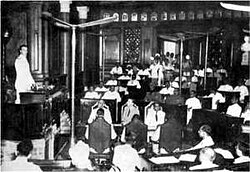
The role became almost entirely ceremonial, with actual power residing in the Indian cabinet. C. Rajagopalachari became the only Indian to hold the office before it was superseded by the President of India in 1950.
Administrative Structure and Residences
The Executive Council
The Governor-General was assisted by an executive council. Over time, the composition of this council shifted from being appointed by the Company's Court of Directors to being appointed by the British Sovereign and the Secretary of State for India. By 1909, the Viceroy could appoint up to sixty members to debate and vote on legislation.
Official Residences
The seat of power moved as the administration grew. Early governors resided at Belvedere House in Calcutta. Later, the grand Government House was built in Calcutta to reflect the prestige of the office.
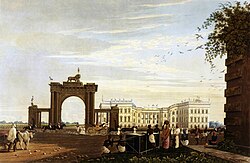
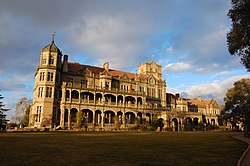
When the capital shifted to Delhi in 1912, the Viceroy moved to the newly constructed Viceroy's House (now known as Rashtrapati Bhavan). To escape the intense summer heat, the government relocated annually to the Viceregal Lodge in Shimla.
Summary of the Office
| Feature | British Raj (1858–1947) | Dominion of India (1947–1950) |
|---|---|---|
| Official Style | His Excellency | His Excellency |
| Primary Title | Viceroy and Governor-General | Governor-General |
| Appointer | Monarch of the United Kingdom | Monarch of India (on govt advice) |
| Primary Residence | Government House / Viceroy's House | Viceroy's House |
| Term Length | De facto five years (renewable) | At the Monarch's pleasure |
Frequently Asked Questions
What is the difference between a Governor-General and a Viceroy?
The Governor-General was the head of the civil and military government. The title of Viceroy was added in 1858 to specifically denote the official's role as the personal representative of the British monarch, particularly in relation to the princely states.
Who was the first and last person to hold the office?
Warren Hastings was the first Governor-General (of Fort William) in 1773. Chakravarti Rajagopalachari was the final Governor-General of the Dominion of India, serving until 1950.
Why did the government move to Shimla every summer?
The administration moved to the Viceregal Lodge in Shimla to escape the extreme heat of the plains, effectively shifting the seat of government for several months each year.
What happened to the office after 1950?
When India adopted its own Constitution and became a republic on January 26, 1950, the office of the Governor-General was abolished and superseded by the President of India.
What was the role of the Chamber of Princes?
Established in 1920, the Chamber of Princes was a forum where the rulers of the native princely states could communicate their needs and aspirations to the British government, with the Viceroy presiding over the meetings.