VfL Wolfsburg: The Rise and Evolution of the Wolves
Known affectionately as Die Wölfe (The Wolves) or Die Weißgrünen (The White and Greens), VfL Wolfsburg is a professional football club with a unique identity deeply intertwined with the industrial heart of Germany. Founded on September 12, 1945, the club has evolved from a local works team into a major competitor in German football, reaching the pinnacle of the sport with a historic league title.
Today, the club is owned by Volkswagen AG and operates out of the state-of-the-art Volkswagen Arena. While the club has experienced periods of immense success and sporting instability, its journey reflects the ambition and resilience of a team that has consistently fought to maintain its status among Germany's elite.
Key Facts
- Founded: September 12, 1945.
- Major Honours: Bundesliga winners (2008–09), DFB-Pokal winners (2015), and DFL-Supercup winners (2015).
- Stadium: Volkswagen Arena, with a capacity of 30,000.
- Ownership: Owned by Volkswagen AG.
- Current Status: Competing in the 2. Bundesliga for the 2025–26 season following relegation via play-offs.
From Industrial Roots to the Bundesliga
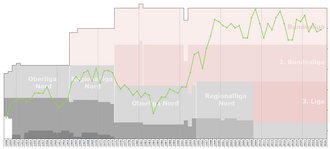
The club's origins trace back to the BSG Volkswagenwerk Stadt des KdF-Wagen, a typical works team associated with the Volkswagen plant. In its early years, the team competed in the Gauliga Osthannover, the top regional division of the time. Following World War II, the club made a steady ascent through the amateur ranks.
Wolfsburg first broke into the top-tier Oberliga Nord in 1954, though they struggled to maintain their position and were relegated in 1959. For the next several decades, the club fluctuated between the second and third divisions. A turning point arrived in the early 1990s; after consecutive first-place finishes in 1991 and 1992, the club advanced to the 2. Bundesliga. By 1997, following a strong second-place finish, Wolfsburg finally secured its place in the Bundesliga, the top tier of the German football league system.
The Golden Era: Titles and Trophies
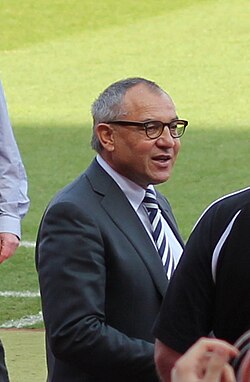
The most successful period in the club's history occurred under the leadership of head coach Felix Magath. In the 2008–09 season, Wolfsburg stunned the football world by winning the Bundesliga title, sealed with a 5–1 victory over Werder Bremen. This historic run was fueled by a record-equaling ten consecutive league wins after the winter break and the prolific scoring of Grafite and Edin Džeko.
This victory granted the club its first entry into the UEFA Champions League. The success continued into the mid-2010s. In the 2014–15 season, the club finished as Bundesliga runners-up and captured the DFB-Pokal (the German knockout cup) with a 3–1 win over Borussia Dortmund. They further cemented their dominance by winning the 2015 DFL-Supercup, defeating Bayern Munich on penalties.
Recent Challenges and Rebuilding
Following their peak, Wolfsburg entered a phase of sporting instability. The club faced several relegation battles, including narrow escapes via play-offs in 2017 and 2018. Despite these struggles, the club saw a resurgence under Oliver Glasner, who led the team to a fourth-place finish in the 2020–21 season, returning them to the UEFA Champions League.
However, the subsequent years were marked by frequent managerial changes, including tenures by Mark van Bommel, Niko Kovač, and Ralph Hasenhüttl. Most recently, the club has faced significant hardship, resulting in relegation to the 2. Bundesliga for the 2025–26 season. Under current head coach Tobias Strobl, the club is now focused on rebuilding and returning to the top flight.
Club Infrastructure and Records
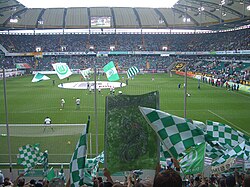
The club's home, the Volkswagen Arena, opened in 2002 and serves as a multi-purpose hub for the team. For its amateur and women's sections, the club utilizes the AOK Stadion. The facility is complemented by the VfL-Center and the VfL-FußballWelt, an interactive exhibition dedicated to the club's history.
| Category | Details |
|---|---|
| Full Name | Verein für Leibesübungen Wolfsburg e. V. |
| Stadium | Volkswagen Arena (30,000 capacity) |
| All-Time Top Scorer | Edin Džeko (85 goals) |
| Most Appearances | Maximilian Arnold (475 matches) |
| Primary Sponsor | Volkswagen |
Frequently Asked Questions
When did VfL Wolfsburg win the Bundesliga?
VfL Wolfsburg won the Bundesliga title once in their history, during the 2008–09 season, under the management of Felix Magath.
Who is the all-time leading goalscorer for the club?
Edin Džeko holds the record for the most goals scored for VfL Wolfsburg, with a total of 85 goals.
Which stadium does the team play in?
The men's professional team plays their home matches at the Volkswagen Arena, which has a capacity of 30,000 spectators.
What is the relationship between the club and Volkswagen?
The club was originally a works team for the Volkswagen plant and is currently owned by Volkswagen AG, which also serves as the primary shirt sponsor.
Has the club won any other major trophies?
Yes, in addition to the Bundesliga, Wolfsburg won the DFB-Pokal in 2015 and the DFL-Supercup in 2015.