Hertha BSC: The History and Legacy of Berlin's Old Lady
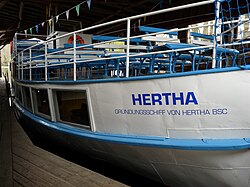
Hertha, Berliner Sport-Club e. V., widely known as Hertha BSC or Hertha Berlin, stands as one of the most storied professional football clubs in Germany. Based in the capital city of Berlin, the club is affectionately nicknamed Die Alte Dame (The Old Lady), a testament to its long-standing presence in the German sporting landscape.
Founded on July 25, 1892, Hertha BSC is not only a pillar of Berlin sports but was also a founding member of the German Football Association (DFB) in Leipzig in 1900. While the club currently competes in the 2. Bundesliga—the second tier of German football—following its relegation from the top flight in the 2022–23 season, its history is marked by periods of immense success and resilience.
Key Facts
- Founded: July 25, 1892
- Home Ground: Olympiastadion (Capacity: 74,475)
- Nickname: Die Alte Dame (The Old Lady)
- Current League: 2. Bundesliga
- Head Coach: Stefan Leitl
- President: Fabian Drescher
- Ownership: 777 Partners (78.8%) and Hertha BSC e. V. (21.2%)
A Journey Through Time
Early Years and National Success
From its inception in the late 19th century, Hertha BSC established itself as a dominant force in regional football. The club achieved significant early success, winning the German Championship in 1930 and 1931. During this era, they were a constant threat in national competitions, finishing as runners-up in 1926, 1927, 1928, 1929, and again in 1974–75.
The Modern Era and Bundesliga Transitions
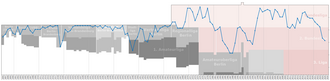
Hertha's journey through the professional ranks has been characterized by a period of oscillation between the first and second divisions. The club has secured the 2. Bundesliga title on three separate occasions: 1989–90, 2010–11, and 2012–13. In addition to league success, the club claimed the DFB-Ligapokal (League Cup) in 2001 and 2002.
The Olympiastadion Experience
Hertha BSC plays its home matches at the iconic Olympiastadion, a venue with a massive capacity of 74,475. The stadium underwent a significant renovation in 2004 to modernize the facilities for the fans and players. The club confirmed in 2016 that it would continue utilizing this historic ground as its home through 2025.
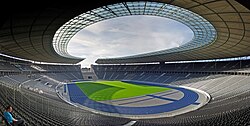
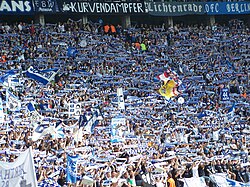
The atmosphere at the stadium is largely driven by the passionate supporters in the Ostkurve (East Curve), where the club's most fervent fans gather to cheer on the team.
Club Profile and Performance
The club's operational structure is currently led by President Fabian Drescher and Head Coach Stefan Leitl. On the pitch, the squad is a blend of international talent and domestic players, featuring athletes from nations including Croatia, Denmark, Austria, and Iceland.
Historically, the club has also made its mark in European competitions. In the UEFA Cup/Europa League, Hertha has maintained a respectable win percentage of 46.25% across 80 matches, including a run to the semi-finals in the 1978–79 season.
| Competition | Titles/Wins | Notable Runners-up |
|---|---|---|
| German Championship | 1930, 1931 | 1926, 1927, 1928, 1929, 1975 |
| 2. Bundesliga | 1990, 2011, 2013 | 1982 |
| DFB-Ligapokal | 2001, 2002 | 2000 |
| Berlin Cup | 13 Titles | 2006 |
| UEFA Cup | Semi-finals (1979) | N/A |
Frequently Asked Questions
What is the meaning of the nickname "Die Alte Dame"?
The nickname translates to "The Old Lady," referring to the club's long history and established status as one of the oldest and most traditional clubs in Berlin.
Where does Hertha BSC play its home games?
Hertha BSC plays at the Olympiastadion in Berlin, which has a capacity of 74,475 spectators.
Who are the current owners of the club?
The club is primarily owned by 777 Partners, who hold a 78.8% share, while Hertha BSC e. V. retains 21.2%.
Has Hertha BSC ever won the German national championship?
Yes, Hertha BSC won the German Championship twice, in 1930 and 1931.
Which league does Hertha BSC currently compete in?
Hertha BSC currently competes in the 2. Bundesliga, the second tier of the German football league system.