Venstre: The History and Evolution of Norway's Liberal Party
Founded in 1884, Venstre (meaning "Left" in Norwegian) emerged from a pivotal constitutional struggle over the governance of Norway. The party was established to advocate for parliamentarianism—the principle that a government must have the support of the parliament to remain in power—setting it in direct opposition to the conservatives, who formed the party Høyre ("Right").
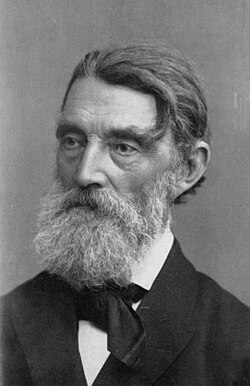
The victory of the parliamentarian movement marked a turning point in Norwegian history. Johan Sverdrup, the leader of Venstre, became the first Norwegian prime minister appointed based on holding a majority in the Storting (the Norwegian parliament).
Key Facts
- Founded: 1884 during the dispute over parliamentarianism.
- Major Achievements: Championed universal male suffrage (1898), the dissolution of the Swedish-Norwegian Union (1905), and universal women's suffrage (1913).
- First Female Leader: Eva Kolstad was elected as the first female political party leader in Norway in 1974.
- First Female Defense Minister: Eldbjørg Løwer served as Norway's first female minister of defense.
- Recent Governance: Joined the Solberg Cabinet in January 2018.
Early Dominance and Social Reform
In the decades following its inception, Venstre was a powerhouse in Norwegian politics, alternating government control with Høyre. Before 1935, the party produced six different Prime Ministers. By 1891, the party shifted toward more liberal-social tendencies, driving the majority of social policies and reforms regarding working conditions and social welfare up until 1914.
The Rise of Competition
Venstre's dominance began to wane with the growth of the Labour Party. The 1915 election was the final time Venstre secured an outright majority in the Storting. The party's influence was further diluted by the departure of members who formed the Bondepartiet (now the Centre Party) in 1920 and the Christian People's Party in 1933.
Crisis, Splits, and the Struggle for Representation
The late 20th century brought significant challenges. In 1972, a dispute over membership in the European Communities (now the European Union) caused a major split at a meeting in Røros. Pro-EC members, including party leader Helge Seip and 9 of 13 MPs, left to form the Liberal People's Party.
Following this split, Venstre's parliamentary presence dwindled. After the 1973 election, only two members remained. The party faced a period of extreme instability, losing all its seats in the Storting after the 1985 election. Although it merged back with the Liberal People's Party in 1988, it failed to win seats in 1989 and struggled to meet the 4% threshold for compensatory seats in 1993.
A notable moment of resilience occurred in 1993 when Lars Sponheim was elected directly from Hordaland. Sponheim famously fulfilled a wager to walk across the mountains from his home in Ulvik Municipality to the capital, Oslo, upon his election.
Return to Power and Modern Era
Venstre regained momentum in 1997, surpassing the 4% threshold and securing six seats. This led to the party's first cabinet participation since 1973 under Kjell Magne Bondevik's first minority government. This administration included Eldbjørg Løwer, who became Norway's first female minister of defense.
The party's fortunes continued to fluctuate. While the 2005 election yielded a strong result of 5.9% of the vote, the 2009 election saw the party fall below the 4% threshold, resulting in only two seats. This led to the resignation of Lars Sponheim and the unanimous election of Trine Skei Grande as leader in 2010.
In recent years, Venstre has returned to a role of influence. After crossing the threshold with 5.2% in 2013, the party initially provided a confidence and supply agreement to the Solberg Cabinet. By January 2018, Venstre formally joined the coalition, with Trine Skei Grande serving as Minister of Culture, Ola Elvestuen as Minister of Climate and Environment, and Iselin Nybø as Minister of Research and Higher Education.
Summary of Venstre's Political Milestones
| Year | Event/Achievement | Significance |
|---|---|---|
| 1884 | Party Formation | Established parliamentarianism in Norway |
| 1898 | Universal Male Suffrage | Expanded democratic voting rights |
| 1905 | Union Break-up | Independence from Sweden |
| 1913 | Universal Women's Suffrage | Achieved full gender equality in voting |
| 1972 | Røros Split | Party divided over EC/EU membership |
| 1974 | Eva Kolstad Elected | First female leader of a Norwegian political party |
| 2018 | Joined Solberg Cabinet | Returned to coalition government |
Frequently Asked Questions
What does the name "Venstre" mean?
Venstre is the Norwegian word for "Left," reflecting the party's original political positioning in opposition to the conservative Høyre ("Right").
Who was the first Prime Minister from Venstre?
Johan Sverdrup was the first prime minister appointed based on the support of a majority in the Storting.
Why did the party split in 1972?
The party split during a meeting in Røros due to a disagreement over whether Norway should join the European Communities (now the European Union).
What is the 4% threshold mentioned in the party's history?
The 4% threshold is the minimum percentage of the national vote a party must achieve to become eligible for levelling seats (compensatory seats) in the Storting.
Who was the first female leader of Venstre?
Eva Kolstad was elected as the leader of Venstre in 1974, making her the first woman to lead a political party in Norway.