Vasily Mikhailovich Severgin: A Pioneer of Russian Geology and Mineralogy
Vasily Mikhailovich Severgin (1765–1826) was a distinguished Russian academician, chemist, mineralogist, and geologist whose work laid the groundwork for earth sciences in Russia. A figure of international standing, Severgin held the unique distinction of being the only academician elected to the Geological Society of London for a period of three decades, cementing his role as a bridge between Russian and Western European scientific communities.
His contributions spanned from the chemical analysis of minerals to the foundational theories of how rocks are formed, making him one of the most influential pioneers of geology in his home country.
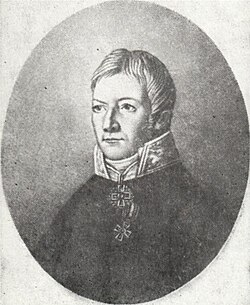
Key Facts
- Full Name: Vasily Mikhailovich Severgin.
- Lifespan: September 19, 1765 – November 29, 1826.
- Primary Fields: Chemistry, Mineralogy, and Geology.
- Major Achievement: Founding editor of the Tekhnologicheskii zhurnal.
- International Recognition: Long-term member of the Geological Society of London.
- Scientific Stance: Opposed neptunism, arguing that basalts formed from molten liquid.
Academic Journey and Education
Born in St. Petersburg to a court musician, Severgin's academic path began at the Gymnasium of the St. Petersburg Academy of Sciences in 1776. By 1784, he transitioned to university studies focusing on mineralogy. To further his expertise, he traveled to the University of Göttingen, where he completed his studies in 1789.
During his time in Germany, Severgin trained under J.F. Gmelin and conducted extensive research on regional basalts. This period was critical as it placed him at the center of the great geological debate of the era: the conflict between neptunists (who believed rocks formed from the crystallization of minerals in the ocean) and plutonists (who believed igneous rocks formed from molten magma).
Contributions to Geological Science
Upon returning to Russia in 1789, Severgin presented papers on basalt that challenged the neptunist view, arguing instead that these rocks originated from molten liquid. His appointment as adjunct chair of mineralogy allowed him to integrate the revolutionary chemical ideas of Antoine Lavoisier into the study of mineral chemistry.
Severgin was a prolific author and educator. In 1791, he published a work based on Kirwan's Elements of Mineralogy. However, his most significant literary contribution came in 1798 with his book on the foundations of mineralogy. This publication was the first Russian text to synthesize concepts of chemical analysis and the processes of rock formation.
Field Research and Exploration
Between 1802 and 1804, Severgin undertook extensive travels across western Russia, Poland, Finland, and the Baltic region. These expeditions were not merely academic; he visited mines, factories, and educational institutions while collecting a vast array of mineral samples to support his research.
The Tekhnologicheskii zhurnal
Beyond his research and teaching, Severgin was a champion of scientific communication. In 1803, he became the founding editor of the Tekhnologicheskii zhurnal. He dedicated the remainder of his life to this publication, serving as its editor until his death in 1826, providing a vital platform for technical and scientific discourse in Russia.
| Period/Year | Milestone/Achievement | Significance |
|---|---|---|
| 1789 | Studies at University of Göttingen | Research on basalts and training under J.F. Gmelin |
| 1791 | Publication based on Kirwan | Introduction of mineralogy elements to Russia |
| 1798 | Foundations of Mineralogy | First Russian text on chemical analysis and rock formation |
| 1802–1804 | Regional Expeditions | Sample collection across Russia, Poland, and Finland |
| 1803–1826 | Editor of Tekhnologicheskii zhurnal | Established a long-running technical periodical |
Frequently Asked Questions
What was Severgin's position on the formation of basalts?
Severgin argued against the neptunists, asserting that basalts were formed from molten liquid rather than crystallizing from the ocean.
Why was Severgin's 1798 book significant?
It was the first text written in the Russian language to address the combined concepts of chemical analysis and the formation of rocks.
Which international scientific society recognized Severgin?
He was elected to the Geological Society of London, where he remained the only Russian academician member for thirty years.
What was the Tekhnologicheskii zhurnal?
It was a technical journal founded and edited by Severgin starting in 1803, which served as a key publication for scientific and technological advancement in Russia.
Who influenced Severgin's approach to mineral chemistry?
Severgin based his examinations of mineral chemistry on the scientific ideas proposed by the chemist Antoine Lavoisier.