Systema Naturae: Carl Linnaeus and the Foundation of Biological Taxonomy
In the history of biological science, few works have exerted as much influence as Systema Naturae. Authored by the Swedish botanist, zoologist, and physician Carl Linnaeus (1707–1778), this monumental series of publications transformed how humanity organizes the natural world. By introducing a consistent method for naming and grouping organisms, Linnaeus provided the framework for what we now recognize as modern biological classification.
Originally written in Latin, the work evolved significantly over several decades. While the concept of binomial nomenclature—the use of two-part scientific names for species—was partially developed earlier by the Bauhin brothers, Gaspard and Johann, Linnaeus was the first to apply it consistently across his scientific writings. This consistency turned a fragmented collection of observations into a unified, global language for science.
Key Facts
- Author: Carl Linnaeus (Carl von Linné)
- Primary Subject: Taxonomy and biological classification
- Most Important Edition: The 10th edition, published in 1758
- Core Innovation: Consistent use of binomial nomenclature
- Scope: Originally listed approximately 10,000 species (6,000 plants and 4,236 animals)
- Legacy: The 10th edition is considered the starting point of modern zoological nomenclature
The Evolution of a Scientific Masterpiece
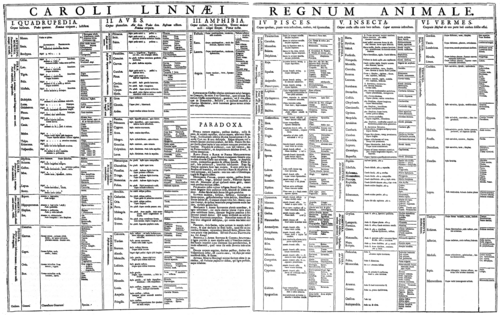
The publication history of Systema Naturae is a testament to the rapid expansion of scientific knowledge during the 18th century. The first edition, released in 1735, was a relatively slim volume of only 11 large pages. However, as new specimens were sent to Linnaeus from every corner of the globe, the work grew exponentially. By the time the 12th edition was published between 1766 and 1768, the work had expanded to a massive 2,400 pages.
As the work grew, so did the sophistication of the classification. In the early editions, Linnaeus followed the lead of his friend Peter Artedi, the "father of ichthyology," by classifying whales as fish. However, by the landmark 10th edition in 1758, Linnaeus corrected this, moving whales into the mammal class. This edition also saw the formal introduction of two-part names for animal species, mirroring the system he had established for plants in his 1753 work, Species Plantarum.
The Three Kingdoms of Nature
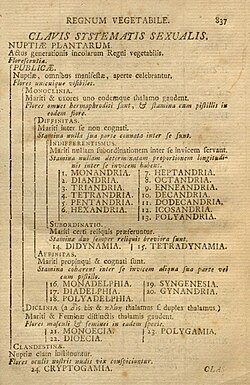
Linnaeus organized the natural world into three grand kingdoms: Animals, Vegetables (plants), and Minerals. This hierarchical structure allowed scientists to categorize life through classes, orders, genera, and species.
Plant Classification: The Sexual System
One of the most distinctive aspects of Linnaeus's botanical work was the Sexual System. This method classified plants based on their reproductive organs. The classes included:
- Monandria, Diandria, Triandria, Tetrandria, Pentandria, Hexandria, Heptandria, Octandria, Enneandria, Decandria, Dodecandria, Icosandria, and Polyandra
- Didynamia and Tetradynamia
- Monadelphia, Diadelphia, and Polyadelphia
- Syngenesia and Gynandria
- Monoecia, Dioecia, and Polygamia
- Cryptogamia
Mineral Classification
Even the non-living world was given a place within the system, divided into three primary classes:
- Petræ: Rocks
- Mineræ: Minerals and ores
- Fossilia: Fossils and aggregates
Scientific Impact and Legacy
The impact of Systema Naturae on the scientific community cannot be overstated. It provided the indispensable foundation for biological nomenclature, which is regulated today by various Nomenclature Codes. Because Linnaeus published many species and genera names so early, his names often take priority over those proposed by later scientists. In the field of zoology, there is only one major exception: the 1757 monograph Svenska Spindlar by Carl Clerck, which holds priority for certain names.
Beyond the names themselves, Linnaeus's success was driven by his ability to mobilize a network of skillful students. These researchers traveled abroad to collect specimens, ensuring that his system was applied to a vast and diverse array of life forms. By the end of the 18th century, the Linnaean system had become the global standard for biological classification.
Summary of Major Editions
| Edition | Year | Location | Significance |
|---|---|---|---|
| 1st Edition | 1735 | Leiden | The original publication (11 pages) |
| 10th Edition | 1758 | Stockholm | Starting point of zoological nomenclature |
| 12th Edition | 1766–1768 | Stockholm | The last edition under Linnaeus's authorship |
| 13th Edition | 1788–1793 | Leipzig | Published by Johann Friedrich Gmelin |
Frequently Asked Questions
What is binomial nomenclature?
Binomial nomenclature is a formal system of naming species of living things by giving each a name composed of two parts: the genus name and the specific epithet. Linnaeus popularized this system to create a consistent, universal language for biology.
Why is the 10th edition of Systema Naturae so important?
The 10th edition, published in 1758, is recognized as the official starting point for modern zoological nomenclature. It was in this edition that Linnaeus consistently applied the two-part naming system to animals.
Did Linnaeus classify all known species?
No. In his work, Linnaeus listed approximately 10,000 species, including about 6,000 plants and 4,236 animals. This was a significant achievement for the time, but it represented only a fraction of the world's biodiversity.
Who published the final editions of the series?
After Linnaeus's health declined, the series continued. Johann Friedrich Gmelin published an enhanced 13th edition between 1788 and 1793, which is recognized by zoologists as the final edition in the series.
Is there any exception to Linnaeus's priority in zoology?
Yes. The only major exception is Carl Clerck's 1757 monograph on Swedish spiders, Svenska Spindlar. The names established in that work take priority over Linnaean names.