Valens: The Roman Emperor of the East and the Disaster at Adrianople
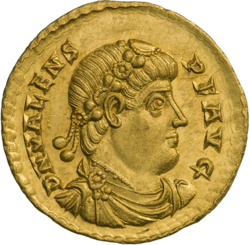
The history of the late Roman Empire is often defined by its struggle to maintain territorial integrity against migrating tribes and internal strife. Among the figures of this era, Valens (328–378 AD) stands as a complex and often tragic figure. Ruling the eastern half of the empire from 364 to 378 AD, Valens navigated a landscape of religious schisms, Persian aggression, and the catastrophic Gothic migrations that would eventually alter the course of Western civilization.
Valens did not ascend to the throne through a long line of succession but was elevated by his elder brother, Valentinian I. While his military career prior to the throne was largely unremarkable, his reign was characterized by a relentless effort to secure the frontiers and manage the administrative burdens of a sprawling empire.
![Marble bust possibly representing Valens or Honorius (Capitoline Museums)[citation needed]](/images/ed/53/ed5342cbb37780fa85a1a80cbbc5d86ab6f4d8b39d102be6745ece10d72698e7.jpg)
Key Facts
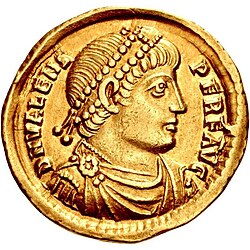
- Reign: 28 March 364 – 9 August 378 AD.
- Role: Co-emperor of the Roman Empire, specifically ruling the East.
- Religion: A follower of Semi-Arianism (specifically Homoean Christianity).
- Major Achievement: Construction of the Aqueduct of Valens in Constantinople.
- Defining Defeat: The Battle of Adrianople (378 AD), where he was killed.
- Dynasty: Valentinianic.
Early Life and Rise to Power
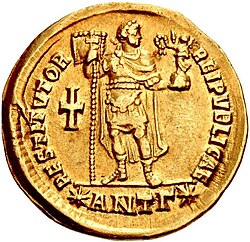
Born in 328 AD in Cibalae, Pannonia Secunda (modern-day Vinkovci), Valens was born into an Illyrian family with strong military ties. His father, Gratianus Funarius, was a senior officer and comes Africae. Valens and his brother Valentinian spent their youth on family estates in Britain and Africa, absorbing the diverse cultures of the empire.
The brothers were both Christians, though they adhered to different theological interpretations. While Valentinian followed Nicene Christianity, Valens embraced Arianism, a sect that differed on the nature of the relationship between God the Father and God the Son. Valens served in the protectores domestici (an elite imperial guard) under emperors Julian and Jovian. Notably, he reportedly resisted pressure to perform pagan sacrifices during Julian's polytheist reign.
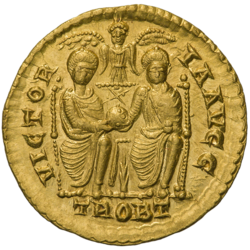
Following the death of Jovian in 364 AD, Valentinian I was acclaimed augustus. Recognizing the impossibility of ruling the entire empire alone, Valentinian appointed Valens as co-emperor on March 28, 364 AD, granting him authority over the eastern provinces.
The Challenges of the Eastern Empire
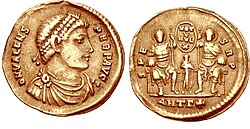
Valens' reign was a constant battle against internal usurpers and external threats. Early in his rule, he faced the challenge of Procopius, a usurper whom he eventually defeated in 366 AD. However, the most persistent threats came from the borders.
The Gothic Wars
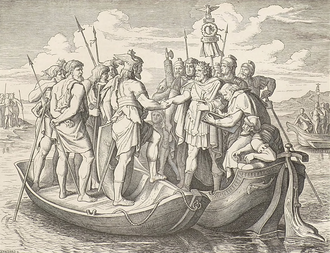
In 367 and 369 AD, Valens campaigned against the Visigoths across the Danube. While early efforts were inconclusive, a successful campaign in 369 AD forced the Gothic leader Athanaric to sue for peace, earning Valens the title Gothicus Maximus.
The Persian Frontier and Regional Revolts
To the east, Valens dealt with the perennial threat of Persia, particularly regarding control over Armenia. While his generals achieved several victories, such as those at Bagavan and Gandzak in 371 AD, the frontier remained volatile. His efforts were further complicated by internal uprisings, including a major revolt in Isauria (western Cilicia) and a rebellion by the Saracens under Queen Mavia in Phoenicia and Palestine.
Civil Infrastructure
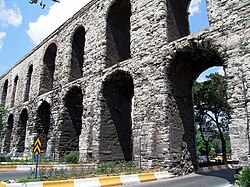
Despite the military turmoil, Valens contributed to the urban development of the capital. He inaugurated the Aqueduct of Valens in Constantinople, a massive engineering feat that was longer than all the aqueducts in Rome combined.
The Road to Adrianople
![Portrait head of Valens, or his brother, on a modern bust historically mislabelled as Constantine (Uffizi)[53]](/images/76/58/7658c792d3f98ff14730391899230c121c56b91f6bb7e02f717a66f2ecef8363.jpg)
The turning point of Valens' reign began in 376 AD. Driven by the westward migration of the Huns, the Visigoths under Fritigern sought asylum within the Roman Empire. Valens granted them entry, but the resettlement was a disaster. Local Roman officials were corrupt, selling food at exorbitant prices and accepting bribes to allow the Goths to keep their weapons.
By 377 AD, the Goths revolted, defeating Roman forces at the Battle of Marcianople. Valens, who had been preoccupied with the Persian frontier, returned to the Balkans to handle the crisis personally. However, a lack of coordination with his nephew, the Western Emperor Gratian, and poor tactical decisions led to a catastrophic confrontation.
The Battle of Adrianople (378 AD)
On August 9, 378 AD, the Roman army met the Goths near Adrianople. The result was one of the most crushing defeats in Roman history. The Roman infantry was surrounded and decimated. Accounts of Valens' death vary: some state he was killed by an arrow, while others suggest he died when Goths accidentally burned down a wooden hut where he had been carried for safety.
Legacy and Historical Assessment
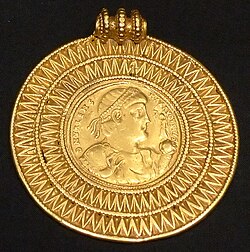
Historians view Valens with a mixture of criticism and nuance. A.H.M. Jones described him as a conscientious administrator who cared for the humble, yet lacked military genius and was plagued by suspicion. Edward Gibbon noted his personal moderation and efforts to reduce the tax burdens established by Constantine, but criticized his tendency toward proscriptions and executions driven by fear.
The defeat at Adrianople is regarded as the "beginning of the end" for Roman territorial integrity. It proved that the Roman army was not invincible and opened the floodgates for further barbarian encroachment into the empire's heartlands.
| Category | Details |
|---|---|
| Dynasty | Valentinianic |
| Co-Rulers | Valentinian I, Gratian, Valentinian II |
| Key Adversaries | Procopius, Visigoths, Sassanid Persians |
| Religious Affiliation | Semi-Arianism (Homoean) |
| Major Infrastructure | Aqueduct of Valens (Constantinople) |
| End of Reign | Killed at the Battle of Adrianople (378 AD) |
Frequently Asked Questions
Who appointed Valens as emperor?
Valens was appointed co-emperor by his elder brother, Valentinian I, on March 28, 364 AD, to help manage the administration of the vast Roman Empire.
What was the significance of the Battle of Adrianople?
The battle resulted in the death of Valens and a massive loss of Roman troops. It is historically viewed as a pivotal moment that signaled the decline of Roman territorial control and the beginning of significant barbarian incursions.
What was Valens' religious belief?
Valens was a Christian who followed Semi-Arianism, specifically the Homoean sect, which differed from the Nicene Christianity followed by his brother Valentinian I.
What is the Aqueduct of Valens?
It is a major water supply system built in Constantinople during Valens' reign, noted for being longer than the combined length of the aqueducts in Rome.
How did Valens die?
Valens died during the Battle of Adrianople in 378 AD. Historical accounts differ, suggesting he was either killed by an arrow or died when a hut he was sheltering in was set on fire by the Goths.