Meletius of Antioch and the Meletian Schism
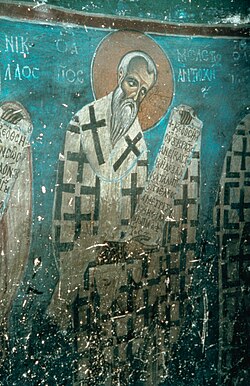
The history of the early Christian church was often defined by intense theological disputes over the nature of the Divine. One of the most complex figures of the 4th century was Meletius of Antioch, a man of noble birth and significant wealth who rose to become the Patriarch of Antioch. His tenure was marked by political instability, multiple exiles, and a deep ecclesiastical divide known as the Meletian Schism.
Meletius is remembered not only for his leadership during the First Council of Constantinople but also for his personal asceticism, which stood in stark contrast to his private riches. Today, he is venerated as a saint and confessor across the Roman Catholic, Eastern Orthodox, and Oriental Orthodox churches.
Key Facts
- Role: Patriarch of Antioch (360–381).
- Major Event: Presided over the First Council of Constantinople in 381.
- Theological Conflict: Central figure in the Meletian Schism, a dispute between two pro-Nicene factions.
- Exiles: Banished from Antioch three times (361–362, 365–366, and 371–378).
- Feast Day: 12 February.
Early Life and the Bishopric of Sebaste
Born in Melitene, Lesser Armenia, to wealthy parents, Meletius first entered the historical record around 357. Initially, he was associated with Acacius, the bishop of Caesarea, and supported the Homoean formula. This theological position argued that the Son is "like" the Father, intentionally avoiding specific references to essence or substance.
This alignment with the court party led to his appointment as the bishop of Sebaste. However, this appointment was met with strong resistance from the Homoousians—those who believed the Father and Son were of the "same essence," as defined in the Nicene Creed. Due to this friction, Meletius eventually resigned his see.
The Patriarchate and the Meletian Schism
In 360, Meletius became the Patriarch of Antioch. His leadership was immediately fraught with tension. By 361, he was exiled, possibly due to a sermon delivered to Emperor Constantius II that revealed Homoousian leanings, though some historians suggest the exile resulted from internal conflicts with the clergy.
During this period, the church in Antioch split into two rival pro-Nicene groups, creating the Meletian Schism. The primary difference was linguistic and conceptual:
- The Meletians: Maintained that the Father, Son, and Holy Spirit are three hypostases (distinct individual substances).
- The Eustathians: Preferred the term prosōpa (meaning "person" or "mask"), emphasizing a single hypostasis.
Basil of Caesarea criticized the Eustathian use of "prosōpa," arguing that it failed to sufficiently distinguish the Persons of the Trinity and risked aligning with Sabellianism, a heresy that viewed the Trinity as a single person appearing in different roles.
Exile and Eventual Triumph
Meletius' path to stability was hindered by the Arian emperor Valens, who exiled him twice more (in 365 and 371/372). The situation was further complicated when a presbyter named Vitalius was consecrated patriarch by the heretical Apollinaris of Laodicea.
The tide turned after the death of Valens in 378. The Western emperor Gratian and the Eastern emperor Theodosius I both favored Meletius, who had moved closer to the views of the Nicene Creed. Upon his return to Antioch, Meletius was recognized as the leader of orthodoxy. He presided over the great synod of Antioch in 379 and the Second Ecumenical Council (the First Council of Constantinople) in 381.
Death and Lasting Legacy
Meletius died shortly after the opening of the First Council of Constantinople. Emperor Theodosius honored him as a saint, and his body was returned to Antioch for burial. Despite his death, the schism persisted. While Flavian was consecrated as Meletius' successor, the Eustathians elected Evagrius as their own patriarch in 388.
Full reconciliation was a slow process. It was not until 399 that John Chrysostom helped secure a bridge between Flavian and the sees of Rome and Alexandria, and the Eustathians did not fully accept Flavian until 415.
| Category | Details |
|---|---|
| Birthplace | Melitene, Lesser Armenia |
| Tenure as Patriarch | 360–381 AD |
| Key Theological Stance | Three Hypostases (Meletian view) |
| Major Council | First Council of Constantinople (381) |
| Successor | Flavian I of Antioch |
Frequently Asked Questions
What was the primary cause of the Meletian Schism?
The schism was a dispute between two pro-Nicene groups in Antioch. The Meletians emphasized three distinct hypostases (substances), while the Eustathians used the term prosōpa (persons/masks) to emphasize the unity of the divine essence.
How did Meletius' theological views change over time?
Meletius began his career supporting the Homoean formula (the Son is "like" the Father). Over time, he moved toward the Homoousian position of the Nicene Creed, eventually being hailed as a leader of orthodoxy.
Why was Meletius exiled multiple times?
His exiles were the result of both theological and political conflicts. He was exiled under Arian emperors like Valens and faced opposition from rival clergy and other pro-Nicene factions who questioned his orthodoxy.
What role did Meletius play in the First Council of Constantinople?
Meletius presided over the First Council of Constantinople in 381, which is recognized as the Second Ecumenical Council, shortly before his death.
Who were the Eustathians?
The Eustathians were a pro-Nicene faction in Antioch who remained faithful to the memory of Eustathius of Antioch. They opposed Meletius due to his early theological associations and his preference for the term hypostasis over prosōpon.