Vaira Vīķe-Freiberga: The Legacy of Latvia's First Female President
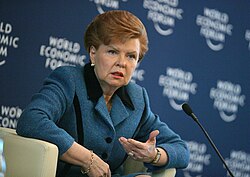
Vaira Vīķe-Freiberga is a distinguished Latvian politician, scholar, and diplomat who broke significant gender barriers as the sixth president of Latvia. Serving from 1999 to 2007, she remains the first and only woman to hold the office and the most recent president to be re-elected for a second term. Her tenure was marked by a steadfast commitment to democratic values and the strategic integration of Latvia into the Western political sphere.
Beyond her political achievements, Vīķe-Freiberga is an accomplished interdisciplinary scholar. Her work spans psychology, semiotics (the study of signs and symbols), and the analysis of Latvian oral literature. Throughout her career, she has balanced the rigors of high-level governance with a prolific academic output, publishing eleven books and numerous scientific articles.
Key Facts
- Presidency: Served as the 6th President of Latvia from July 8, 1999, to July 8, 2007.
- Historic First: The first and only woman to serve as President of Latvia.
- Diplomatic Success: Instrumental in securing Latvia's membership in both NATO and the European Union.
- Academic Background: Holds a PhD in psychology from McGill University.
- Global Leadership: Former president of the Club of Madrid and a candidate for UN Secretary-General in 2006.
Early Life and Global Education
Born in Riga, Latvia, on December 1, 1937, Vaira Vīķe's early life was shaped by the turbulence of World War II. In 1944, her family escaped the second Soviet occupation of Latvia, fleeing to a displaced persons camp in Lübeck, Germany. Her journey continued to Casablanca, French Morocco, in 1949, where she attended primary school and the Collège de jeunes filles de Mers-Sultan.
In 1954, the family relocated to Toronto, Canada. Vīķe pursued higher education at the University of Toronto, earning a Bachelor of Arts in 1958 and a Master of Arts in psychology in 1960. Her linguistic versatility—fluency in English, French, Latvian, Spanish, and German—allowed her to work as a translator and teacher before specializing in clinical psychology at the Toronto Psychiatric Hospital.
She furthered her academic credentials at McGill University in Montreal, where she earned her PhD in psychology in 1965. Her doctoral dissertation, supervised by Dr. Virginia Douglas, focused on concept learning in normal and hyperactive children.
Academic and Professional Career
From 1965 to 1998, Vīķe-Freiberga established herself as a prominent professor at the French-speaking University of Montreal. Her teaching portfolio included psychopharmacology (the study of how drugs affect the mind and behavior), psycholinguistics, and experimental methods. Her research primarily explored memory processes, language, and the cognitive effects of drugs.
Parallel to her psychological research, she conducted deep scholarly analysis of Latvian folksongs, utilizing structural analysis of computer-accessible texts. This period of her life was incredibly productive, resulting in ten books and approximately 160 articles and essays. In June 1998, she was named professor emerita and returned to Latvia after 54 years abroad to serve as the director of the newly founded Latvian Institute.
Presidency of the Republic of Latvia
Vīķe-Freiberga's entry into the presidency was unconventional; she was drafted by the Saeima (the Latvian Parliament) and elected on June 20, 1999. Throughout her two terms, she maintained high public approval ratings, ranging between 70% and 85%.
Her presidency was defined by two major geopolitical milestones: achieving membership in the European Union and NATO. She became a powerful voice for democracy and moral values on the world stage, delivering a notable address to a joint session of the United States Congress in 2006.
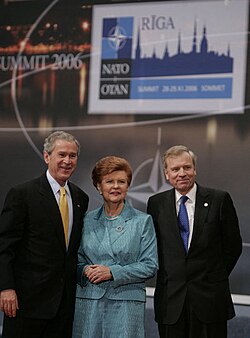
Her international influence extended to the United Nations, where Secretary-General Kofi Annan appointed her to a team of global leaders to promote UN reform. In 2006, the three Baltic States officially nominated her as a candidate for the post of United Nations Secretary-General.
Post-Presidency and International Influence
After leaving office in 2007, Vīķe-Freiberga remained a central figure in international diplomacy. She served as the president of the Club of Madrid from 2014 to 2020 and was the vice-chair of the Reflection group on the long-term future of the European Union. She has consistently advocated for a federal Europe and the necessity of acknowledging the entirety of European history.
She has held various prestigious roles, including chair of the European Commission High Level Expert Group on Media Freedom and a Senior Fellow at Harvard University's John F. Kennedy School of Government. She is also a member of the Global Leadership Foundation and the InterAction Council of Former Heads of State and Government.
Honors and Recognition
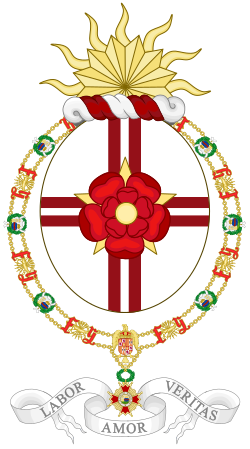
Vīķe-Freiberga's contributions to science and politics have been recognized with 37 Orders of Merit and 16 Honorary Doctorates. Notable awards include the Hannah Arendt Prize for political thought (2005) and the Knight of Freedom Award (2013). She is a fellow of the Royal Society of Canada and the World Academy of Art and Science.
| Category | Details |
|---|---|
| Education | BA & MA (University of Toronto), PhD (McGill University) |
| Presidential Term | 1999–2007 (6th President of Latvia) |
| Key Achievements | EU and NATO membership for Latvia |
| Academic Focus | Psychology, Psycholinguistics, and Semiotics |
| Major Post-Presidency Role | President of the Club of Madrid (2014–2020) |
Frequently Asked Questions
Was Vaira Vīķe-Freiberga the first woman president of Latvia?
Yes, she was the first and remains the only woman to hold the office of President of Latvia.
What were her primary achievements during her presidency?
She played a leading role in securing Latvia's membership in the European Union and NATO, while maintaining high domestic approval ratings.
What is her academic background?
She is a professor and interdisciplinary scholar with a PhD in psychology from McGill University, specializing in psycholinguistics and cognitive processes.
Which international organizations has she been involved with after her presidency?
She has been active in the Club of Madrid, the European Council on Foreign Relations, the Global Leadership Foundation, and the United Nations reform efforts.
How many languages does Vaira Vīķe-Freiberga speak?
She is fluent in English, French, Latvian, Spanish, and German.