UTC+08:00 Time Zone: Global Reach and Regional Applications
UTC+08:00 is a time offset that is eight hours ahead of Coordinated Universal Time (UTC). In practical terms, when it is midnight (00:00) at the UTC prime meridian, it is already 08:00 in regions observing this zone. Following the ISO 8601 standard, a timestamp in this zone is represented as +08:00.
Due to the massive population of China, UTC+08:00 is the most populous time zone in the world, encompassing an estimated 1.4 billion people. Because it is used across all predominantly Chinese-speaking regions, it provides a unified time for international Chinese television channels and websites. It has also been considered as a candidate for a potential ASEAN Common Time.
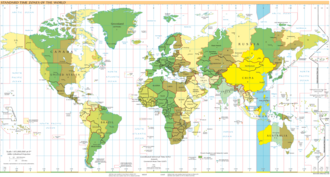
Key Facts
- Offset: 8 hours ahead of UTC.
- Central Meridian: 120 degrees East.
- Population: The world's most populous time zone.
- Major Regions: China, Malaysia, Philippines, Singapore, Western Australia, and parts of Indonesia and Russia.
- Notation: Primarily uses the 24-hour clock.
Regional Names and Adoption
Depending on the country, UTC+08:00 is known by various local names. In Indonesia, it is called Central Indonesia Time (Waktu Indonesia Tengah or WITA), while in Australia, it is Australian Western Standard Time. In Russia, it is referred to as Irkutsk Time or MSK+5.
North Asia
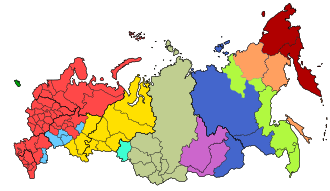
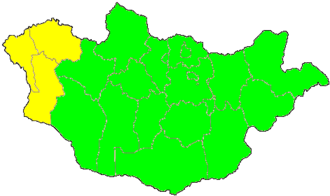
In Russia, this zone covers the Irkutsk Oblast and Buryatia within the Siberian and Far Eastern Federal Districts. In Mongolia, the eastern three-fourths of the country, including the capital Ulaanbaatar, observe this time.
East Asia
This zone is the standard for Mainland China (China Standard Time), Hong Kong (Hong Kong Time), Macau (Macau Time), and Taiwan (National Standard Time).
Southeast Asia
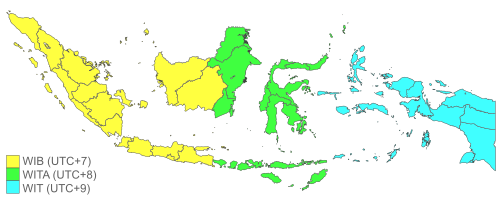
Several nations use UTC+08:00 as their primary standard, including Brunei, Malaysia, the Philippines, and Singapore. Indonesia uses it for its central region, covering all provinces in Sulawesi, the Lesser Sunda Islands (including Bali), and parts of Kalimantan.
Oceania and Antarctica
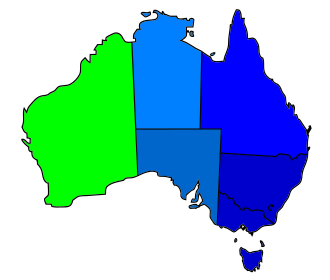
In Australia, Western Australia observes this time, with the exception of small areas like Eucla which unofficially use UTC+08:45. In Antarctica, Casey Station also operates on UTC+08:00.
Geographical vs. Official Time Discrepancies
There are significant differences between the geographical time zone (based on longitude) and the official time adopted by governments. The physical UTC+08:00 zone spans from 112°30′ E to 127°30′ E.
Areas using UTC+08:00 outside their physical zone
- Physical UTC+09:00: Parts of northeast China (Heilongjiang and Jilin) and easternmost Western Australia.
- Physical UTC+07:00: Singapore, Peninsular Malaysia, and large portions of central China (including Sichuan, Yunnan, and Inner Mongolia).
- Physical UTC+06:00: Most of the Tibet Autonomous Region and the Xinjiang Uyghur Autonomous Region. In Xinjiang, while UTC+08:00 is official, many locals unofficially observe UTC+06:00.
- Physical UTC+05:00: Western parts of Xinjiang (such as Kashgar).
Areas within the physical zone using different offsets
Conversely, some regions located within the 112°30′ E to 127°30′ E longitude range do not use UTC+08:00. This includes parts of Russia (Zabaykalsky Krai), East Timor (UTC+09:00), parts of Japan (Okinawa), and the western parts of Korea (Seoul and Pyongyang), all of which use UTC+09:00.
Summary of UTC+08:00 Usage
| Region/Country | Local Name | Scope |
|---|---|---|
| China | China Standard Time | National |
| Indonesia | Central Indonesia Time (WITA) | Central provinces/islands |
| Australia | Australian Western Standard Time | Western Australia |
| Russia | Irkutsk Time (MSK+5) | Irkutsk Oblast, Buryatia |
| Singapore/Malaysia | Standard Time | National |
Historical Changes
Time zone boundaries have shifted over time. Prior to April 30, 1975, the southern half of Vietnam (Republic of Vietnam) used UTC+08:00, placing it one hour ahead of North Vietnam. After reunification, the entire country adopted UTC+07:00.
In Indonesia, Presidential Decree 41/1987 reorganized time zones. East Timor previously used UTC+08:00 before changing to UTC+09:00 upon independence. Additionally, West and Central Kalimantan shifted from UTC+08:00 to UTC+07:00 to align with Java and Sumatra.
Frequently Asked Questions
Which is the most populous time zone in the world?
UTC+08:00 is the most populous time zone, primarily because it is the sole official time zone for Mainland China.
Does Western Australia always use UTC+08:00?
Most of Western Australia uses UTC+08:00, but some areas near Eucla unofficially observe UTC+08:45.
Why do some parts of China use UTC+08:00 despite being geographically in other zones?
China uses a single national standard time (China Standard Time) for administrative and political unity, despite the country's vast longitudinal span.
What is the difference between WITA and UTC+08:00?
WITA (Waktu Indonesia Tengah) is simply the local Indonesian name for the UTC+08:00 time offset.
Do any Antarctic locations use this time zone?
Yes, Australia's Casey Station in Antarctica operates on UTC+08:00.