US Dollar History: From Spanish Silver to Global Reserve Currency
The United States dollar is more than just a medium of exchange; it is a reflection of the nation's economic evolution. From its origins as a derivative of Spanish colonial silver to its current status as the world's primary reserve currency, the dollar has undergone numerous transformations in value, backing, and design.
Origins: The Influence of the Spanish Dollar
Long before the U.S. Mint existed, the Spanish milled dollar (also known as the Spanish peso or piece-of-eight) was the dominant trade coin across the Americas, Asia, and Europe. Produced from rich silver mines in Mexico City, Potosí, and Lima, these coins were highly regarded for their consistent weight and purity.
When the United States established its own currency, it did so at par with the Spanish dollar. This influence was so profound that Spanish, Mexican, and American dollars remained legal tender in the U.S. until the Coinage Act of 1857. Even the decision to create a 25-cent quarter dollar—rather than a 20-cent coin—was driven by the colonists' familiarity with the Spanish two-real quarter peso.
The Coinage Act of 1792
The formal foundation of the U.S. monetary system was laid by the Coinage Act of 1792. This legislation defined the dollar based on the Spanish milled dollar, establishing a decimal system where the dollar was divided into dimes (1/10), cents (1/100), and mills (1/1000).
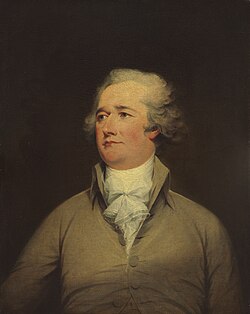
Alexander Hamilton played a pivotal role in finalizing these details. By assaying worn Spanish dollars, he determined an average fine silver content of 371 grains. Using a gold-to-silver ratio of 15, the government established the standard for the "eagle" (a 10-dollar gold coin) at 24.75 grains of fine gold.
Silver and Gold Standards of the 19th Century
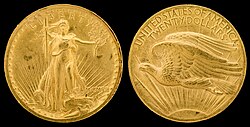
From 1792 until 1900, the U.S. operated on a bimetallic standard, meaning the dollar was defined by both silver and gold. However, this balance shifted over time. The Coinage Act of 1834 revised the gold equivalent to 23.2 grains, and later adjustments in 1837 set it at 23.22 grains.
The California Gold Rush caused silver coins to vanish from circulation as silver prices rose. In response, the Coinage Act of 1853 reduced the silver content for coins valued under one dollar, while maintaining the standard silver dollar for those wishing to convert bullion.
The Evolution of Paper Money
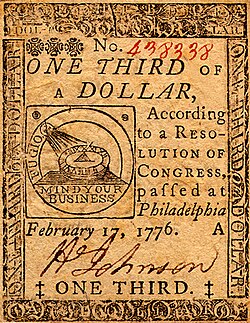
Early American paper money had a rocky start. During the Revolution, the Continental Congress issued "Continental Currency," which depreciated so severely that it inspired the phrase "not worth a continental." This failure led the U.S. Constitution to forbid states from making anything but gold and silver coin a legal tender for debts.
In the 19th century, the government issued various notes to finance wars and economic crises:
- Treasury Notes: Interest-bearing short-term debt used during the War of 1812 and the Civil War.
- Demand Notes: Non-interest notes redeemable for precious metals on demand.
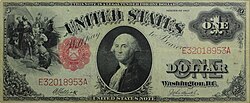
- United States Notes: Introduced by the Legal Tender Act of 1862, these were not redeemable on demand but were legal tender.
The Transition to the Gold Standard and Beyond
The era of bimetallism effectively ended with the Coinage Act of 1873, which suspended the minting of the standard silver dollar—an event critics called the "Crime of '73." The Gold Standard Act of 1900 officially severed the link to silver, defining the dollar solely in terms of fine gold.
The 20th century brought drastic changes. In 1933, Executive Order 6102 mandated the confiscation of gold coins. The final break occurred on August 15, 1971, during the "Nixon Shock," when the U.S. ended the convertibility of dollars into gold. Since then, the dollar has floated freely on foreign exchange markets.
The Modern Era: Federal Reserve and Global Reserve Status
The Federal Reserve Act of 1913 created the Federal Reserve System to provide an elastic currency and supervise the banking system. Today, all U.S. banknotes are issued exclusively as Federal Reserve Notes.
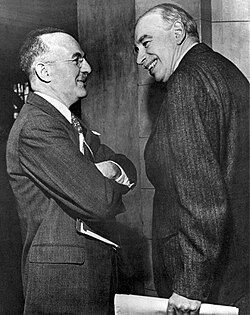
Following World War II, the 1944 Bretton Woods Agreement established the U.S. dollar as the primary global reserve currency, linked to gold while other currencies were linked to the dollar. This agreement also created the International Monetary Fund (IMF) and the World Bank Group.
This position grants the U.S. an "exorbitant privilege," allowing it to borrow heavily in its own currency at minimal interest rates without facing the typical balance-of-payments crises that affect other nations.
Key Facts
- Origin: Modeled after the Spanish milled dollar (piece-of-eight).
- Decimalization: Established by the Coinage Act of 1792 (1 dollar = 100 cents).
- Bimetallism: The U.S. used both gold and silver standards until 1900.
- Gold Standard: Officially ended in 1971 via the "Nixon Shock."
- Current Note Type: All current U.S. banknotes are Federal Reserve Notes.
- Global Role: Primary international reserve currency since the 1944 Bretton Woods Agreement.
| Era/Act | Primary Backing/Standard | Key Characteristic |
|---|---|---|
| 1792 Coinage Act | Bimetallic (Gold & Silver) | Decimal system based on Spanish dollar |
| 1862 Legal Tender Act | Fiat (U.S. Notes) | Non-redeemable notes during Civil War |
| 1900 Gold Standard Act | Gold Only | Repealed link to silver |
| 1944 Bretton Woods | Gold-linked Dollar | Dollar becomes primary global reserve |
| 1971 Nixon Shock | Floating Exchange | End of gold convertibility |
Frequently Asked Questions
Why does the U.S. use a 25-cent quarter?
The quarter dollar was issued because colonists were already familiar with the Spanish two-real quarter peso, making it a more practical choice than a 20-cent coin.
What was the "Crime of '73"?
This refers to the Coinage Act of 1873, which suspended the minting of the standard silver dollar, effectively ending the bimetallic era and moving the U.S. toward a gold standard.
Why are there no living people on U.S. currency?
By law, only the portraits of deceased individuals may appear on United States currency.
What is the "exorbitant privilege" of the U.S. dollar?
It is the ability of the U.S. government to borrow heavily from global capital markets in its own currency at low interest rates without risking a balance of payments crisis.
What are Federal Reserve Notes?
They are the current form of U.S. paper currency, authorized by the Federal Reserve Act of 1913 and the only type of note issued by the U.S. since 1971.