US Capitol Cornerstone: Artifacts and Commemorations
The laying of the cornerstone of the United States Capitol was more than a construction milestone; it was a symbolic event that left behind a legacy of historical artifacts and enduring traditions. From the tools used by George Washington to the modern efforts to relocate the original stone, the history of the Capitol's foundation continues to fascinate historians and the public alike.
Key Facts
- The Trowel: Used by Washington and later employed in ceremonies for the Washington Monument and National Cathedral.
- The Gavel: Gifted by Washington to Valentine Reintzel; currently stored in a PNC Bank vault.
- The Cornerstone: Rediscovered in 1993 by Architect of the Capitol George White using advanced radar technology.
- The Centennial: A massive 1893 celebration attended by approximately 150,000 people.
The Sacred Artifacts of the Ceremony
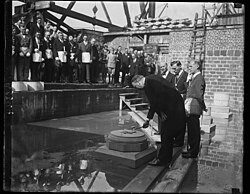
Several items used during the original ceremony have been preserved as significant historical relics. Among the most notable is the trowel used by George Washington. This tool is now on display at the George Washington Masonic Memorial in Alexandria, Virginia. Its legacy extended beyond the Capitol, as it was later used in cornerstone ceremonies for the Herbert Hoover Building, the British embassy chancery, the Jefferson Memorial, the Washington Monument, and the National Cathedral.
The gavel, used to strike the cornerstone three times, followed a different path. Washington presented it to Valentine Reintzel, the Worshipful Master of Lodge 9 of Maryland (now Potomac Lodge No. 5). Following Reintzel's death in 1817, his family donated the gavel to the lodge. In 1922, it was moved to the vault of Riggs National Bank (now PNC Bank), though it has been retrieved for major events, including the cornerstone ceremonies of the Washington Monument and the National Cathedral.
Other attire, such as the apron and sash worn by Washington, are also of historical interest. While popular belief suggests they were embroidered and gifted by the Marquise de La Fayette, contemporary research disputes this claim. The apron is currently held by the Masonic Grand Lodge of Pennsylvania.
The Search for the Lost Cornerstone
Over two centuries, the precise location of the original cornerstone was lost due to building expansions and various attacks. It remained hidden until 1993, when George White, the Architect of the Capitol, led a sophisticated search. Using ground-penetrating radar (a geophysical method using radar pulses to image the subsurface), electromagnetic induction, and induced polarization, White located a large ceremonial stone buried beneath a section of the foundation.
While the stone was found, the original silver plaque was missing. Experts believe the plaque was likely destroyed or dislodged during the construction of the Senate chambers in 1850.
Centennial and Bicentennial Observances
The anniversary of the cornerstone laying has been marked by grand celebrations. On September 18, 1893, a centennial rededication took place, mirroring the 1793 event. President Grover Cleveland led a massive parade featuring the presidential state coach, U.S. Army cavalry, Masonic lodges, lineage societies (such as the Society of the Cincinnati and the Aztec Club of 1847), federal military forces, and local fire brigades. The event, which included a 1,500-person choir and a two-hour speech by William Wirt Henry, drew an estimated 150,000 spectators.
A more modest bicentennial rededication was held on September 18, 1993, organized by George White. This event was attended by the Grand Masters of all 50 U.S. grand lodges. During this ceremony, White announced that a tricentennial observance is scheduled for Friday, September 18, 2093.
Artistic Depictions of the Event
The ceremony has been immortalized in various works of art. Thomas Crawford's 1868 work, the George Washington and the Revolutionary War Door, features the event. Additionally, artist Allyn Cox created two murals: one located in the chambers of the U.S. House of Representatives and another on the side of the Washington Masonic National Memorial.
For the bicentennial, the Supreme Council of the Scottish Rite commissioned John Melius, a former Smithsonian historical artist, to paint an accurate oil-on-canvas representation of the ceremony, which now hangs at the House of the Temple.
Summary of Key Artifacts and Events
| Item/Event | Current Location/Date | Significance |
|---|---|---|
| Trowel | George Washington Masonic Memorial | Used for multiple DC landmark ceremonies |
| Gavel | PNC Bank Vault | Gifted to Valentine Reintzel; used for National Cathedral |
| Cornerstone | Capitol Foundation | Rediscovered in 1993 via radar |
| Centennial | September 18, 1893 | Attended by 150,000 people; led by Grover Cleveland |
| Bicentennial | September 18, 1993 | Attended by Grand Masters of all 50 states |
Frequently Asked Questions
Where is the original cornerstone located now?
The cornerstone is located beneath a section of the U.S. Capitol foundation, where it was rediscovered in 1993 by Architect of the Capitol George White.
What happened to the silver plaque that was on the stone?
The silver plaque was not found during the 1993 excavation; experts believe it was destroyed or dislodged during the 1850 construction of the Senate chambers.
Which artifacts from the ceremony are still in use today?
The trowel and the gavel have both been used occasionally in subsequent Masonic cornerstone ceremonies for important buildings, such as the Washington Monument and the National Cathedral.
Who led the centennial celebration in 1893?
President Grover Cleveland led the centennial parade and delivered the opening remarks for the rededication ceremony.
When will the tricentennial observance take place?
The tricentennial observance is scheduled to occur on Friday, September 18, 2093.