Uruguayan War: The Conflict That Sparked the Paraguayan War
The Uruguayan War, fought from August 10, 1864, to February 20, 1865, was a pivotal conflict in the Platine region. While relatively short in duration, this war fundamentally reshaped the political landscape of South America and served as the immediate catalyst for the devastating Paraguayan War. The struggle pitted the governing Blanco Party of Uruguay against a powerful alliance comprising the Empire of Brazil and the Uruguayan Colorado Party, with covert support from Argentina.
At its core, the war was the culmination of long-standing internal strife between the Colorados and Blancos—two political factions that had fought for control of Uruguay since its independence. This internal rivalry eventually drew in neighboring superpowers, transforming a civil insurrection into an international crisis.
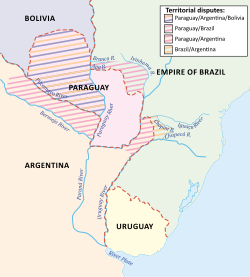
Key Facts
- Duration: August 10, 1864 – February 20, 1865.
- Primary Belligerents: The Empire of Brazil and the Colorado Party vs. the Blanco Party.
- Key Outcome: A Brazilian–Colorado victory and the installation of a friendly government in Montevideo.
- Strategic Impact: The conflict revealed Brazilian military vulnerabilities and triggered the Paraguayan War.
- Major Cities Involved: Montevideo, Paysandú, and Salto.
The Roots of Conflict: Blanco and Colorado Strife
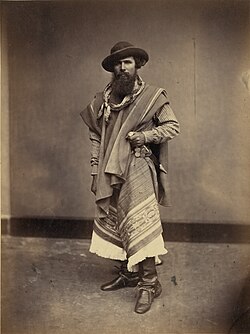
Uruguay had been plagued by intermittent struggles between the Colorado and Blanco factions for decades. In 1863, the Colorado leader Venancio Flores launched the "Liberating Crusade," an insurrection designed to overthrow the fusionist government of Bernardo Berro. Flores did not act alone; he secured the support of Argentine President Bartolomé Mitre, who provided river transport, supplies, and volunteers.
This alliance was born of mutual convenience. Argentina was fragmented, with the State of Buenos Aires and the Argentine Confederation competing for dominance. Flores had previously helped Buenos Aires secure victory at the Battle of Pavón in 1861, and Mitre's support for the Colorados was a repayment of that political debt.
International Escalation and Brazilian Intervention
The conflict expanded as the Empire of Brazil became entangled in Uruguayan affairs. The border between Brazil's Rio Grande do Sul province and Uruguay was a chaotic zone of cattle-rustling and violence. Approximately 18 percent of the Uruguayan population (about 40,000 people) spoke Portuguese and identified as Brazilian.
Tensions peaked when the Uruguayan president attempted to tax cattle from Rio Grande do Sul and restrict the use of Brazilian slaves—despite slavery having been outlawed in Uruguay years prior. Brazilian land barons, such as David Canabarro and Antônio de Sousa Neto, pressured the Empire to intervene. While some in the Brazilian government were skeptical of the claims, the Empire decided to act, fearing that showing weakness would invite conflict with the British Empire, with whom Brazil was already experiencing diplomatic tension.
Military Campaigns and the Fall of the Blancos
Brazil initially attempted diplomacy through Minister Plenipotentiary José Antônio Saraiva. However, when the Uruguayan government under Atanasio Aguirre refused Brazilian ultimatums, the Empire launched a military campaign. Notably, Brazil did not formally declare war, leaving the conflict as an undeclared war for most of its duration.
The Advance on Salto and Paysandú
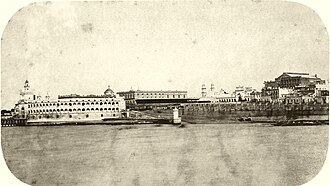
The Brazilian Army of the South, supported by naval forces, began a systematic campaign to dismantle Blanco control. In October 1864, Brazilian forces occupied Melo. By November, a joint Brazilian-Colorado force besieged the town of Salto, which surrendered on November 28.
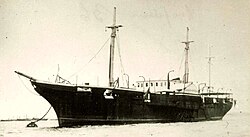
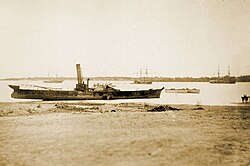
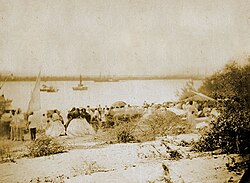
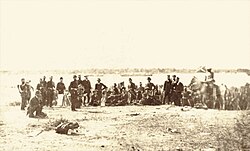
The siege of Paysandú became one of the most intense episodes of the war, characterized by heavy fighting and the displacement of civilians as the Brazilian navy and army closed in on the garrison.
The Siege of Montevideo
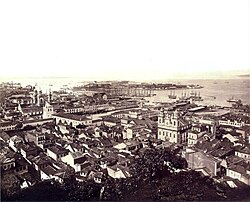
By early 1865, the Brazilian government mobilized additional troops from Rio de Janeiro and Bahia. The Army of the South grew to over 8,000 men. By February 2, the capital, Montevideo, was under a full naval blockade and siege. Although the city was defended by nearly 4,000 men, they lacked combat experience.
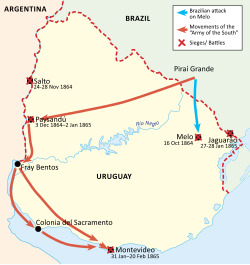
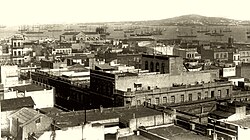
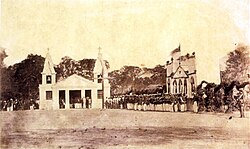
To avoid the international outcry that would follow the total destruction of the capital, Brazil and the Colorados opted for an armistice rather than a full-scale assault, leading to the capitulation of the Blanco government.
War Summary and Aftermath
The war ended in a decisive victory for the Brazilian-Colorado alliance, but the strategic victory was hollow. While Brazil successfully installed a friendly regime in Uruguay, the campaign exposed significant military weaknesses. This perceived fragility emboldened Paraguay, which sought to exploit the situation, leading directly to the outbreak of the Paraguayan War.
| Category | Details |
|---|---|
| Dates | August 10, 1864 – February 20, 1865 |
| Belligerents | Empire of Brazil & Colorados vs. Blancos |
| Key Leaders | Pedro II, Venancio Flores, Bartolomé Mitre, Atanasio Aguirre |
| Brazilian Casualties | Estimated 549 to 616 (including dead and wounded) |
| Primary Result | Brazilian-Colorado victory; installation of a friendly government |
| Long-term Consequence | Triggered the Paraguayan War |
Frequently Asked Questions
What was the primary cause of the Uruguayan War?
The war was caused by a combination of internal political strife between the Blanco and Colorado parties and external pressures from Brazil and Argentina, specifically regarding border disputes, cattle taxation, and the treatment of Brazilian citizens in Uruguay.
Why did the Empire of Brazil intervene in Uruguay?
Brazil intervened to protect the interests of Brazilian land barons in the frontier region, to respond to the Uruguayan government's taxes on cattle, and to project strength during a period of diplomatic tension with the British Empire.
Who were the Colorados and Blancos?
The Colorados and Blancos were the two dominant, opposing political factions in 19th-century Uruguay. Their struggle for power often led to civil unrest and invited intervention from neighboring South American nations.
How did this war lead to the Paraguayan War?
Although Brazil won the Uruguayan War, the campaign revealed military inefficiencies and weaknesses. Paraguay viewed this as an opportunity to intervene in the region, leading to an attack on Brazilian and Argentine provinces.
Was the Uruguayan War a formally declared war?
No. For the majority of the conflict, the Empire of Brazil declined to acknowledge a formal state of war, making it an undeclared conflict.