Ursuline Nuns in New Orleans: A Legacy of Education and Healthcare
The history of New Orleans is deeply intertwined with the arrival and dedication of the Ursuline sisters. Beginning in the early 18th century, these women brought a commitment to spiritual growth, academic excellence, and medical care to the burgeoning colony of Louisiana, leaving an indelible mark on the city's cultural and social landscape.
The Journey to the New World
In 1726, King Louis XV of France mandated that three Ursuline nuns from Rouen travel to New Orleans. Their mission was twofold: to establish a hospital for the impoverished sick and to provide education for the daughters of wealthy families. At the request of Governor Étienne Perier, a group of fourteen nuns embarked on this arduous journey.
Among the group were Sister Saint-Augustin (Marie Tranchepain, the mother superior), Sister Angélique (Marie le Boullanger), and Dame Jude from Rouen, as well as Mother François-Xavier from le Havre and Madame Cavelier from Elbeuf. The party also included two postulants—Sister le Massif from Tours and Marie-Madeleine Hachard from Rouen—along with three nuns from Brittany (two from Ploërmel and one from Hennebont).
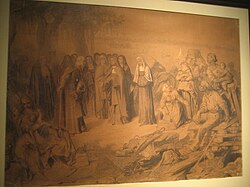
The voyage was grueling, lasting five months instead of the expected three. Upon their arrival in July 1727, the sisters were temporarily housed in one of the city's larger residences. Much of what is known about this journey comes from the letters of Marie-Madeleine Hachard to her father, which were published in 1728 by Antoine le Prévost.
Pioneering Education and Healthcare
The Ursulines believed that educating women was fundamental to creating a just, spiritual, and civilized society. To this end, they founded the Ursuline Academy in 1727, which became the first boarding school in Louisiana. The academy served not only local residents but also Catholic Hispanic girls and women from privileged families across central and South American countries.
Beyond the classroom, the sisters were pioneers in medicine and music. They established the first school of music in New Orleans and founded an orphanage and one of the city's first hospitals. Their medical work was extensive, treating soldiers and the slave population for diseases such as malaria and yellow fever. Notably, Sister Francis Xavier, who practiced in New Orleans in the early 1700s, is recognized as the first pharmacist in the United States.
The sisters' commitment to service extended into times of conflict. During the War of 1812, the Ursulines converted their classrooms into infirmaries to treat wounded soldiers from both the American and British armies.
The Evolution of the Ursuline Convents
The physical presence of the Ursulines in New Orleans evolved through several structures. Their first building, completed in 1734, was a three-story half-timbered structure using colombage (a traditional French timber-framing method). However, the humid semi-tropical climate of south Louisiana caused the unprotected timbers to deteriorate within twelve years.
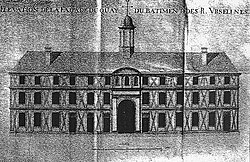
In 1745, plans were drawn for a second building adjacent to the first. As the new structure rose, the original convent was dismantled, and some of its materials were reused. This second convent was completed in 1751 and was later designated a National Historic Landmark in 1966.
The sisters' locations shifted over the following centuries:
- 1823: The nuns moved to a convent in the 9th Ward, transferring the French Quarter building to the city's bishop.
- 1910s: The 9th Ward premises were sold to the city to make way for the Industrial Canal.
- Present: The sisters relocated to their current quarters on Nashville Avenue in Uptown New Orleans.
Key Facts
- First Boarding School: The Ursuline Academy was established in 1727.
- Medical Milestone: Sister Francis Xavier was the first pharmacist in the United States.
- Historic Landmark: The second Ursuline Convent in the French Quarter is a National Historic Landmark.
- Diverse Reach: The academy educated women from central and South American countries.
- War Effort: Classrooms were used as infirmaries for both sides during the War of 1812.
| Period | Location | Key Detail |
|---|---|---|
| 1734–1751 | French Quarter (1st Building) | Half-timbered colombage construction |
| 1751–1823 | French Quarter (2nd Building) | National Historic Landmark |
| 1823–1910s | 9th Ward | Later used for the Industrial Canal |
| Modern Era | Uptown (Nashville Ave) | Current location of the sisters |
Frequently Asked Questions
Why did the first Ursuline convent deteriorate so quickly?
The first building used colombage, a half-timbered construction method. The unprotected timbers were impractical for the humid, semi-tropical climate of south Louisiana, leading to visible deterioration within twelve years.
Who was the first pharmacist in the United States?
Sister Francis Xavier, an Ursuline nun practicing in New Orleans in the early 1700s, is credited as the first pharmacist in the United States.
What was the purpose of the Ursuline Academy?
Founded in 1727, the academy provided an exceptional education for girls and women, including those from socially privileged Catholic Hispanic families in central and South American countries.
How did the Ursulines contribute to healthcare in New Orleans?
The sisters established one of the city's first hospitals and an orphanage. They treated soldiers and the slave population for yellow fever and malaria, and provided medical care to both British and American soldiers during the War of 1812.
Where are the Ursuline nuns located today?
After moving from the French Quarter and the 9th Ward, the nuns are currently located in their quarters on Nashville Avenue in Uptown New Orleans.