UNRWA: Providing Humanitarian Aid to Palestine Refugees
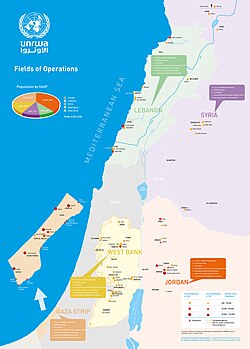
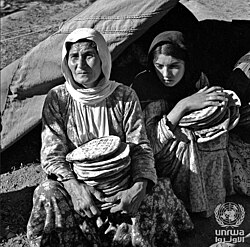
The United Nations Relief and Works Agency for Palestine Refugees in the Near East, commonly known as UNRWA, is a specialized United Nations programme established to provide direct relief and works programmes for Palestinian refugees. Founded on December 8, 1949, the agency has operated for 76 years, serving populations across the Levant region from its headquarters in Amman, Jordan, and offices in Gaza, Palestine.
Under the leadership of Commissioner-General Philippe Lazzarini and Deputy Commissioner-Generals Natalie Boucly and Antonia Marie De Meo, UNRWA manages a vast network of services designed to support the basic needs of refugees, ranging from primary education to emergency medical response.
Key Facts
- Established: December 8, 1949.
- Primary Purpose: Direct relief and works programmes for Palestinian refugees.
- Staffing: Approximately 30,000 employees.
- 2020 Budget: US$806 million.
- Core Services: Education, healthcare, social services, infrastructure improvement, and microfinance.
- Headquarters: Amman, Jordan and Gaza, Palestine.
Core Operations and Services
UNRWA operates as a comprehensive service provider, filling critical gaps in infrastructure and social safety nets for registered refugees. Its mandate covers several key fields of humanitarian aid.
Education and Health Care
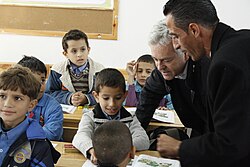
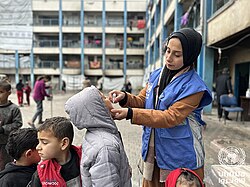
Education is a cornerstone of UNRWA's mission, providing schooling to thousands of children. In the health sector, the agency maintains a robust network of facilities. As of 2014, UNRWA operated 139 primary health facilities, employing 3,107 health staff to serve over 3.1 million refugees, resulting in more than 9.2 million annual patient visits.
Relief, Social Services, and Infrastructure
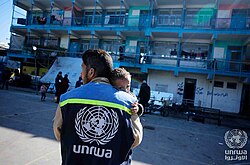
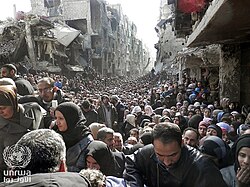
Beyond health and school, the agency provides essential social services and works to improve the infrastructure of refugee camps and settlements. This includes emergency response operations during conflicts and natural disasters, as well as long-term camp improvements.
Microfinance Assistance
To promote economic self-reliance, UNRWA's Microfinance Department provides loans to refugees. Cumulative data as of 2023 shows that 29,000 loans have been awarded with a total value of US$531.41 million. These efforts specifically target vulnerable groups, with 48% of outreach directed toward women and 25% toward youth.
Funding and Governance
UNRWA is funded through voluntary contributions from member states and private partners. The agency is overseen by an Advisory Commission and reports to the United Nations. Funding levels vary by country, with some providing over US$100 million annually while others contribute smaller amounts or none at all.
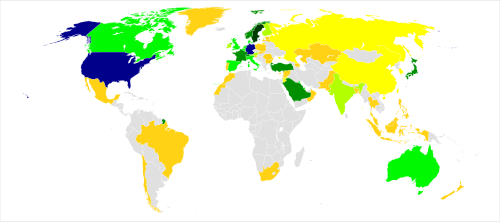
The agency's financial stability is often subject to geopolitical tensions, leading to periods of funding suspensions or conditional aid. For example, in 2021, the European Union conditioned certain funding on the removal of incitement from Palestinian Authority textbooks.
Challenges and Controversies
Due to the complex political environment of the Levant, UNRWA has faced significant scrutiny. Issues have included allegations regarding the neutrality of its staff, the content of textbooks used in its schools, and the agency's relationship with local authorities, including Hamas in the Gaza Strip.
The agency has been the subject of various independent evaluations and reports. While some reports describe the agency as competent and resilient, others have called for deeper reforms. In recent years, the agency has faced legal challenges and bans within Israel, leading to cases before the International Court of Justice (ICJ).
Summary of UNRWA Impact
| Category | Metric/Detail | Reference Period/Data |
|---|---|---|
| Health Facilities | 139 primary facilities | 2014 |
| Health Reach | 3,134,732 refugees | 2014 |
| Microfinance Loans | 29,000 loans awarded | Cumulative to 2023 |
| Loan Value | US$531.41 million | Cumulative to 2023 |
| Total Staff | 30,000 | General |
| Budget | US$806 million | 2020 |
Frequently Asked Questions
What is the primary purpose of UNRWA?
UNRWA is a United Nations programme dedicated to providing direct relief, health care, education, and social services to Palestinian refugees in the Near East.
Who leads UNRWA?
The agency is led by Commissioner-General Philippe Lazzarini, supported by Deputy Commissioner-Generals Natalie Boucly and Antonia Marie De Meo.
How is UNRWA funded?
UNRWA relies on voluntary contributions from various countries and private donors, though these funds can fluctuate based on political agreements and evaluations.
What services does UNRWA provide beyond basic aid?
In addition to health and education, UNRWA offers microfinance loans to encourage economic independence, particularly for women and youth, and manages infrastructure improvements in refugee camps.
Where does UNRWA operate?
The agency operates within the Levant region, with major headquarters and operational hubs in Amman, Jordan, and Gaza, Palestine.