United States Court for China: Jurisprudence and Legal Framework
The United States Court for China operated as a unique legal entity, exercising jurisdiction far from American soil. Its legal framework was a complex hybrid, blending federal statutes, common law, and local regulations to govern U.S. citizens and nationals residing in China. Because it functioned outside the domestic United States, the court had to navigate significant gaps in applicable law, often expanding its own reach to ensure order and justice.
Key Facts
- Expansive Jurisdiction: Covered U.S. citizens and non-citizen nationals from possessions like Guam and the Philippines.
- Constitutional Limits: The U.S. Constitution did not apply, meaning there were no rights to constitutional due process or jury trials.
- Legal Hybridity: Drew from U.S. federal law, the laws of Alaska and D.C., Shanghai municipal regulations, and traditional Chinese customs.
- Divorce Rules: Only the plaintiff was required to be an American resident in China for divorce or annulment cases.
- Statutory Authority: Governed by specific acts, including the China Trade Act of 1922.
Jurisdictional Reach and Interpretation
The Court adopted a broad interpretation of its jurisdiction. While treaties strictly mentioned U.S. citizens, the Court extended its authority to non-citizen nationals—individuals from U.S. possessions such as the Philippines and Guam. Furthermore, the court maintained that any American citizen in China, regardless of whether their residency was temporary or permanent, remained fully under the jurisdiction of U.S. laws and institutions.
This authority extended to specific civil matters. The court enforced consular title deeds for U.S. citizens holding land in trust for Chinese beneficiaries. In matrimonial law, the court applied a lenient standard for divorce and annulment: only the plaintiff needed to be an American resident in China, with no nationality or residency requirements imposed on the defendant.
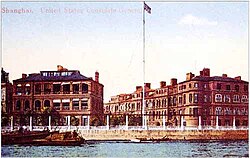
Sources of Law and the Common Law Conundrum
Because the court was based outside the United States, it operated without the protections of the U.S. Constitution; consequently, defendants had no right to a jury trial or constitutional due process. To fill legal voids, the court relied on a varied array of sources:
- U.S. Federal Law: Applied where available, supplemented by the decisions of U.S. courts.
- Municipal Regulations: The rules of the Shanghai International Settlement were recognized and enforced.
- Local Customs: Traditional Chinese law and "compradore" (local business agent) customs were applied in certain cases.
A significant challenge arose because U.S. federal law did not cover many civil or criminal matters typically handled by state laws. This "common law" gap was addressed in the case of Biddle v. United States, where the Ninth Circuit ruled that the laws of the District of Columbia or the Territory of Alaska could be treated as federal law. Judge Lobingier later expanded this, asserting that this doctrine applied universally to all civil and criminal laws, including those regarding corporations and procedure.

Procedural Rules and Congressional Statutes
Unlike federal courts within the United States—which followed the Conformity Act of 1872 (deferring to state law for civil procedure until 1938)—the Court for China prescribed its own procedural rules. This autonomy allowed the court to tailor its operations to the specific needs of its overseas environment.
The U.S. Congress further empowered the court through specific legislation. Key statutes included the 1915 Act to Regulate the Practice of Pharmacy and the Sale of Poison in the Consular Districts of the United States in China, and the China Trade Act of 1922 (later amended in 1925).
| Category | Applicable Law / Rule | Notes |
|---|---|---|
| Constitutional Rights | Not Applicable | No jury trials or constitutional due process. |
| Jurisdiction | Expansive | Included U.S. citizens and nationals from possessions. |
| Gap-Filling Law | Alaska / D.C. Law | Used to supplement deficient federal laws. |
| Local Influence | Shanghai Regulations / Chinese Custom | Integrated into specific case rulings. |
| Procedure | Self-Prescribed | Independent of the Conformity Act of 1872. |
Frequently Asked Questions
Did the U.S. Constitution apply to the Court for China?
No. Because the court was located outside the United States, the U.S. Constitution did not apply, meaning there was no right to a jury trial or constitutional due process.
Who fell under the court's jurisdiction?
The court had jurisdiction over U.S. citizens and non-citizen nationals from U.S. possessions, such as Guam and the Philippines, regardless of whether they resided in China temporarily or permanently.
How did the court handle laws that weren't covered by U.S. federal law?
Following the precedent in Biddle v. United States, the court applied the laws of the District of Columbia or the Territory of Alaska as a substitute for federal law in both civil and criminal matters.
What were the requirements for filing for divorce in this court?
Only the plaintiff was required to be an American resident in China; the defendant had no specific residency or nationality requirements.
Which Congressional acts specifically granted powers to the court?
The court was empowered by the Act to Regulate the Practice of Pharmacy and the Sale of Poison (1915) and the China Trade Act of 1922 (amended 1925).