British Supreme Court for China: A History of Extraterritoriality
For nearly a century, the legal landscape of East Asia was shaped by extraterritoriality—a legal status where foreign citizens were exempt from the jurisdiction of local laws and instead remained subject to the laws of their own home country. Central to this system was the British Supreme Court for China, an institution that managed complex legal disputes across China, Japan, and Korea.
The Foundations of Extraterritorial Rights
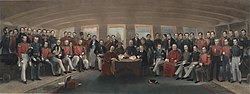
Britain first acquired extraterritorial rights in China through the Treaty of Nanking in 1842. These rights were further expanded when the United States secured similar privileges under the Treaty of Wanghsia; Britain leveraged these gains via a Most Favoured Nation provision in a Supplemental Agreement to the Treaty of Nanking. Eventually, these rights were formally codified in a direct Sino-British agreement known as the Treaty of Tientsin.
Beyond China, Britain extended its legal reach into Japan through the Anglo-Japanese Treaty of Amity and Commerce in 1858, and later into Korea via the United Kingdom–Korea Treaty of 1883.
Legal Governance and Jurisdiction
The Treaty of Tientsin established a clear framework for how jurisdiction was handled between British and Chinese subjects:
- Internal British Disputes: Any disputes between British subjects fell exclusively under the jurisdiction of British authorities.
- Criminal Acts: Chinese subjects were arrested and punished by Chinese authorities under Chinese law. Conversely, British subjects were tried and punished by a Consul or authorized public functionary according to British law.
- Cross-Border Complaints: If a British subject complained against a Chinese subject (or vice versa), the British consul attempted an amicable arrangement. If this failed, the consul requested assistance from Chinese authorities to examine the case and decide it equitably.
- Civil Matters: Debt enforcement was reciprocal; Chinese authorities enforced debts owed by Chinese subjects to the British, and British authorities did the same for debts owed by British subjects to the Chinese.
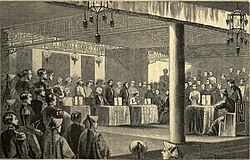
While British consular courts handled first-instance jurisdiction and cases involving British defendants, the Shanghai International Settlement utilized a Mixed Court (known in Chinese as Yángjīngbāng lishì gōngxiè or later Huìshěn Gōngxiè) for criminal acts and debt enforcement involving Chinese defendants.
Evolution of the Court System
Initially, appeals from British consular courts were sent to the Supreme Court of Hong Kong. However, as British economic activity grew in the Yangtse valley, this became impractical. This led to the creation of the British Supreme Court for China and Japan. This move was accepted by Qing officials, as it allowed them to exert direct pressure on British authorities regarding sentences they found unsatisfactory.
Expansion and Renaming
In 1879, the British Court for Japan was established in Kanagawa (modern-day Yokohama) to handle first-instance actions and appeals within Japan, with final appeals heard by the Chief Justice and Judge of the Supreme Court in Shanghai. In 1884, the court's jurisdiction extended to Korea.
The court's name evolved as geopolitical boundaries shifted:
- 1900: Renamed the British Supreme Court for China and Corea after Britain relinquished extraterritorial rights in Japan (effective July 1899) under the Anglo-Japanese Treaty of Commerce and Navigation.
- 1911: Renamed the British Supreme Court for China following the annexation of Korea by Japan in 1910.
The Decline and Dissolution of the Court
By the 1920s, negotiations began to end extraterritoriality. Agreements in principle were reached with the Chinese Foreign Minister in 1930 and 1931 after the Kuomintang consolidated power. However, the Japanese invasion of Manchuria (1931) and Northern China (1937) delayed these changes.
The court effectively ceased operations on December 8, 1941, when the Japanese Navy occupied the premises at the start of the Pacific War. After nine months of internment, the judges and staff were evacuated to Britain on the SS Narkunda.
The legal era officially ended on May 20, 1943, when the British-Chinese Treaty for the Relinquishment of Extra-Territorial Rights in China came into force. The United States relinquished its rights simultaneously, leading to the final dissolution of the court.
Key Facts
- Total Duration: The court held jurisdiction in China for 78 years, Japan for 34 years, and Korea for 27 years.
- Founding Treaty: The Treaty of Nanking (1842) initiated British extraterritorial rights in China.
- Mixed Court: A specialized court in the Shanghai International Settlement for cases involving Chinese defendants.
- Final Dissolution: The court was dissolved in 1943 following a treaty signed on January 11, 1943.
| Region | Start Year | End Year | Duration |
|---|---|---|---|
| China | 1842 | 1943 | 78 Years |
| Japan | 1858 | 1899 | 34 Years |
| Korea | 1883 | 1910 | 27 Years |
Frequently Asked Questions
What was the purpose of the Mixed Court in Shanghai?
The Mixed Court handled criminal acts and debt enforcement involving Chinese defendants within the Shanghai International Settlement.
How were disputes between British and Chinese subjects handled?
Complaints were first presented to the British consul for an amicable resolution. If that failed, the consul and Chinese authorities jointly examined the merits of the case to reach an equitable decision.
Why was the British Court for Japan established in Kanagawa?
It was created in 1879 to accommodate growing British commercial interests in Japan and to remove the inconvenience of requiring first-instance actions to be brought in Shanghai.
When did Britain officially give up extraterritorial rights in China?
Britain gave up these rights under a treaty signed on January 11, 1943, which officially came into force on May 20, 1943.
What caused the court to stop functioning in 1941?
The court effectively ceased to function on December 8, 1941, when the Japanese Navy occupied the court premises at the onset of the Pacific War.