Ukrainska Pravda: A History of Independent Journalism in Ukraine
Founded at the turn of the millennium, Ukrainska Pravda has evolved from a daring online project into one of Ukraine's most influential media outlets. Its trajectory mirrors the country's own struggle for democracy, marked by courageous reporting, political turmoil, and a steadfast commitment to press freedom.
Foundation and the Legacy of Heorhii Gongadze
The seeds of Ukrainska Pravda were sown in December 1999, when journalists Heorhii Gongadze, Olena Prytula, and Serhii Sholokh traveled to Washington to highlight the suppression of press freedom in Ukraine. This trip inspired the creation of a dedicated Ukrainian online news outlet.
In April 2000, Gongadze and Prytula officially founded Ukrainska Pravda, with Gongadze serving as editor-in-chief and Prytula as his deputy. The site launched immediately following the 2000 nationwide referendum initiated by President Leonid Kuchma. While initial funding came from a sponsor linked to Yevhen Marchuk, the Secretary of the National Security and Defense Council (NSDC), the partnership dissolved quickly after the outlet published a critical piece about Marchuk.
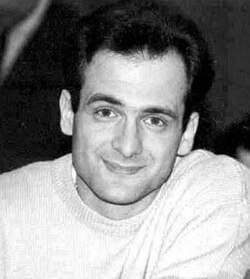
The publication's early years were marked by tragedy. On September 17, 2000, Heorhii Gongadze was kidnapped and murdered after openly protesting state censorship. His death sparked international outrage and drew global attention to the precarious state of Ukrainian journalism. Following this loss, Olena Prytula assumed leadership of the publication.
The outlet's influence grew significantly with the release of the Melnychenko tapes, which allegedly implicated President Kuchma in Gongadze's murder. By 2004, Ukrainska Pravda became a vital information source during the Orange Revolution, notably publishing exit poll data that suggested electoral fraud in the presidential elections. During this era, the site relied heavily on grants from organizations such as the International Renaissance Foundation and the National Endowment for Democracy.
Growth, Influence, and the Euromaidan Movement
By 2005, Ukrainska Pravda achieved financial independence through advertising revenue. Under Olena Prytula's leadership, the outlet expanded into a media group, launching specialized sites for entertainment, local news, and the economy. Its investigative rigor was highlighted in 2005 through Serhii Leshchenko's series "Andrii Yushchenko, Son of God?", which questioned the financial means behind the lavish lifestyle of President Viktor Yushchenko's son.
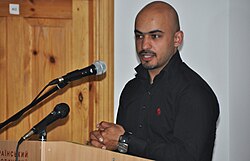
The publication continued to challenge power, particularly through the work of Serhii Leshchenko and Mustafa Nayyem. Starting in 2008, Leshchenko investigated the privatization of the state-owned Mezhyhiria residence by Viktor Yanukovych. In 2011, a tense exchange between Nayyem and Yanukovych regarding the residence was interpreted by Freedom House as a presidential threat against the journalist.
Ukrainska Pravda played a pivotal role in the 2013 Euromaidan movement. Mustafa Nayyem is credited with the first call for citizens to gather at Independence Square to protest the government's decision to postpone the Association Agreement with the European Union. In a show of solidarity, the outlet temporarily renamed itself Yevropeiska Pravda ("European Truth") on November 24, 2013. The site's importance peaked on January 24, 2014, during the Hrushevskyi Street clashes, when it recorded a then-record 1.6 million visitors.
Post-Revolution Transitions and Challenges
The aftermath of Euromaidan saw a shift in leadership and personnel. In 2014, Leshchenko and Nayyem entered politics, winning seats in the Verkhovna Rada. Sevhil Musaieva, founder of Hubs, was appointed editor-in-chief in October 2014, while Olena Prytula remained the owner and strategic lead. Pavel Sheremet joined as executive director.
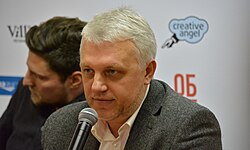
The organization expanded its footprint in 2015 by launching MediaHub, a coworking space shared with Hromadske TV and the NGO Center UA, and establishing a journalism school directed by Sheremet. Tragedy struck again in July 2016 when Sheremet was killed in a car explosion. Investigations suggested the attack may have been an attempt on Olena Prytula, as the vehicle belonged to her. Prytula later urged the Prosecutor General to treat the murder as an act of terrorism.
The outlet remained a critical voice, urging EU governments in 2016 to withhold visa-free regimes and financial aid due to "falsification of reforms" by Ukrainian authorities. In 2017, it criticized President Petro Poroshenko for revoking the citizenship of Mikheil Saakashvili.
Modernization and Change of Ownership (2020–2021)
In 2020, Ukrainska Pravda underwent a significant digital transformation, redesigning its website to better highlight analytical pieces and opinion columns. To ensure long-term sustainability, the outlet introduced the UP Club, a tiered membership system allowing readers to support the publication financially while keeping all content free for the general public.
The membership tiers include:
- UP Club: Basic support providing access to exclusive events and newsletters.
- UP Toloka: A mid-tier offering additional discounts and partner bonuses.
- Editor's Club: An exclusive tier requiring a $1,250 annual contribution and editorial recommendation, granting access to leadership and a private Slack channel.
Beyond news, the outlet ventured into documentary filmmaking, releasing "Red Line Corruption" in December 2020 to examine Ukraine's anti-corruption infrastructure. To celebrate its 20th anniversary, it also launched the Ukrainska Pravda Award across eight categories, including "Journalist of the Year" and "Innovator of the Year."
In May 2021, a major transition occurred when Olena Prytula transferred 100% of the publication's corporate rights and assets to the Dragon Capital group, led by CEO Tomáš Fiala. The agreement ensured that the editorial policy and the leadership of Sevhil Musaieva would remain unchanged. From the sale proceeds, Prytula allocated $100,000 each to Heorhii Gongadze's daughters and $250,000 for scholarships in honor of Pavlo Sheremet.
Key Facts
- Founded: April 2000 by Heorhii Gongadze and Olena Prytula.
- Key Figures: Heorhii Gongadze (founder), Olena Prytula (founding editor), Sevhil Musaieva (editor-in-chief).
- Major Events: Played critical roles during the Orange Revolution (2004) and Euromaidan (2013-2014).
- Ownership: Acquired by Dragon Capital in May 2021.
- Philanthropy: Established the Heorhii Gongadze Prize in 2019 with PEN Ukraine.
| Tier | Cost (Approx.) | Key Benefits |
|---|---|---|
| UP Club | 55 UAH/mo or 500 UAH/yr | Exclusive events, journalist meetings, newsletters |
| UP Toloka | 125 UAH/mo or 1,000 UAH/yr | All UP Club perks plus partner discounts |
| Editor's Club | $1,250/yr | Closed events with leadership, private Slack channel |
Frequently Asked Questions
Who founded Ukrainska Pravda?
The outlet was founded in April 2000 by journalists Heorhii Gongadze and Olena Prytula.
What was the significance of the Melnychenko tapes?
The tapes allegedly implicated former President Leonid Kuchma in the murder of Heorhii Gongadze, which significantly increased the popularity and influence of Ukrainska Pravda.
How did the outlet support the Euromaidan movement?
Mustafa Nayyem, a journalist at the outlet, was the first to call for protests at Independence Square. The publication also temporarily changed its name to Yevropeiska Pravda to show solidarity with the protesters.
Who currently owns Ukrainska Pravda?
As of May 2021, the publication is owned by the Dragon Capital group of companies following an agreement with founding editor Olena Prytula.
What is the Heorhii Gongadze Prize?
Established in 2019 by PEN Ukraine, KMBS Alumni, and Ukrainska Pravda, this annual award honors independent journalists and is presented every May 21.