Understanding the U.S. Forest Service: Protecting America's Natural Heritage
The United States Forest Service (USFS) is a vital federal agency dedicated to the stewardship of the nation's most precious forest and grassland resources. Operating as an agency within the United States Department of Agriculture (USDA), the Forest Service manages a vast landscape that balances ecological protection, resource extraction, and public recreation. While many people associate the agency with iconic symbols like Smokey Bear, its actual scope involves complex scientific research, law enforcement, and large-scale wildfire management.
Key Facts
- Total Land Managed: 193 million acres (780,000 km²).
- Core Assets: 154 national forests and 20 national grasslands.
- Workforce: Approximately 35,000 employees (as of FY 2016).
- Primary Mission: Sustainable multiple-use management through an ecological approach.
- Unique Status: The only major national land management agency not part of the Department of the Interior.
A Brief History of Federal Forestry
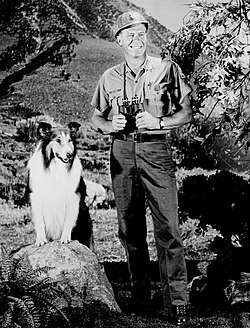
The roots of the Forest Service trace back to 1876, when Congress established the office of Special Agent within the Department of Agriculture to assess the condition of American forests. Under the leadership of Franklin B. Hough, this office evolved into the Division of Forestry in 1881, and eventually the Bureau of Forestry in 1901.
The agency was officially formed on February 1, 1905, succeeding the Bureau of Forestry. Over the decades, various pieces of legislation have shaped its operations, including the Weeks Act of 1911 and the Multiple Use – Sustained Yield Act of 1960. While other agencies like the National Park Service (created in 1916) and the Bureau of Land Management (created in 1946) were established to manage different types of public lands, the Forest Service has maintained its unique position within the USDA.

Organizational Structure and Scale
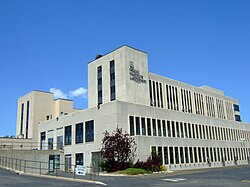
The Forest Service is a massive organization that operates through several major divisions to ensure the diverse needs of the public are met. These divisions include the Chief's Office, the National Forest System, State and Private Forestry, Business Operations, and Research and Development.
The National Forest System
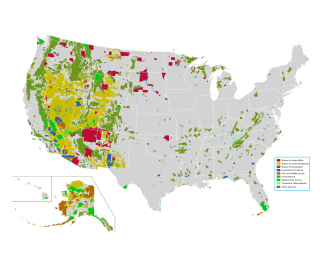
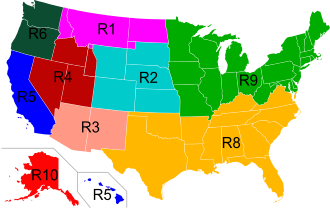
The National Forest System comprises the 193 million acres of public land managed as national forests and grasslands. These lands are spread across 44 states, Puerto Rico, and the Virgin Islands, representing about 9% of the total land area in the United States. To manage this immense territory, the agency utilizes over 600 Ranger Districts. Each district is led by a district ranger and manages specific tasks such as trail maintenance, campground operations, and wildlife habitat management.
![More than 80% of the 193 million acres (780,000 km2) of land managed by the United States Forest Service is in the western states. This map shows USFS lands as a percentage of total land area in each state.[27]](/images/68/3a/683af093dbb445a11990533ddb8643ceed943c9d39d1d581c76fa1e553848abc.png)
Research and Development
Science is at the heart of the agency's management strategies. The Research and Development division includes five research stations and 92 research work units located at 67 sites across the country. Additionally, the agency maintains 80 Experimental Forests and Ranges, which serve as long-term sites for scientific and management studies.
Law Enforcement & Investigations
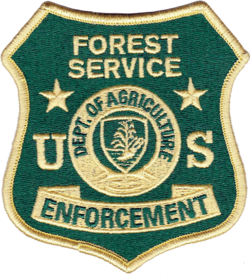
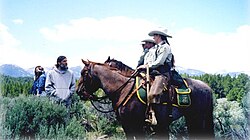
To protect these resources and ensure public safety, the agency maintains a Law Enforcement & Investigations unit. This division includes uniformed, high-visibility patrol officers who monitor the lands and enforce federal regulations.
Wildfire Management and Response
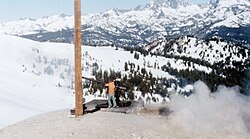
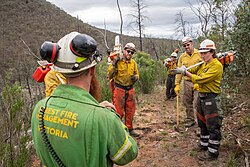
Wildfire suppression and prevention are critical components of the Forest Service's mission, often accounting for nearly 50% of its overall budget. During peak fire seasons, the agency employs between 10,000 and 15,000 wildland firefighters. These professionals often work on an interagency basis, collaborating with state and local departments to protect communities.
In response to the devastating fires of 2000, the National Fire Plan was developed to improve resource availability and reduce the impact of wildfires on rural communities. This plan remains a cornerstone of the agency's modern firefighting operations.
Agency Overview Summary
| Category | Details |
|---|---|
| Parent Agency | U.S. Department of Agriculture (USDA) |
| Headquarters | Washington, D.C. (Moving to Salt Lake City, Utah) |
| Total Land Area | 193 million acres |
| Key Divisions | National Forest System, Research & Development, Law Enforcement |
| Primary Focus | Resource protection, recreation, and wildfire management |
Frequently Asked Questions
What is the difference between the Forest Service and the National Park Service?
While both manage public lands, the Forest Service is part of the Department of Agriculture and focuses on a "multiple-use" concept, which includes resource extraction and sustainable harvesting alongside recreation. The National Park Service is part of the Department of the Interior and focuses primarily on preservation and protection.
How does the Forest Service manage such a large amount of land?
The agency uses a hierarchical structure. The National Forest System is divided into individual national forests and grasslands, which are further subdivided into over 600 Ranger Districts. These districts allow for localized management of trails, campgrounds, and wildlife habitats.
What does "multiple-use management" mean?
Multiple-use management is a concept where land is managed to meet various needs simultaneously. This includes protecting ecological health, providing space for recreation (like hiking and camping), and allowing for the sustainable harvesting of resources, such as timber.
Is the Forest Service moving its headquarters?
Yes. As part of a restructuring plan to be closer to the western forests and the people they serve, the Forest Service announced plans to move its main office to Salt Lake City, Utah.
How many people work for the Forest Service?
As of fiscal year 2016, the agency employed approximately 35,000 people, consisting of both permanent and seasonal staff.