Tyndareus: A Story of British Pluck and Seamanship in WWI
During the First World War, the seas were fraught with peril for troopships transporting soldiers to distant fronts. One such vessel, the Tyndareus, became the center of a dramatic rescue operation in early 1917, showcasing the discipline of the British Army and the resilience of modern naval engineering.
The Maiden Voyage and the Mine Strike
In January 1917, the Tyndareus departed from its home port of Liverpool for its maiden voyage to the Far East, under the command of Captain George Flynn. However, the journey took a perilous turn on February 6, 1917. While sailing approximately 10 miles (16 km) off Cape Agulhas—the geographic southern tip of Africa—the ship struck a mine.
The mine had been laid by the SMS Wolf, a German merchant raider (a commerce raider designed to disrupt enemy shipping). The resulting explosion tore a massive hole in the forward section of the hull, causing the ship to begin sinking by the head.
Discipline Under Pressure
On board were 1,000 men and 30 officers of the 25th (Garrison Service) Battalion, The Middlesex Regiment, bound for Hong Kong. The battalion was commanded by Lieutenant-Colonel John Ward, who also served as the Liberal–Labour Member of Parliament for Stoke-upon-Trent.
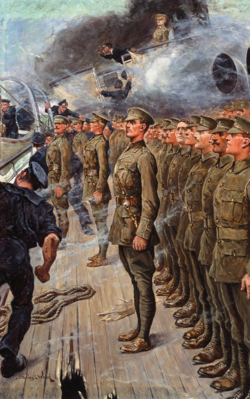
As the ship took on water, the troops were paraded on deck in their life jackets for a roll call. In a display of composure that the Cape Times later described as "British pluck," the soldiers began singing "There's a Long Long Trail A-Winding" and "It's a Long Way to Tipperary" while awaiting orders. This stoicism was compared by journalists to the legendary bravery seen during the wreck of the HMS Birkenhead.
The Rescue and Recovery
Despite the challenge of rough seas, the evacuation was a success. The troops were transferred to the SS Eumaeus, another Blue Funnel ship, and the HMHS Oxfordshire, a hospital ship that had responded to the SOS signals. Support also arrived from the British cruiser HMS Hyacinth and a tug from Simonstown.
A conflict of command arose when the captain of the HMS Hyacinth ordered the Tyndareus to be beached to prevent it from becoming a hazard to other shipping. Captain Flynn, however, ignored the order. Through skillful seamanship and rigorous damage control, Flynn managed to navigate the sinking vessel safely into Simonstown for repairs.
The survival of the ship drew praise from Viscount Buxton, the Governor General of South Africa. In a letter to the chairman of the Blue Funnel Line, Buxton congratulated the builders and the company, suggesting that the hull's design features—likely improved following the loss of the Titanic—were instrumental in saving the vessel.
Legacy and Commemoration
The bravery of the Middlesex Regiment did not go unnoticed. King George V sent a message to the troops, expressing his admiration for their discipline and courage, noting that they had upheld the "splendid tradition of Birkenhead."
The events were immortalized in an oil painting by Stanley Llewellyn Wood. Additionally, Lieutenant-Colonel Ward commissioned a memorial stone to record the gallantry of his men. Originally erected on Victoria Peak on Hong Kong Island, the stone was moved to London in 1994 and is currently housed at the National Army Museum in Chelsea.
Key Facts
- Incident Date: February 6, 1917.
- Location: 10 miles off Cape Agulhas, South Africa.
- Cause: Mine laid by the German merchant raider SMS Wolf.
- Personnel: 1,000 men and 30 officers of the 25th Battalion, Middlesex Regiment.
- Rescue Vessels: SS Eumaeus, HMHS Oxfordshire, and HMS Hyacinth.
- Outcome: All troops saved; ship successfully towed to Simonstown for repairs.
| Category | Details |
|---|---|
| Ship Name | Tyndareus |
| Commanding Officer | Captain George Flynn |
| Military Unit | 25th (Garrison Service) Battalion, The Middlesex Regiment |
| Destination | Hong Kong |
| Final Port of Refuge | Simonstown |
Frequently Asked Questions
What caused the Tyndareus to sink?
The ship struck a naval mine that had been deployed by the German merchant raider SMS Wolf off the coast of Cape Agulhas.
Who were the soldiers on board the ship?
The ship was carrying 1,000 men and 30 officers from the 25th (Garrison Service) Battalion of the Middlesex Regiment, led by Lieutenant-Colonel John Ward.
How were the troops rescued?
The troops were transferred to the SS Eumaeus and the hospital ship HMHS Oxfordshire despite rough sea conditions.
Why did Captain Flynn ignore the order to beach the ship?
Captain Flynn believed he could save the vessel through skillful seamanship and damage control, eventually bringing the ship safely into Simonstown for repairs rather than abandoning it on a beach.
Where is the memorial stone for the soldiers located now?
Originally placed on Victoria Peak in Hong Kong, the memorial stone was moved to the National Army Museum in Chelsea, London, in 1994.