Troodon: The Controversial Bird-Like Dinosaur of the Late Cretaceous
Troodon is a genus of relatively small, bird-like theropod dinosaurs that lived during the Campanian age of the Late Cretaceous period, approximately 77 million years ago. Known primarily from North America, this animal has become one of the most debated subjects in paleontology due to the fragmentary nature of its remains and the complex history of its classification.
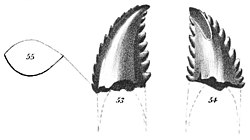
First discovered in October 1855, the type species Troodon formosus was among the earliest dinosaurs identified in North America. Interestingly, for the first two decades after its discovery, it was mistaken for a lizard.
Key Facts
- Temporal Range: Late Cretaceous (Campanian), roughly 77.5–76.5 million years ago.
- Classification: A maniraptoran theropod within the family Troodontidae.
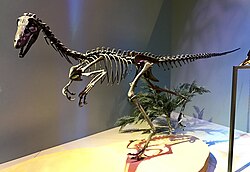
- Key Feature: Possessed an enlarged claw on the second toe, a trait characteristic of early paravians.
- Dietary Theory: Tooth structure suggests they may have been omnivores.
- Distribution: Found in Montana, Alberta, and as far north as Alaska.
A History of Taxonomic Confusion
The scientific journey of Troodon is a case study in the evolution of paleontological thought. Because the original T. formosus specimen consisted only of a tooth, early researchers struggled to place it correctly.
From Lizards to Pachycephalosaurs
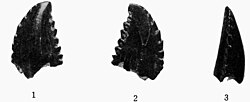
Initially classified as a "lacertilian" (lizard) by Joseph Leidy, the specimen was later reassigned as a megalosaurid in 1901. By 1924, some researchers suggested the tooth actually belonged to the dome-headed Stegoceras, leading to a long period where Troodon was classified as a pachycephalosaur. It wasn't until 1945 that Charles Mortram Sternberg rejected this link, noting the tooth's closer similarity to carnivorous theropods.
The Lumping and Splitting Debate
In the 1930s, other troodontid remains were found, including Stenonychosaurus inequalis (based on a foot and hand) and Polyodontosaurus grandis (a lower jaw). In 1987, paleontologist Phil Currie proposed that these various finds—along with Pectinodon bakkeri—were all actually the same species: Troodon formosus. This "lumping" of species became the scientific standard for decades.
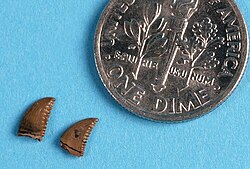
However, modern research has challenged this. Since the 2010s, scientists have argued that teeth alone are not diagnostic enough to group these animals into one species. This has led to a "splitting" movement, where Stenonychosaurus and Latenivenatrix are once again treated as distinct genera. As recently as 2025, researchers have proposed a neotype (a replacement type specimen) to better define T. formosus using material from the Two Medicine Formation.
Paleobiology and Ecology
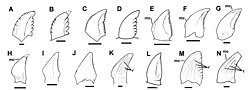
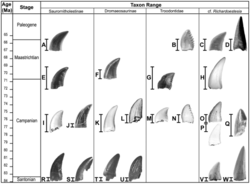
Troodontids were highly specialized predators. Their teeth, which share characteristics with both carnivores and herbivores, suggest a flexible, omnivorous diet.
Arctic Adaptation
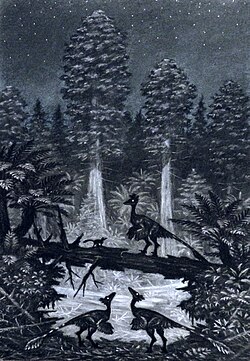
Some of the most fascinating evidence for Troodon comes from the Prince Creek Formation in Alaska. In this high-latitude environment, troodontids were the most common theropods, making up two-thirds of all specimens—a sharp contrast to the 6% found in southern Montana deposits.
The Alaskan environment was harsh, with temperatures ranging from 2°C to 12°C (36°F to 54°F) and roughly 120 days of winter darkness. The prevalence of Troodon in these regions suggests they favored cooler climates and were capable of surviving extreme polar conditions alongside other dinosaurs like Nanuqsaurus.
Reproduction and Nesting
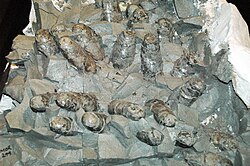
Evidence from assigned eggs suggests that troodontids may have employed communal nesting strategies, similar to modern ostriches. Research into their eggshells indicates a unique mineralization process and an intermediate incubation period, reflecting a transition between reptilian and avian reproductive traits.
Summary of Troodon Characteristics
| Feature | Description |
|---|---|
| Diet | Likely omnivorous (based on tooth morphology) |
| Key Anatomy | Bird-like build, enlarged second-toe claw |
| Preferred Climate | Cooler temperatures (highly abundant in Arctic regions) |
| Time Period | Late Cretaceous (Campanian) |
| Primary Locations | Montana, Alberta, and Alaska |
Frequently Asked Questions
Was Troodon actually a single species?
This is a subject of ongoing debate. While they were grouped as one species (T. formosus) for many years, recent evidence suggests that the material should be split into multiple genera, such as Stenonychosaurus and Latenivenatrix.
What did Troodon eat?
While they are classified as theropods (typically carnivores), the structure of their teeth is similar to some herbivorous dinosaurs, leading many paleontologists to believe they were omnivores.
How did Troodon survive in Alaska?
Troodontids appear to have been well-adapted to cooler climates. In the Prince Creek Formation, they were the dominant theropod, surviving in an environment with significant winter darkness and low temperatures.
Is Troodon related to birds?
Yes, Troodon is a maniraptoran theropod, a group of dinosaurs closely related to the ancestors of modern birds, sharing several anatomical similarities including a bird-like skeletal structure.