Triple Crown Trophy: The Ultimate Symbol of Thoroughbred Racing
In the world of Thoroughbred racing, few achievements carry as much prestige as the United States Triple Crown. While the victory itself cements a horse's legacy, the physical manifestation of this triumph is the Triple Crown Trophy—a masterpiece of silver that represents the pinnacle of the sport.
The Artistry and Origin of the Trophy
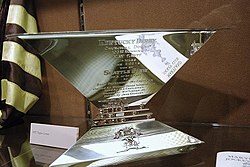
Commissioned in 1950 by the Thoroughbred Racing Association, the trophy was designed to be more than a simple prize; it was envisioned as a true work of art. The task was entrusted to the artisans at the world-renowned Cartier Jewelry Company.
The resulting design is a sophisticated three-sided vase. Each face of the trophy is dedicated to one of the three "jewels" of the crown, symbolizing the immense challenge of winning all three races. The sides are meticulously engraved with specific details from the Kentucky Derby, the Preakness Stakes, and the Belmont Stakes.
History and Distribution
Although commissioned in 1950, the first trophy was awarded to Citation, the 1948 Triple Crown winner. To honor the history of the sport, retroactive trophies were presented to the first eight previous winners (or their heirs) in reverse chronological order.
Today, the Triple Crown Trophy serves as a permanent award. When it is not touring during the live running of the three races, it resides on public display at the Kentucky Derby Museum in Louisville, Kentucky.
The Full Suite of Championship Awards
Winning the Triple Crown involves securing victory in three distinct races, each of which carries its own prestigious award. While the Triple Crown Trophy honors the overall achievement, individual race trophies are also presented:
- Kentucky Derby: Winners receive the Kentucky Derby Trophy, a solid gold piece valued at over $90,000.
- Preakness Stakes: Winners are presented with the Woodlawn Vase during a national television ceremony and receive a solid silver replica valued at over $30,000 for their permanent possession.
- Belmont Stakes: Winners are presented with the August Belmont Trophy and receive a silver tray for their permanent possession.
Because of the extreme difficulty of winning all three races, only five colts have ever claimed all four trophies in a single year: Secretariat (1973), Seattle Slew (1977), Affirmed (1978), American Pharaoh (2015), and Justify (2018).
Key Facts
- Designer: Created by the Cartier Jewelry Company.
- Design: A three-sided silver vase representing the three Triple Crown races.
- First Recipient: Awarded to Citation (1948 winner).
- Location: Permanently housed at the Kentucky Derby Museum.
- Elite Club: Only five horses have won all four associated trophies in one year.
| Race | Primary Trophy | Permanent Award/Value |
|---|---|---|
| Kentucky Derby | Kentucky Derby Trophy | Solid gold (>$90,000) |
| Preakness Stakes | Woodlawn Vase | Silver replica (>$30,000) |
| Belmont Stakes | August Belmont Trophy | Silver tray |
| Triple Crown | Triple Crown Trophy | Three-sided silver vase |
Frequently Asked Questions
Who designed the Triple Crown Trophy?
The trophy was commissioned by the Thoroughbred Racing Association and crafted by artisans at the Cartier Jewelry Company.
Where can the public see the Triple Crown Trophy?
When it is not on tour during the racing season, the trophy is on public display at the Kentucky Derby Museum in Louisville, Kentucky.
Which horses have won all four trophies in a single year?
Only five colts have achieved this: Secretariat, Seattle Slew, Affirmed, American Pharaoh, and Justify.
What is the significance of the trophy's three-sided design?
The three sides of the vase equally represent the three races that comprise the Triple Crown: the Kentucky Derby, the Preakness Stakes, and the Belmont Stakes.
Was the trophy awarded immediately after the first Triple Crown win?
No, the trophy was commissioned in 1950. The first was awarded to 1948 winner Citation, and retroactive trophies were later given to the previous eight winners or their heirs.