Belmont Cup: The History of the Iconic Thoroughbred Trophy
In the world of elite horse racing, few prizes carry as much prestige and historical weight as the Belmont Cup. Commissioned in 1896, this sterling silver masterpiece was created not only as a reward for athletic excellence but as a lasting tribute to the legacy of August Belmont, the namesake of the legendary Belmont Stakes.
The Artistry and Design of the Cup
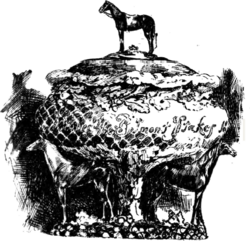
August Belmont Jr. commissioned the renowned jeweler Tiffany & Co. to design a trophy that would honor his late father. The task fell to artist Paulding Farnham, who utilized 350 ounces of sterling silver to create a vessel of immense detail and symbolic meaning. The trophy features an acorn-shaped bowl standing 27 inches high, measuring 15 inches across and 14 inches at the base.
The design is rich with equine symbolism. The bowl is supported by a pedestal featuring three statues of Thoroughbred horses, representing the foundation stallions—Eclipse, Matchem, and Herod—from whom modern racing Thoroughbreds are descended. This lineage is further emphasized by a prominent acorn and oak motif. Topping the piece is a statue of Fenian, the racehorse that secured August Belmont's first victory in the Belmont Stakes in 1869.
Creation and Early History
The plans for the trophy were first revealed on June 2, 1896, during the race at Morris Park Racecourse. While the plans were unveiled then, the physical cup was completed in 1897. The creation of the trophy cost $1,000, serving as a prestigious addition to the $4,000 in prize money awarded to the winner.
Interestingly, the first person to win the Cup was the man who commissioned it; August Belmont Jr. claimed the trophy when his horse, Hastings, won the race. Following this initial success, Paulding Farnham continued to produce several additional Belmont Stakes trophies that were distributed between 1897 and 1907.
Transition to a Permanent Trophy
For three decades, the trophy remained a private possession of the Belmont family. This changed in 1926 when Mrs. Eleanor R. Belmont, widow of Major August Belmont II, donated the piece to the Westchester Racing Association, which served as the governing body for New York racing at the time.
Through this donation, the trophy was established as the permanent prize for the race. In a letter dated June 8, 1926, Westchester Racing Secretary John J. Coakley confirmed that the trophy would henceforth be known as the August Belmont Memorial Cup. It was decreed that the winner of each annual renewal of the Belmont Stakes at Belmont Park would hold the Cup until the following year's race.
Key Facts
- Commissioned: 1896 by August Belmont Jr.
- Manufacturer: Tiffany & Co., crafted by Paulding Farnham.
- Materials: 350 ounces of sterling silver.
- Dimensions: 27 inches high, 15 inches wide, 14 inches at the base.
- Symbolism: Features the foundation sires Eclipse, Matchem, and Herod.
- Cost: $1,000 to produce.
- Permanent Status: Donated to the Westchester Racing Association in 1926.
| Feature | Detail |
|---|---|
| Designer | Paulding Farnham (Tiffany & Co.) |
| Weight | 350 oz Sterling Silver |
| Top Statue | Fenian (1869 winner) |
| Pedestal Statues | Eclipse, Matchem, and Herod |
| Current Name | August Belmont Memorial Cup |
Frequently Asked Questions
Who commissioned the Belmont Cup?
The cup was commissioned in 1896 by August Belmont Jr. to honor the memory of his father, August Belmont.
What is the significance of the three horses on the pedestal?
The three statues represent Eclipse, Matchem, and Herod, the foundation stallions from which modern Thoroughbred racing horses are derived.
Which horse is depicted on the lid of the trophy?
The lid is crowned with a statue of Fenian, the horse that gave August Belmont his first Belmont Stakes win in 1869.
When did the trophy become a permanent award?
The trophy became a permanent award in 1926 after Mrs. Eleanor R. Belmont donated it to the Westchester Racing Association.
How much did the original trophy cost to make?
The cup cost $1,000 to create, which was separate from the $4,000 prize money awarded to the race winner.