Transit-Proximate Development vs. Transit-Oriented Development
In the realm of urban planning, the physical distance between a building and a public transport node—such as a metro, train, or bus station—is often seen as a primary driver for growth. However, simply being located near a station does not automatically make a project sustainable or efficient. This distinction has led planning officials to differentiate between transit-proximate development and transit-oriented development (TOD).
What is Transit-Proximate Development?
Transit-proximate development refers to potentially dense construction that is physically situated near a public transport node. While it shares a geographic location with TOD, it lacks the specific design philosophies intended to maximize the utility of the transit system. In essence, transit-proximate development is defined by its proximity rather than its integration.
Because these developments do not always encourage the use of public transport, they may exhibit characteristics more common in suburban environments than in integrated urban centers. This can result in a missed opportunity to reduce car dependency despite the availability of high-capacity transit.
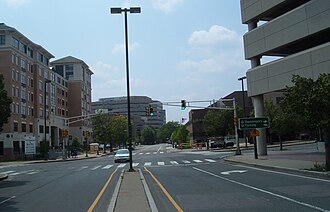
The Gap Between Proximity and Orientation
The primary difference between these two concepts lies in how the development interacts with the transit node. While transit-oriented development is designed to funnel people toward public transport, transit-proximate development may ignore the node's potential. This failure to integrate typically manifests in three key areas:
- Parking Infrastructure: Transit-proximate sites often include extensive parking facilities, mirroring suburban layouts rather than prioritizing transit use.
- Land Use: There is often a lack of mixed-use development, which is the practice of combining residential, commercial, and workplace spaces within the same area to reduce the need for long commutes.
- Pedestrian Accessibility: These developments may lack the comprehensive pedestrian facilities—such as wide sidewalks or safe crossings—necessary to make the journey to the station convenient and safe.
Key Facts
- Transit-proximate development is defined by physical closeness to a transport node but not necessarily by functional integration.
- It can include high-density buildings that still rely heavily on suburban-style parking.
- A lack of mixed-use zoning often characterizes transit-proximate areas.
- Poor pedestrian infrastructure can hinder the effectiveness of a transit-proximate location.
- Transit-oriented development (TOD) is a subset of transit-proximate development that actively encourages public transport use.
Comparison Summary
| Feature | Transit-Proximate Development | Transit-Oriented Development (TOD) |
|---|---|---|
| Location | Near transport node | Near transport node |
| Parking | Often extensive/suburban style | Minimized to encourage transit |
| Land Use | Often single-use | Mixed-use (Housing, Work, Retail) |
| Pedestrian Access | May be limited or poor | High priority/Extensive facilities |
| Primary Goal | Physical proximity | Active transit utilization |
Frequently Asked Questions
Is transit-proximate development the same as TOD?
No. While all transit-oriented development is transit-proximate, not all transit-proximate development is transit-oriented. The latter may be physically close to a station but fail to encourage its use through poor design.
What are the hallmarks of transit-proximate development?
Common hallmarks include large parking lots, a lack of mixed-use spaces (combining shopping, living, and working), and inadequate pedestrian pathways to the transit node.
Why is mixed-use development important for transit?
Mixed-use development places housing, workplaces, and shopping in the same location, which reduces the need for car trips and makes the nearby public transport node more viable and frequently used.
How does parking affect transit-proximate development?
When developments include extensive parking facilities typical of suburban areas, they often prioritize car ownership over the use of the adjacent public transport node, undermining the benefits of the location.